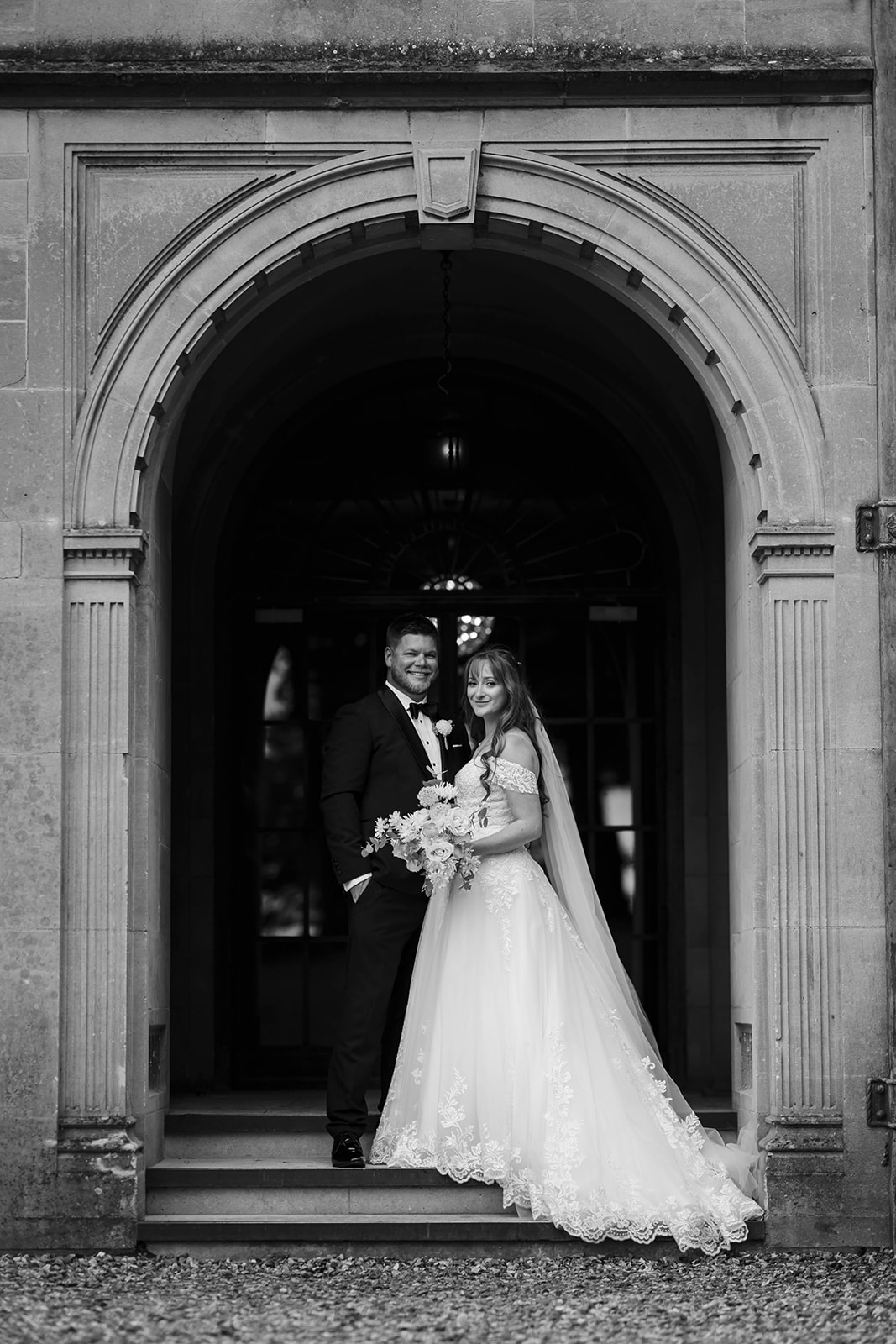
We photographed a wedding in the Wye Valley two summers ago where the couple had planted a tree for every guest instead of giving out favour boxes. Sixty oak saplings, all destined for a rewilding project in Herefordshire. When we were filming the couple walking through the meadow beside the venue, the bride told us she'd spent more time researching their eco friendly wedding than she had choosing her dress. We believed her. And honestly? It showed, in the most beautiful way.
Sustainable weddings aren't a trend anymore. They're a genuine shift in how couples think about one of the biggest days of their lives. But there's a gap between wanting to do things differently and actually knowing how. Vague advice like "choose local flowers" doesn't cut it when you're deep in the planning trenches, trying to balance ethics with aesthetics, budget with values. So here's what we've learned from being behind the lens at hundreds of weddings across the UK: the choices that genuinely matter, and the ones that are mostly just good marketing.
What Does an Eco Friendly Wedding Actually Mean?
Let's be honest about something first. There's no such thing as a zero-impact wedding. Gathering 80 to 150 people in one place, feeding them, clothing them, and transporting them will always leave a footprint. The goal isn't perfection; it's intention. An eco friendly wedding is one where conscious choices are made at every stage of planning, not just the ones that make it onto the Instagram caption.
The areas with the biggest environmental impact are typically: catering and food waste, transportation, floral design, stationery, and the venue itself. Prioritise those five and you'll have made a genuinely meaningful difference, far more than swapping plastic straws for paper ones (though sure, do that too).
Choose a Venue That Does the Heavy Lifting
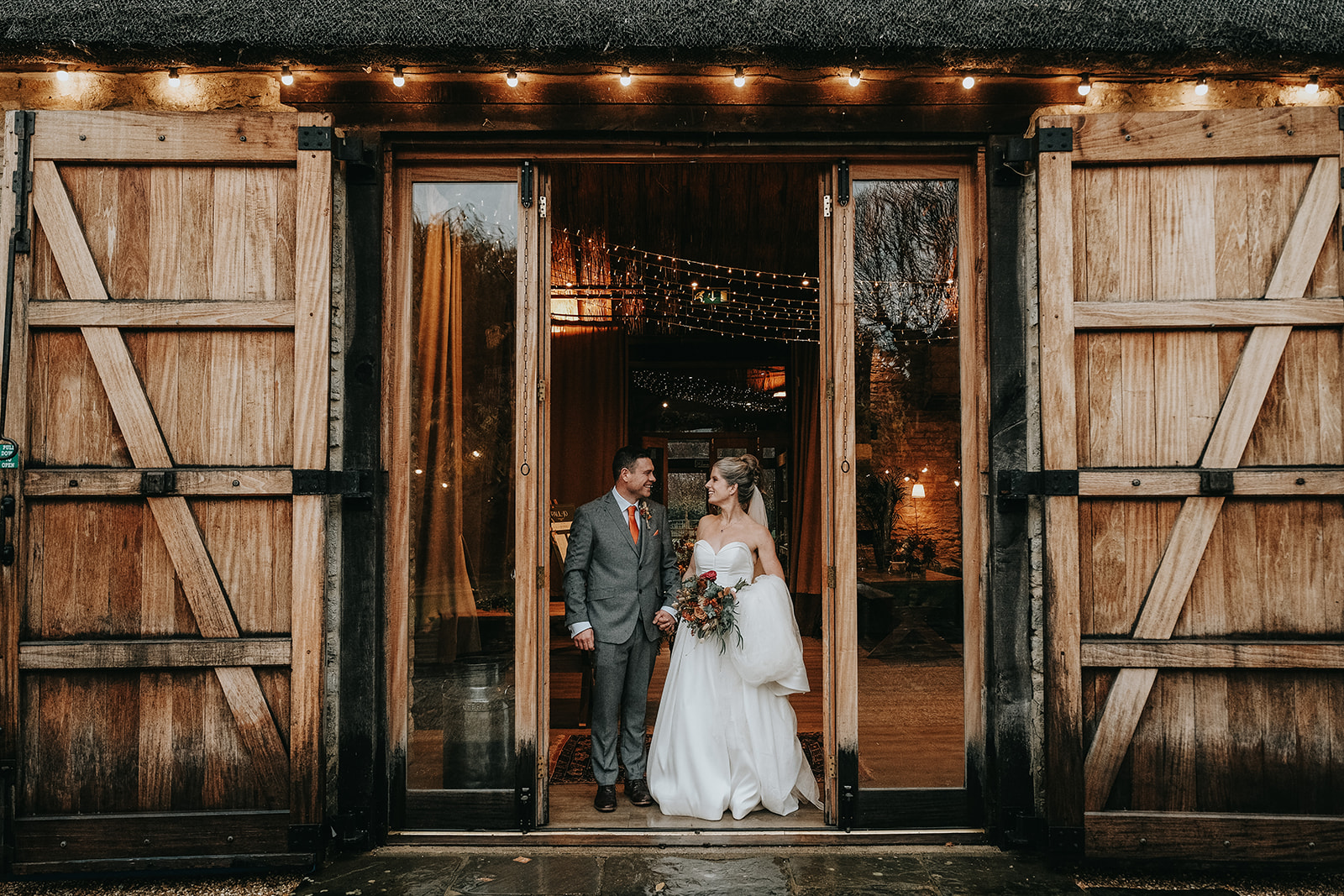
This is the single most impactful decision you'll make. The right venue can dramatically reduce your event's footprint before you've even thought about anything else. In the UK, we're genuinely lucky: there are some extraordinary sustainable wedding venues that have made environmental responsibility central to how they operate.
Soulton Hall in Shropshire runs almost entirely on renewable energy and sources food from its own farm and surrounding producers. Crom Castle in County Fermanagh sits within a nature reserve and works hard to protect the habitat around it. Healey Barn in Northumberland (a venue we know well and absolutely love) is a beautifully restored stone barn that keeps things local by instinct as much as policy. Look for venues with solar panels, rainwater harvesting, composting systems, and on-site accommodation to reduce guest travel. Ask them directly: what's your environmental policy? A good venue will have an answer ready.
The Truth About Sustainable Floristry
Flowers are where a lot of couples feel the tension most sharply. The conventional cut flower industry is genuinely problematic: most blooms sold in the UK are flown in from Kenya, Colombia, or the Netherlands, often grown with heavy pesticide use. But the answer isn't to skip flowers entirely (unless you want to, of course).
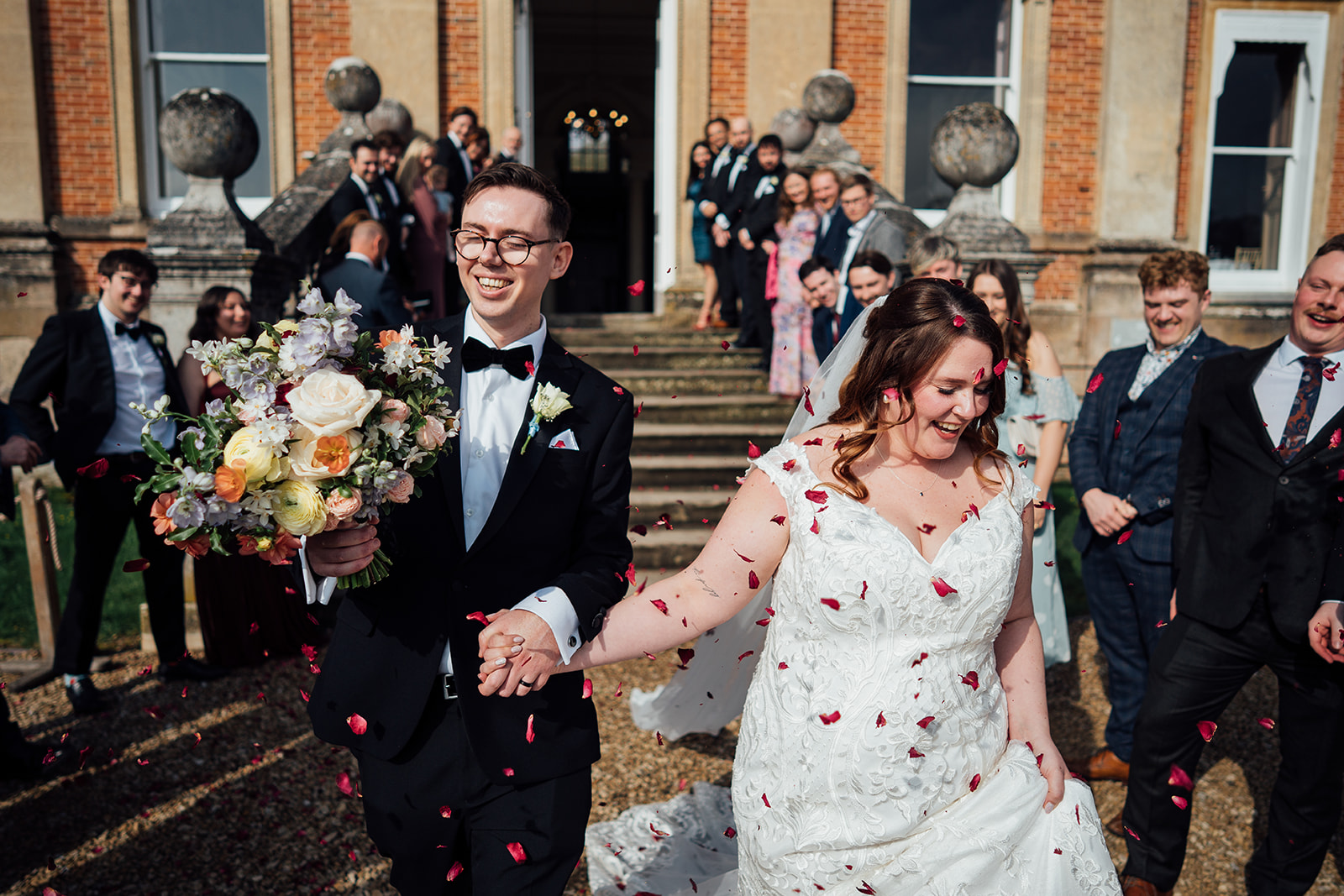
Seek out a local, seasonal florist who grows their own or sources from British flower farms. The Flowers from the Farm network is a brilliant starting point; it's a cooperative of hundreds of small British growers and you can search by county to find someone near your venue. A florist in the Cotswolds who's cutting dahlias and sweet peas the morning of your wedding is a completely different proposition to one ordering in roses from a wholesaler.
We remember shooting a wedding at Upton Barn in Devon where the florist had grown literally every stem in her own Somerset garden. The arrangements were loose, wildly beautiful, and smelled extraordinary. Our cameras loved the textures. And because the flowers were seasonal (it was late August), the palette felt completely of the moment, nothing forced or artificial about it.
A few things worth knowing about sustainable floristry:
- Dried and pampas arrangements are genuinely sustainable and photograph and film beautifully, especially in winter light.
- Potted plants as centrepieces can be given away to guests or donated to community gardens afterwards.
- Foraged greenery (with the landowner's permission) adds wildness and texture at almost zero cost.
- Avoid floral foam (oasis): it's made from non-biodegradable plastic and microplastics leach into waterways. Good florists are moving away from it anyway.
Catering: Where the Real Carbon Is
Food and drink typically account for the largest share of a wedding's carbon footprint, and it's also where waste gets genuinely painful. We've stood in many a venue kitchen at the end of a reception and watched entirely untouched platters get binned. It's heartbreaking, practically and ethically.
The most effective changes here are straightforward. Choose a caterer who sources regionally (ask for specifics, not just a vague "we work with local suppliers" claim). Opt for a menu that's plant-forward, or at least reduces the proportion of beef and lamb, which carry the highest carbon cost. Work with your caterer to get guest numbers right so you're not over-ordering massively.
And arrange for leftovers to be donated or collected. OLIO and Too Good To Go both operate in many parts of the UK and can connect surplus food with people who need it. Some venues have relationships with local food banks. It takes one conversation to set up, and it means nothing goes to waste.
Rethinking the Dress (and the Suit)
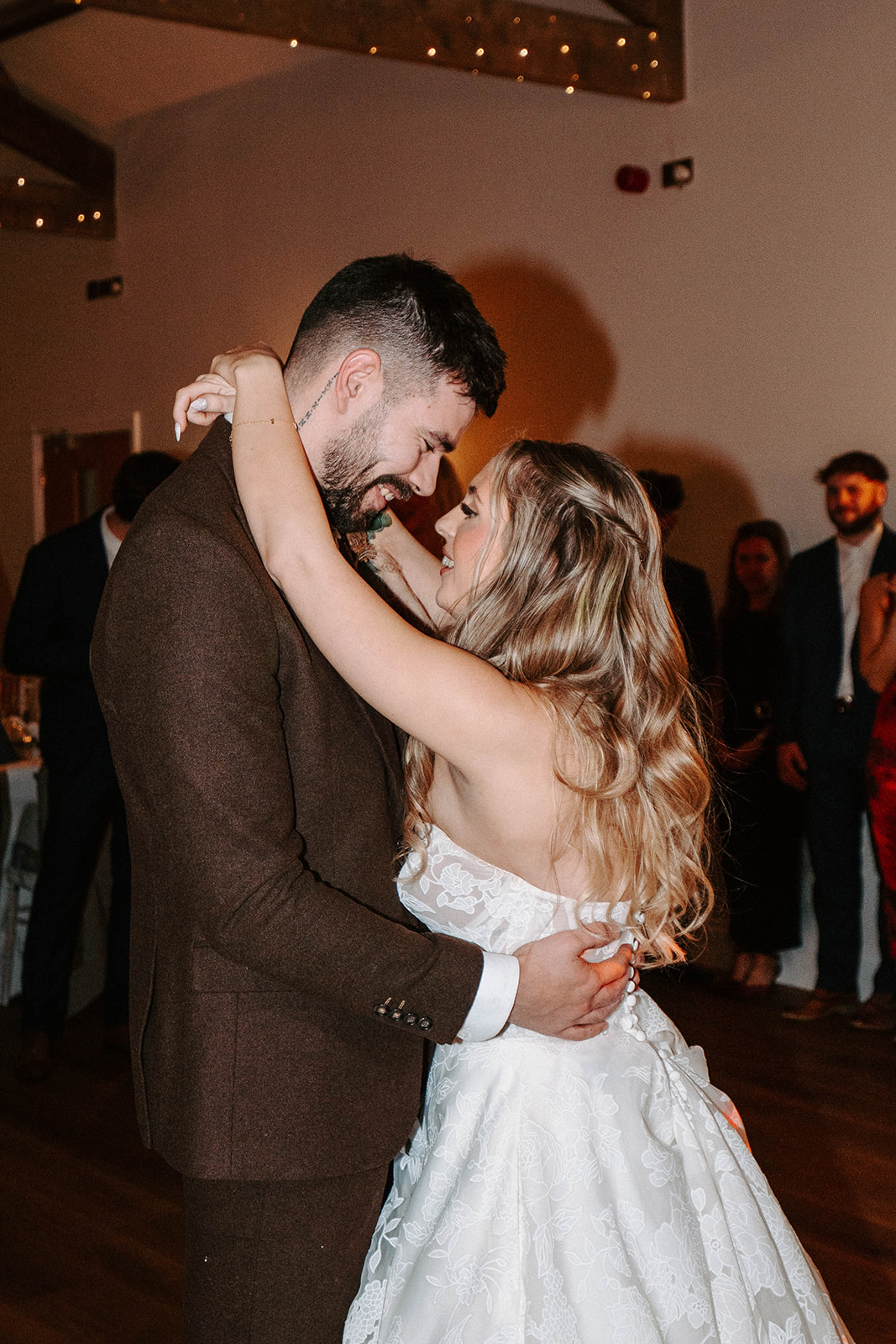
The fashion industry's environmental impact is well documented, and wedding attire is a particularly acute version of the problem: a garment worn once, then often stored in a box for decades. There are better options, and they're genuinely gorgeous.
Preloved bridal is having a real moment. SANSOVINO 6, Rock My Wedding's marketplace, and Still White all carry stunning dresses at a fraction of the original price. Renting is increasingly mainstream, with companies like Girl Meets Dress offering bridal options. Some designers, including Halfpenny London and Catherine Deane, use sustainable fabrics and ethical production; it's worth asking any designer you're considering what their supply chain looks like.
For the groom or groomsmen, renting suits is both cheaper and more sustainable than buying something that will rarely be worn again. Moss Bros, Slaters, and independent tailors across the UK all offer hire. And if someone does buy, a well-made suit worn to future weddings, job interviews, and Christmas dinners is a completely different environmental proposition to a fast-fashion option bought and discarded.
Stationery and the Digital Middle Ground
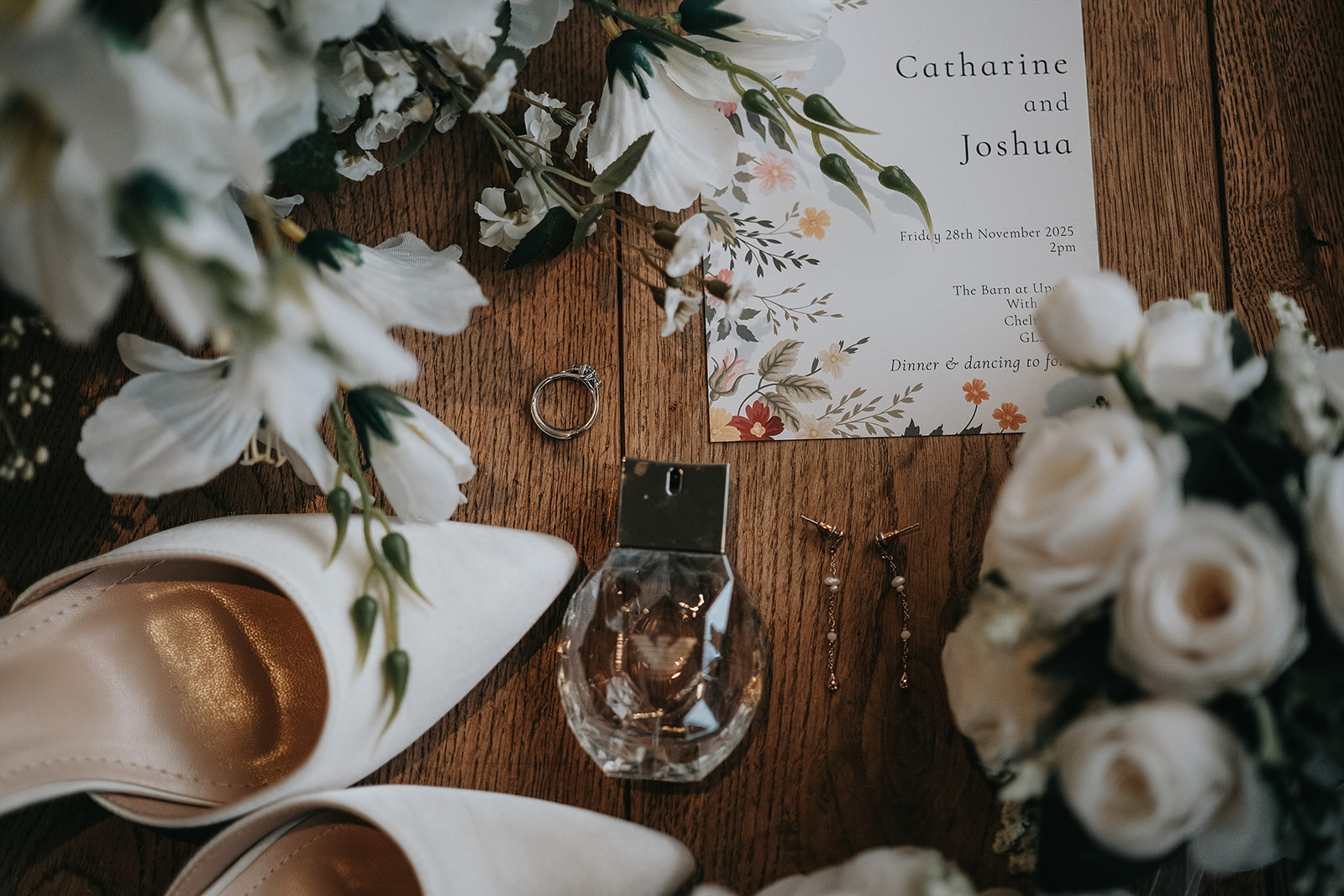
Paper waste is one of the easier areas to address, though it's also one where couples feel the most creative attachment. Stationery is tactile and beautiful and we completely understand not wanting to give it up.
The good news is that sustainable stationery has never been better. Recycled and seed paper (which guests can plant after the wedding) are both widely available. Printers like Papier and Harlow & Grey offer eco-conscious options. For the less sentimental elements, like RSVP cards, dietary forms, and accommodation information, a digital solution via Zola, Withjoy, or even a simple website is genuinely sufficient.
One thing we'd gently push back on: don't go fully digital if it means losing the pieces that become heirlooms. A beautifully printed order of service, the menu card from the table, the handwritten place names: these end up in boxes and frames and are treasured for decades. Be selective about what you print, not wholesale about eliminating it.
Transport: The Overlooked Footprint
Guest travel is often the single largest contributor to a wedding's carbon footprint, and it's also the hardest to control because you can't tell people how to get there. What you can do is make sustainable options easier.
Choose a venue that's accessible by train, or organise a coach from a central pickup point. If your guest list is largely local, say within 30 miles of the venue, that's already a significant advantage. Encourage carpooling explicitly in your communications; most guests will happily share if someone organises it. And if you're having an electric or hybrid vehicle as your wedding car, companies like Eleetric Wedding Cars and Recharge Cars operate across England and Scotland with genuinely beautiful options.
For your own honeymoon, rail travel within Europe has become dramatically more romantic and practical. The Caledonian Sleeper to the Scottish Highlands, the Eurostar into Paris, or the Interrail routes through Italy: these are genuinely extraordinary experiences that also happen to produce a fraction of the emissions of flying.
The Favours and Gifts Conversation
Favour boxes filled with branded shortbread and a miniature candle: we've photographed thousands of them. We've also seen thousands of them left on tables at the end of the night. If you're going to spend money on favours, spend it on something edible, plantable, or genuinely useful.
Seed packets are popular for good reason: they're inexpensive, lightweight, and actually get used. Local honey, homemade jam, or a small packet of loose-leaf tea from a British producer all work beautifully. Or skip individual favours entirely and make a donation to a charity that matters to you as a couple. Print a small card explaining what you've given and why. Guests remember that far more than a paper cone of sugared almonds.
For the gift list, platforms like Honeyfund allow guests to contribute to experiences rather than objects. The Good Gift Company and similar ethical registries let you direct gifts toward charitable causes. And if you do want physical gifts, a registry with a company like John Lewis that has clear sustainability policies is preferable to one without.
How We Capture Sustainable Weddings
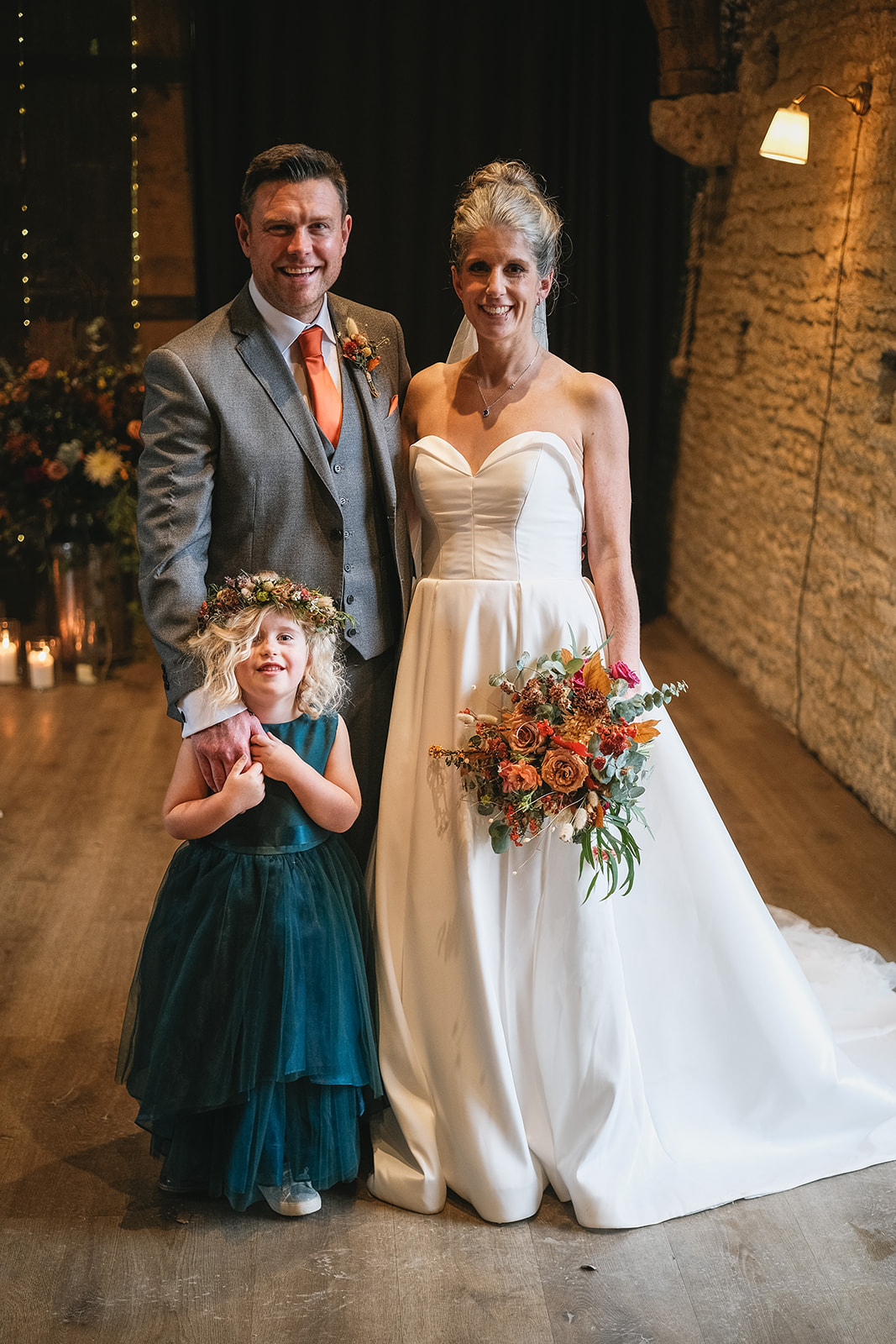
Here's something we've noticed from behind the lens: eco-conscious weddings tend to photograph and film beautifully. The wildflower meadows, the loose seasonal arrangements, the natural textures of linen and cotton and wood, the outdoor ceremonies in Dorset valleys or on Scottish hillsides: these are the images we genuinely love making. There's an authenticity to a wedding that's been planned with care and intention, and it comes through in every frame of footage and every still photograph.
We also make our own small commitments. We deliver galleries digitally rather than on physical media. We use rechargeable batteries across all our camera equipment. And we try, wherever possible, to travel to weddings together when our team is attending the same venue.
If you're planning an outdoor ceremony or a venue with extraordinary natural surroundings, talk to your photographer and videographer about it early. The light at 4pm in October in a Herefordshire meadow is something genuinely special, and knowing the setting lets us plan for the moments that will make your gallery and film extraordinary.
Frequently Asked Questions
How much more expensive is an eco friendly wedding?
Not necessarily more, and sometimes less. Seasonal, locally grown flowers are often cheaper than imported varieties. Preloved dresses cost a fraction of new ones. Plant-based menus can reduce catering costs significantly. The areas where sustainable choices do cost more tend to be specialist suppliers and ethical fashion. Think of it as a reallocation rather than an addition: spend less on things that get thrown away and more on things that matter.
What's the single biggest change we can make for a more sustainable wedding?
Choose your venue carefully. The venue determines so much: the energy it uses, how food is sourced, how waste is managed, and how far guests need to travel. A rural venue with on-site accommodation, renewable energy, and a farm-to-table caterer is doing more environmental good than any number of seed-paper invitations. Get the venue right and everything else becomes easier.
Can we have a sustainable wedding without it looking sparse or compromised?
Absolutely, and this is perhaps the most important thing to say. Some of the most visually stunning weddings we've photographed and filmed have been the most consciously planned. Seasonal British flowers are extraordinary. Natural fabrics photograph beautifully. Stone barns and wildflower meadows and candlelit tables set with mismatched vintage china: none of this looks like compromise. It looks considered, warm, and real. The aesthetic of sustainability and the aesthetic of beauty are not in conflict.
Is it possible to offset the carbon from our wedding?
Carbon offsetting is a useful tool but shouldn't be the first resort. Reduce what you can first, then consider offsetting what remains. If you do offset, choose verified schemes: Gold Standard and Verra-certified projects are considered the most credible. UK-based offsetting through organisations like the Woodland Trust or the RSPB connects your contribution directly to habitat restoration here at home, which many couples find more meaningful than abstract international credits.
Planning a wedding that reflects your values is one of the most personal things you can do. And if you'd like someone behind the lens who genuinely loves these kinds of weddings, who'll notice the grandmother's ring on the table and the wildflowers in the buttonhole and the way the evening light falls across a meadow, we'd really love to hear from you. Whether you're looking for photography, film, or both, we'd be honoured to be part of your day. Tell us your story.