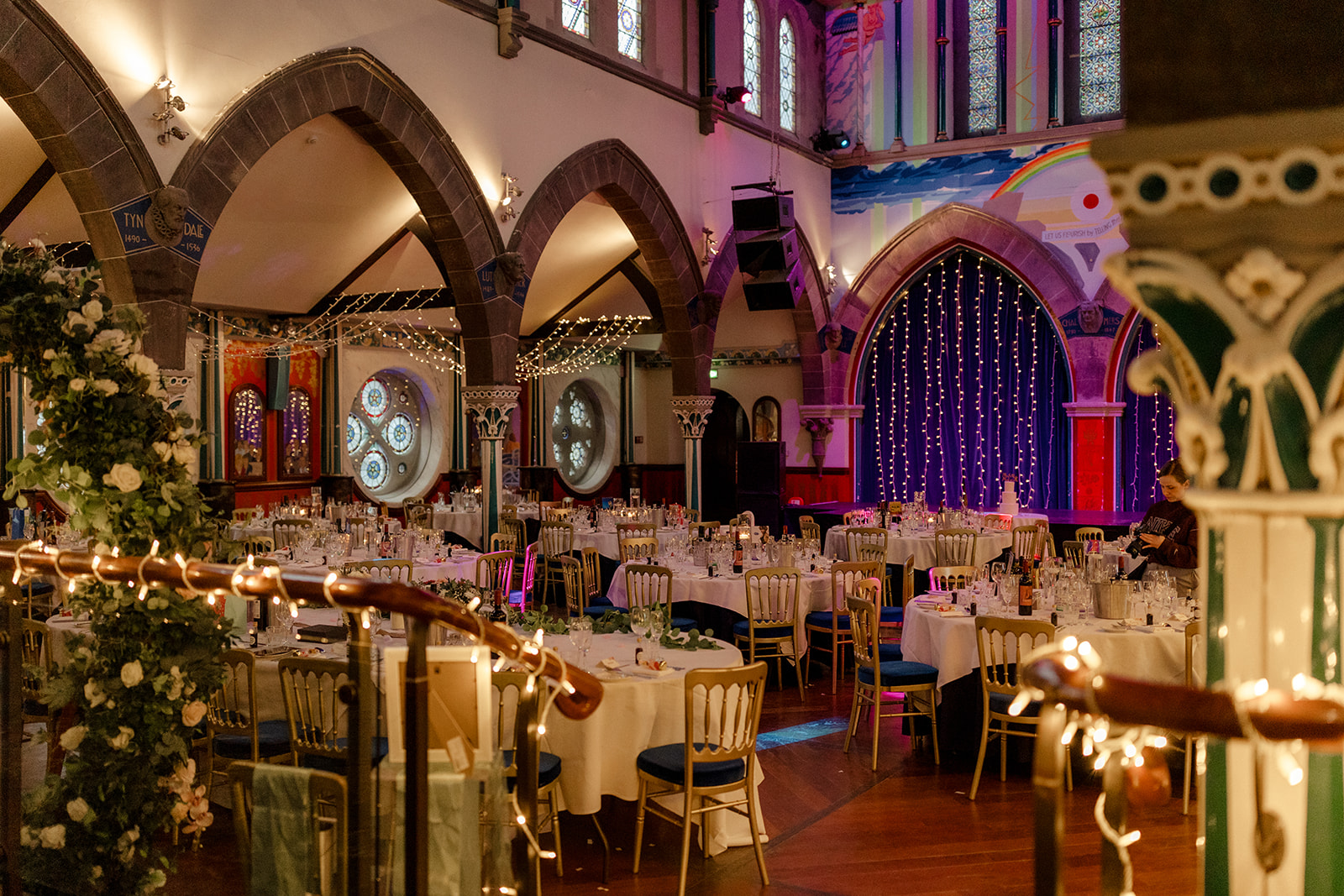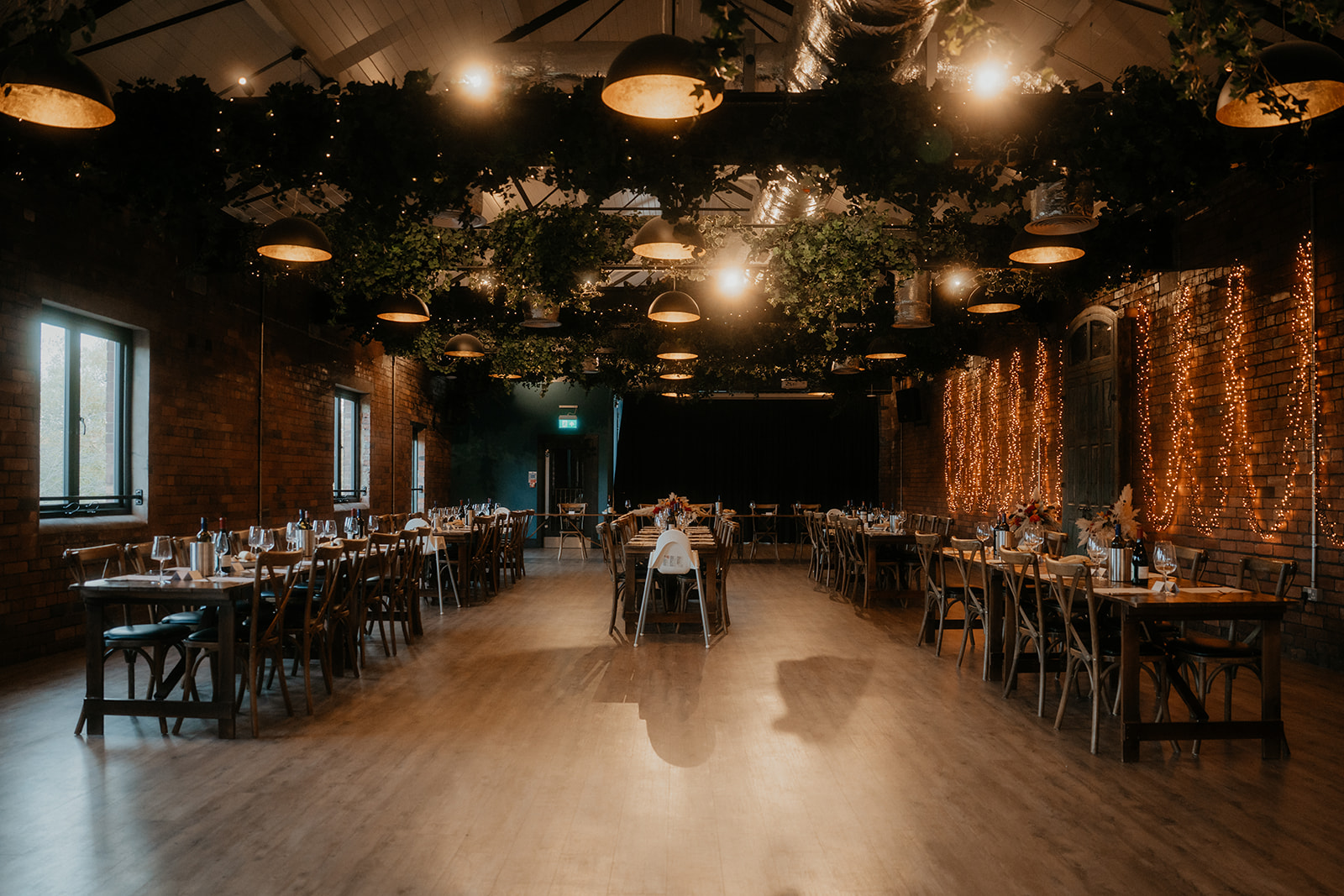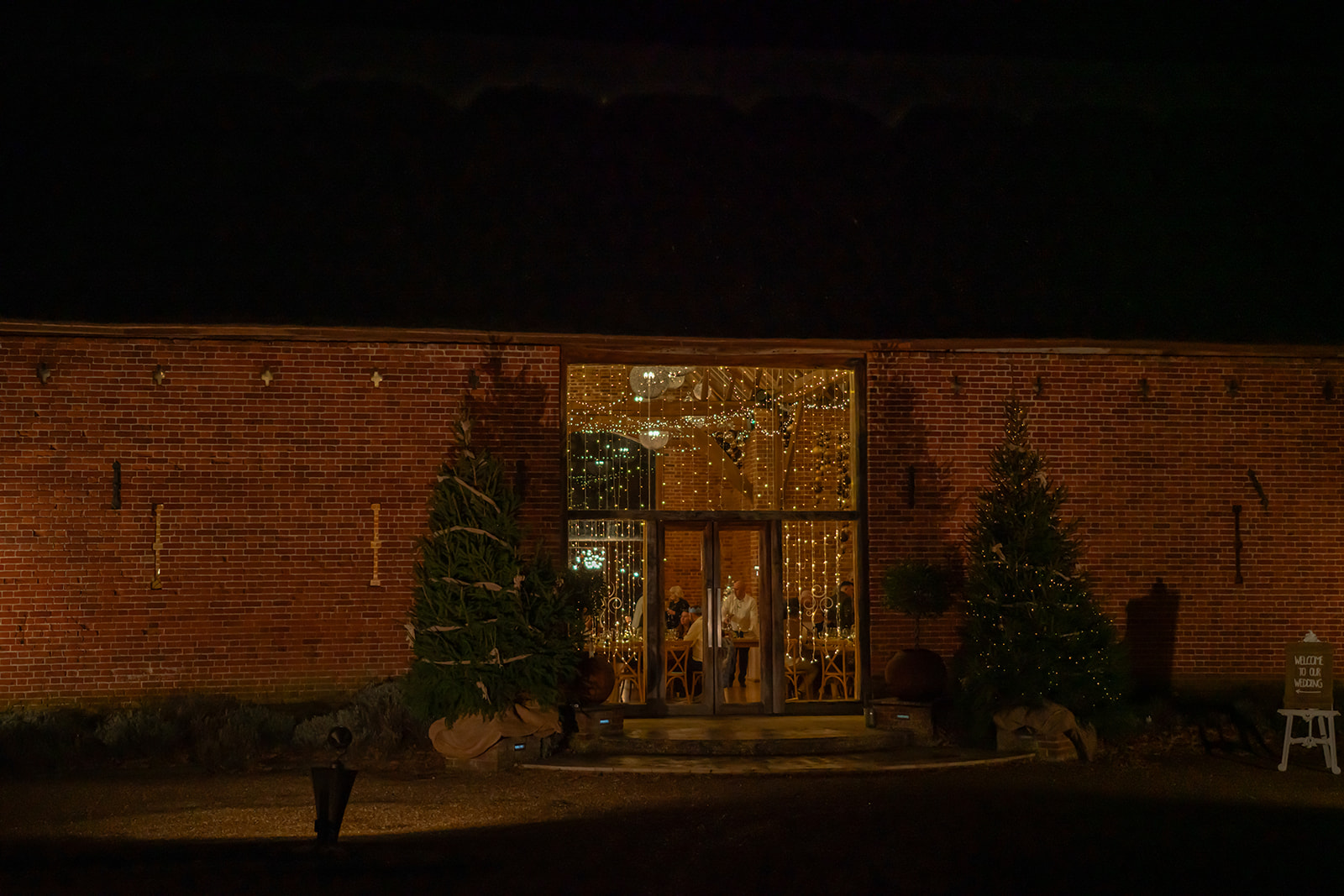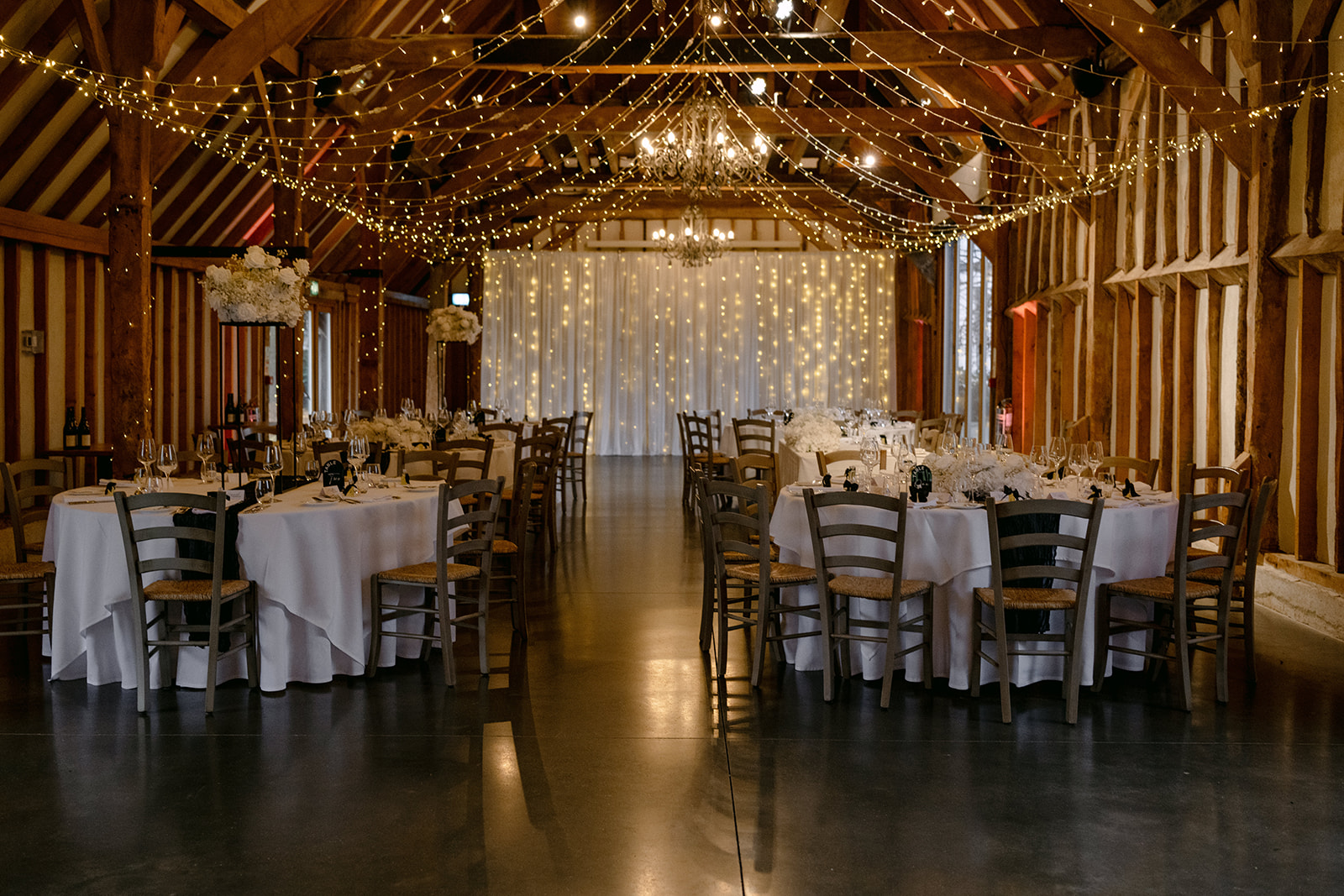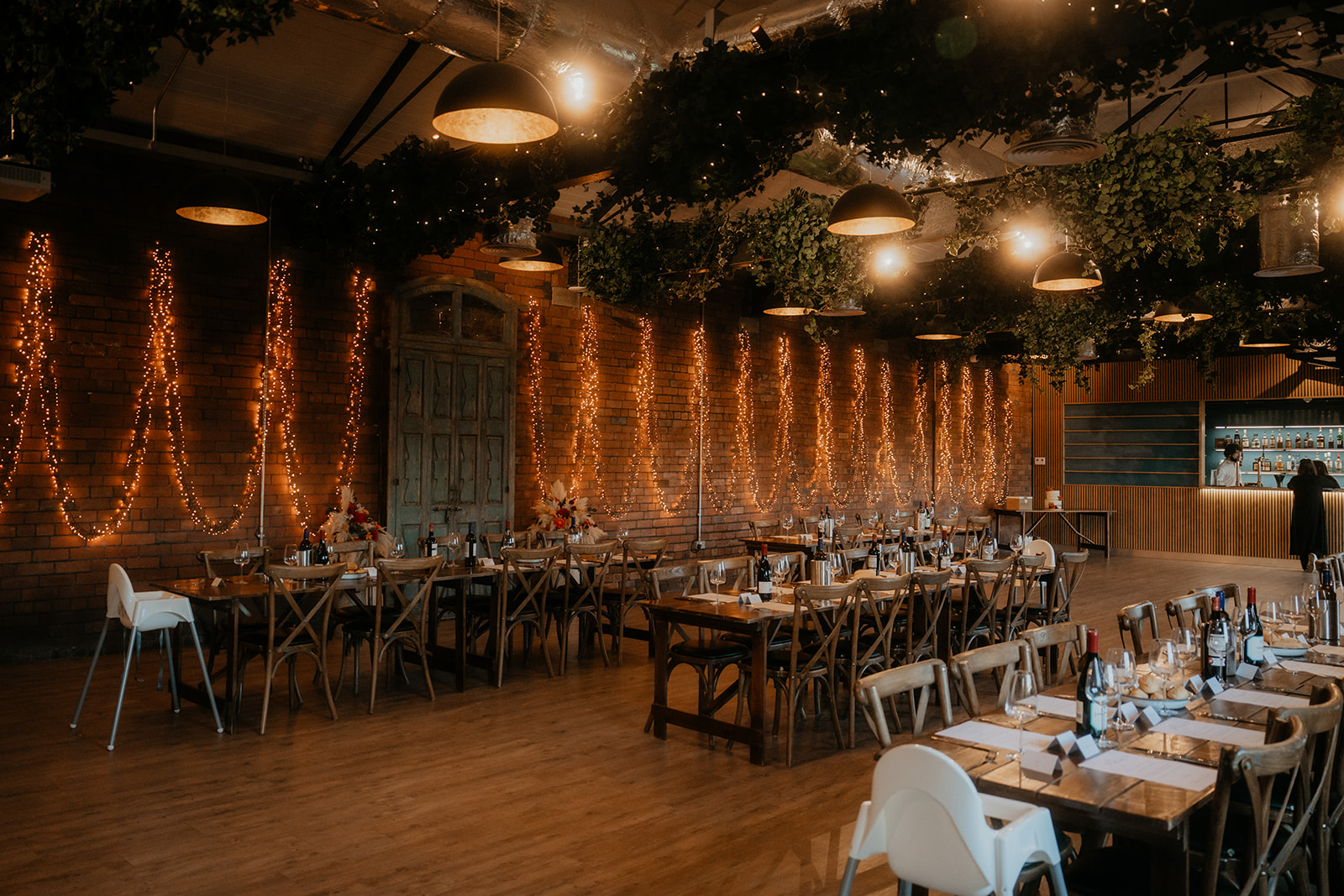
A canopy of warm bulbs overhead, the smell of cut flowers, sixty people laughing below: fairy lights done well don't just look beautiful, they change the entire feeling of a room.
Why Fairy Lights Work So Well and what most couples miss.
We've shot weddings in every kind of space you can imagine: converted barns in the Cotswolds, Victorian townhalls in Edinburgh, marquees on windswept coastal fields in Cornwall, and candlelit country houses in the Welsh borders. And across all of them, the one element that appears at almost every reception and genuinely shifts the atmosphere is fairy lights. Not because they're fashionable (though they are), but because warm light at low levels does something to a room that no chandelier or overhead fitting can replicate. It softens everything. It makes people lean in a little closer.
The thing most couples miss, though, is that fairy lights are not a decoration you simply order and forget about. The type of bulb, the density of the installation, the height, the colour temperature, the way they interact with your venue's existing architecture: all of it matters. Done well, they become invisible in the best possible way, just warmth and atmosphere. Done carelessly, they can look like a garden centre at Christmas. We've seen both, and we'll help you avoid the latter.
Fairy lights at a wedding venue broadly fall into a few categories: festoon or bistro-style bulb strings (the chunky outdoor ones), fine micro LED curtain lights, Edison-style filament strings, and star-cloth or canopy installations. Each creates a completely different effect, and each suits different spaces. Getting clear on which type you want before you start talking to suppliers will save you a lot of time and a fair amount of money.
Choosing the Right Style of Fairy Lights for your venue and vibe.
Before we get into logistics, it's worth spending a moment on the visual difference between the main styles, because couples often use 'fairy lights' as a catch-all when they actually have something very specific in mind.
Festoon lights (sometimes called bistro lights or outdoor string lights) are the chunky bulb strings you see draped across outdoor terraces and barn beams. They're warm, sociable, and slightly rustic. They suit barns, outdoor receptions, and relaxed country house weddings very well. They tend to look a little odd in formal ballrooms, though, where the scale can feel off.
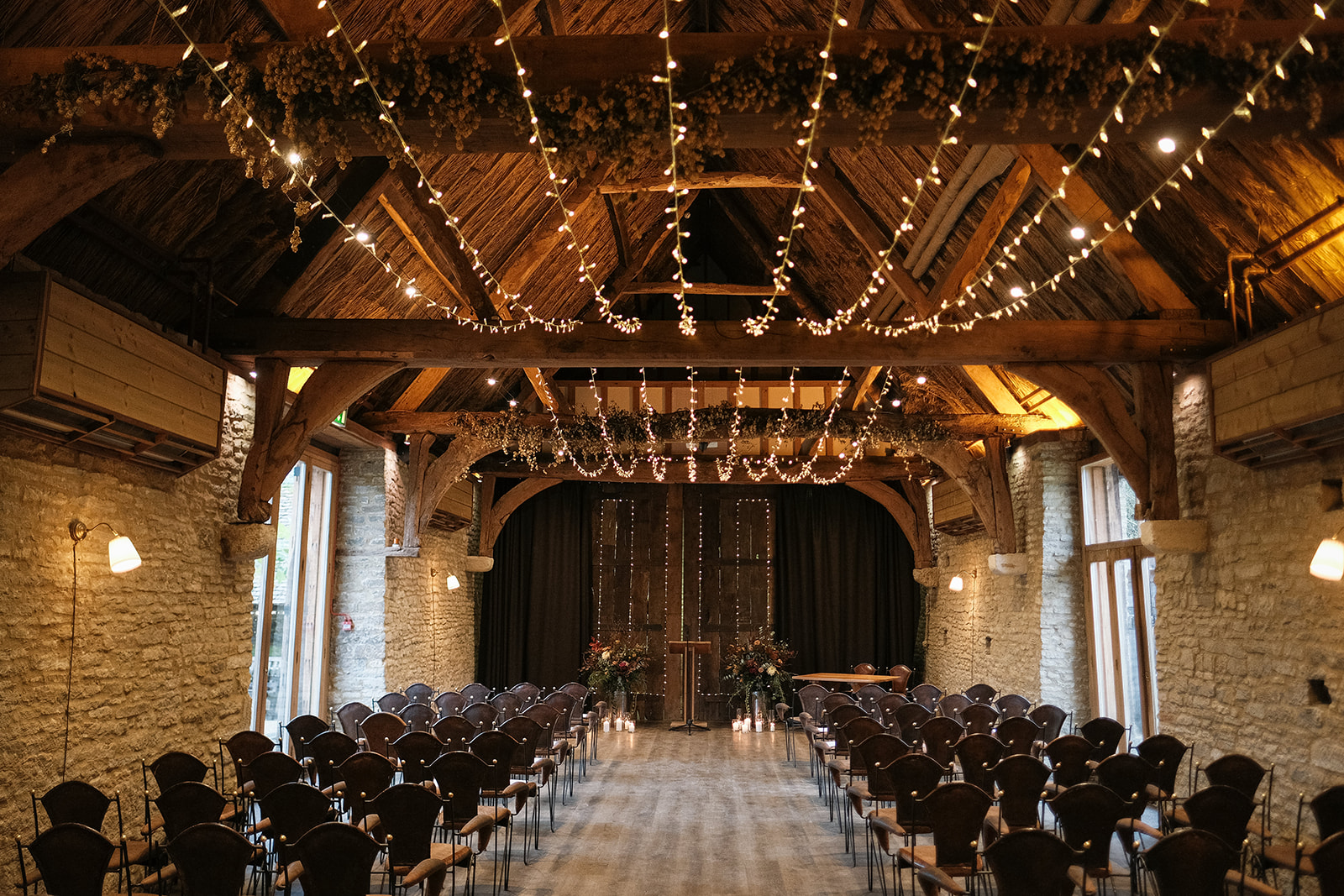
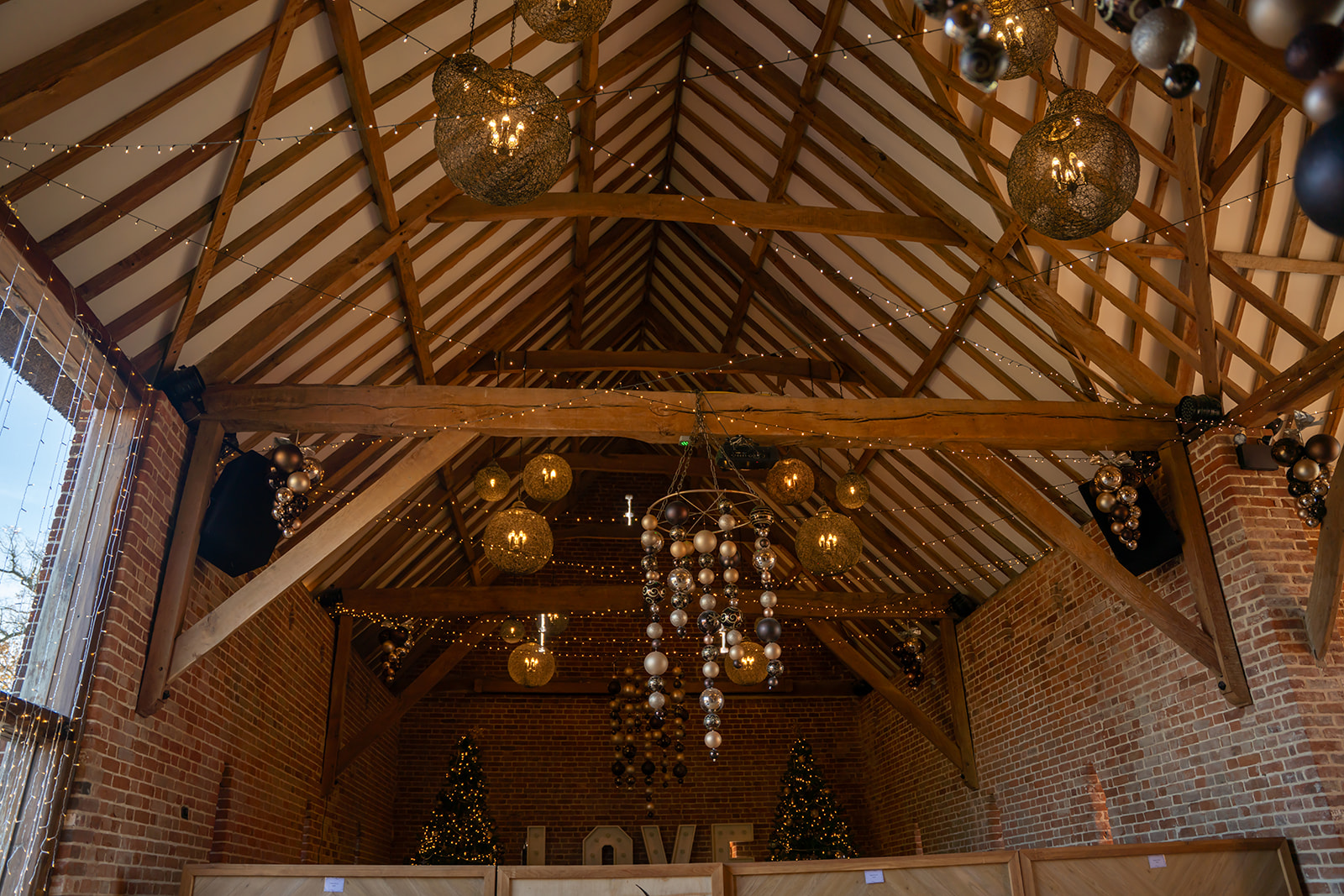
Micro LED curtain or canopy lights are the fine, delicate strands you see creating a ceiling of light above a dance floor. These are what most couples picture when they say 'a fairy light canopy.' The effect in person is genuinely something: standing under a few thousand tiny warm points of light, with music playing and your guests all around you, is hard to beat. These work beautifully in marquees, barn roofs, and venues with high ceilings.
Edison filament strings sit somewhere between the two: thinner than festoon, warmer and more amber than micro LEDs, with a lovely vintage quality. They work well draped along window ledges, wrapped around pillars, or threaded through foliage.
A few questions worth asking yourself before you commit:
- Is your venue indoor or outdoor, or a mix of both?
- What's the ceiling height? Canopies need at least 3.5 metres to look right.
- What's the existing colour palette of the space? Warm amber lights suit stone, wood, and neutral tones. Cool white LEDs suit more contemporary venues.
- What's your supplier's installation time? Some canopy installations take a full day.
The Practical Stuff Nobody Warns You About until it's almost too late.
Here's where we've watched couples run into trouble, usually about three months before the wedding when they realise the venue has restrictions they didn't know about. So let's go through the practical side properly.
Check with your venue first. Some venues, particularly listed buildings or those with older wiring, have strict rules about additional electrical installations. Ask specifically whether external lighting suppliers are permitted, whether there's a corkage-style fee for bringing in your own electrical equipment, and who is responsible for the installation. Some venues have preferred suppliers for exactly this reason, and using an unapproved electrician can void your venue's insurance.
Power supply matters more than you'd think. A full canopy of micro LEDs across a large marquee can draw a significant amount of power. Your lighting supplier should provide a power load calculation, and the venue needs to confirm the supply can handle it. For outdoor installations, you may need a generator, which affects your budget and your noise levels during the evening.
Think about installation and removal windows. Canopy installations in particular take time: sometimes four to six hours for a large space. This needs to happen before your florist arrives, before the venue dresses the tables, and well before your guests do. Talk to your venue coordinator about the day-before access for suppliers, because not every venue offers it, and some charge extra.
What happens if a strand fails on the day? Ask your lighting supplier directly. Reputable companies will have a technician on call or leave a point of contact for the day itself. The last thing you want is a dark patch above the dance floor at 9pm with no one to call.
If you're working with a tight budget, it's worth knowing that renting fairy light installations (rather than buying) is absolutely standard in the UK wedding industry. Most couples hire everything, and there are brilliant regional suppliers in every county who will deliver, install, and collect. Search for wedding lighting hire in your county rather than nationally, as local suppliers tend to be more flexible and more affordable.
How to Layer Fairy Lights for Maximum Effect without overdoing it.
One of the most common mistakes we see is treating fairy lights as the only lighting in a room. They're not a complete lighting solution; they're one layer of it. The most atmospheric wedding receptions we've been part of use fairy lights alongside candlelight, uplighting, and the venue's own ambient sources, each doing a different job.
Think of it in three layers:
- Overhead light (the canopy or festoon strings): sets the overall warmth and the sense of being held by the space. This is your fairy light installation.
- Mid-level light (candles on tables, lanterns on windowsills, Edison strings along ledges): creates the intimacy around each table and conversation cluster.
- Accent light (uplighting on walls or pillars, pin-spotting on floral centrepieces): adds depth and stops the room feeling flat.
When all three layers work together, the room feels complete. When only one layer exists, even a beautiful canopy can feel a little thin.
Colour temperature is something your lighting supplier will talk about, and it's worth understanding. Warm white (around 2700K) is the soft, amber-toned light that photographs and films well and feels cosy in person. Cool white (around 4000K and above) is crisper and more contemporary, but can feel clinical in a soft wedding setting. For the vast majority of UK wedding venues, warm white is the right call. If you're going for a more modern, minimalist aesthetic in a contemporary space, cool white can work, but it needs careful balancing.
And if you're considering coloured fairy lights: we'd gently say, only if it's very intentional. The odd blush or gold-tinted string can be lovely. A mix of colours rarely photographs as well as couples hope.
Fairy Lights Outside and in Marquees where they truly come alive.
If there's one setting where fairy lights feel completely at home, it's a marquee or a stretch tent. The flexible canvas ceiling is practically designed for a light installation: you can run strings from the central pole out to the edges in a starburst, hang curtain lights in swooping layers, or create a full canopy effect that transforms the entire roof into something that looks like a clear sky on a summer night. We photographed and filmed a marquee wedding in the Yorkshire Dales a couple of summers ago where the couple had gone full canopy with warm micro LEDs, and even before the sun had fully set, the tent had this golden, almost honeyed quality that we haven't quite seen replicated since.
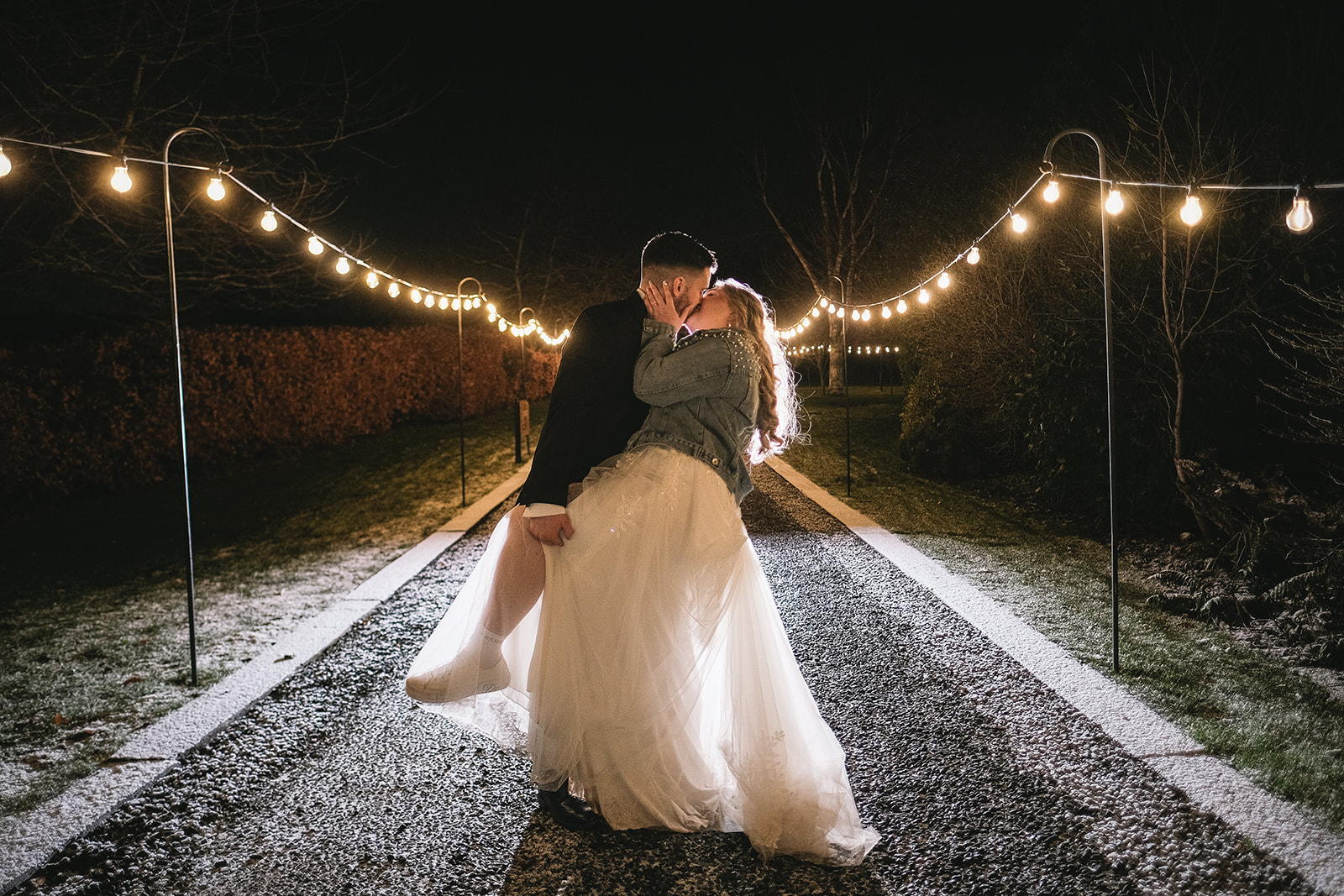
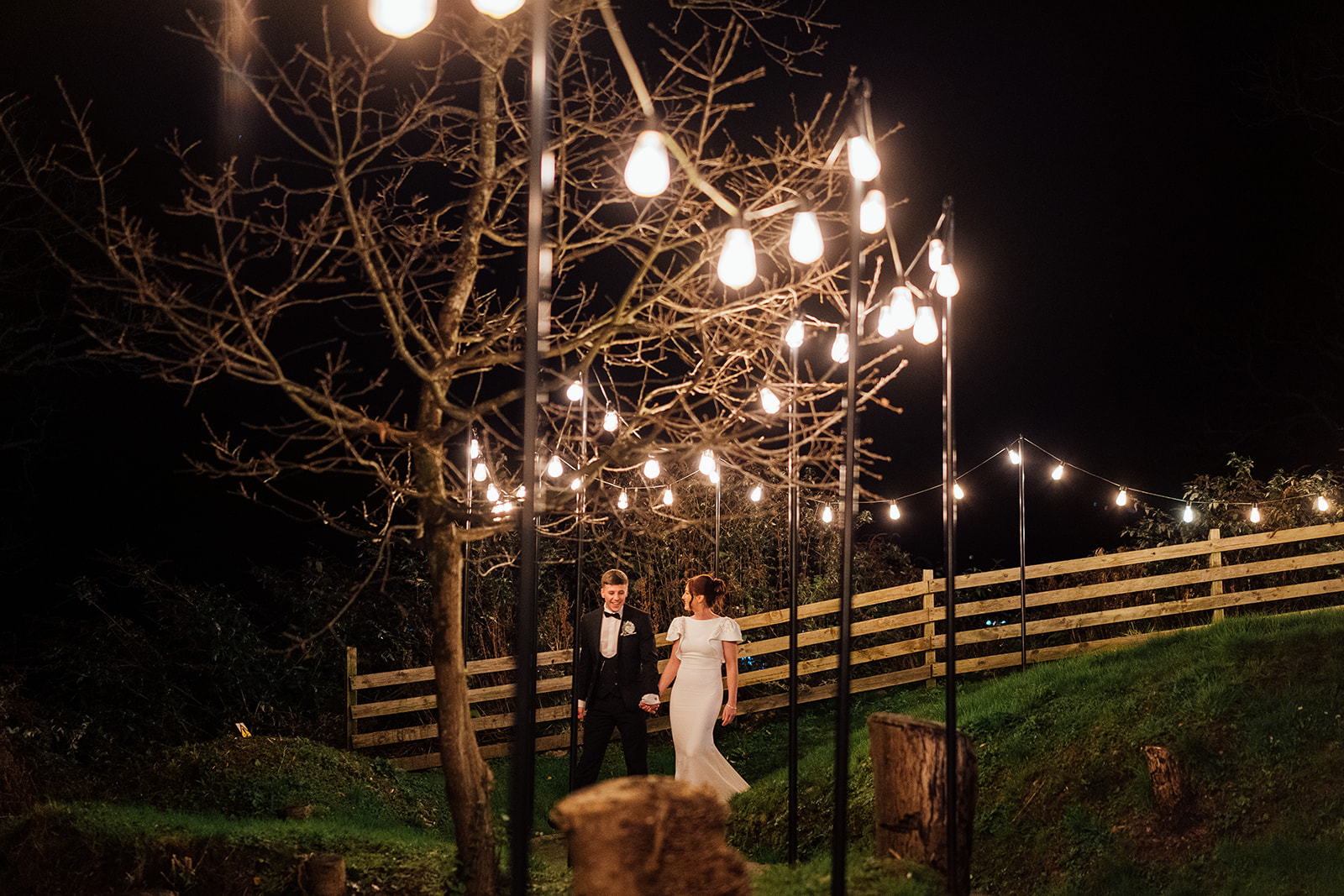
For outdoor spaces, festoon lights strung between trees, along fences, or above a terrace create that Continental dinner-party feeling that a lot of couples are after. They're sociable and relaxed, and they work brilliantly for outdoor evening receptions when the light starts to go around 8pm in June or later in July. In late autumn and winter, outdoor festoon lights carry a completely different mood: cosier, more intimate, with that particular quality of warm light against cold air that makes people want to stay outside just a little longer.
Weather-proofing is non-negotiable for outdoor installations. Make sure any lights used outside are rated IP44 or above, which means they're protected against rain splash. Ask your supplier to confirm this in writing, because it matters both for safety and for insurance purposes.
We cover both photography and film for weddings across the UK, and honestly, the quality of light in a well-lit marquee makes our job a real pleasure, so if you're thinking about your evening coverage, it's worth knowing that great lighting and great photography genuinely go hand in hand.
What to Spend and When to Book real numbers, real advice.
Let's talk money, because this is where a lot of planning guides get vague and unhelpful. Fairy light installations in the UK vary enormously based on the size of the space, the type of installation, and the supplier's overheads, but here are some rough ballpark figures to give you a starting point.
A simple festoon string installation across a small outdoor terrace or barn doorway might cost £200 to £400 hired for the day. A mid-size micro LED canopy for a barn or marquee reception space (say, covering 100 to 150 square metres) typically runs between £600 and £1,200. A full showstopper canopy installation in a large venue, with dense layering and a long installation window, can reach £1,500 to £2,500 or beyond. These figures include delivery, installation, and collection in most cases, but always confirm what's included before you agree anything.
On timing: book your lighting supplier as early as you book your photographer or caterer. Good lighting companies in popular wedding counties (Kent, Surrey, Yorkshire, Cheshire, the Cotswolds) get booked up well in advance of peak summer Saturdays. If you're marrying in June, July, or August and you haven't spoken to a lighting supplier by the previous autumn, you may find your preferred options are already taken.
A few things to check before you pay a deposit:
- Does the quote include VAT? Many smaller suppliers quote excluding VAT.
- What is the cancellation and postponement policy?
- Do they have public liability insurance? This is non-negotiable.
- Will they do a site visit, or do they work from measurements and floor plans?
- Who is the point of contact on the wedding day itself?
Getting these answers in writing before you sign anything will save you stress later, and any reputable supplier will expect these questions.
Quick wins
- COLOUR TEMPERATURE: Choose warm white (around 2700K) for almost every UK wedding venue. It photographs well, feels cosy in person, and flatters every skin tone on the dance floor.
- LAYER YOUR LIGHTING: Fairy lights work best as one layer of a broader scheme: pair your canopy or string installation with candles and uplighting so the room feels complete, not sparse.
- BOOK EARLY: Good lighting suppliers in popular wedding counties fill up fast. Book at the same time as your venue and photographer, not as an afterthought closer to the date.
- CHECK VENUE RULES: Always confirm your venue's electrical restrictions and approved supplier policy before booking a lighting company: some listed buildings have firm rules that can catch couples off guard.
Frequently Asked Questions
How many fairy lights do I need for a wedding reception?
For a micro LED canopy, most suppliers use between 500 and 1,000 lights per square metre for a dense, full effect. For a more relaxed festoon string installation, your supplier will calculate based on the run length and anchor points. Always ask for a site-specific recommendation rather than guessing from a general figure.
Can I use fairy lights at my wedding venue if it's a listed building?
Often yes, but you'll need to check with your venue coordinator first. Listed buildings may restrict how lights are fixed to walls or ceilings, and some require that only approved electrical contractors carry out any installation. Get written confirmation before booking your lighting supplier.
Are fairy lights suitable for an outdoor wedding in the UK?
Absolutely, but make sure any outdoor-rated lights are IP44 certified or above, which means they're protected against rain splash. Your supplier should confirm this, and it's worth asking for it in writing as part of your hire agreement.
What's the difference between festoon lights and a fairy light canopy?
Festoon lights use larger, chunky bulbs on thicker cables and are best for outdoor terraces, barn beams, and relaxed rural venues. A fairy light canopy uses thousands of fine micro LED strands suspended from the ceiling to create a continuous overhead effect. The canopy tends to be more formal and immersive; festoon lights feel more sociable and relaxed.