A chaotic wedding day is almost always a timeline problem. Here's how to build one that actually holds.
Why your wedding day timeline matters more than anything else.
The single most common thing we hear from couples after a stressful wedding day is some version of: "We just ran out of time." Not out of love, not out of enthusiasm, not out of effort. Time. And almost every time, it comes back to a timeline that was either too optimistic, too vague, or built around what the couple hoped would happen rather than what actually does.
A good wedding day timeline is the backbone of the entire day. It's the document that tells your florist when to arrive, your caterer when to serve, your photographer where to be, and your guests where to go next. Get it right and the day flows so naturally that no one notices it exists. Get it wrong and you spend your afternoon apologising to your mother-in-law for the three-hour gap between the ceremony and dinner.
We've worked on over 6,000 UK weddings, and the ones that felt effortless all had one thing in common: a realistic, detailed timeline built weeks in advance and shared with every supplier. Not a rough sketch. A proper document, with named time slots, buffer periods, and a clear understanding of how long things actually take.
So let's build one. From the first alarm going off in the morning to the last song of the night, here's how to plan a wedding day timeline that works.
Start from the ceremony, then work outwards.
The most common mistake couples make is starting their timeline at the beginning of the day and working forward. It sounds logical, but it almost always leads to a scramble. Instead, start with the fixed anchor point: your ceremony time. That's the one thing on your day that rarely moves. Everything else radiates outward from it.
Work backwards to figure out when getting-ready needs to start, and forwards to plan the reception. Here's a rough framework we use as a starting point for a full-day UK wedding with an afternoon ceremony:
- 6:30am–7:00am: Bride/groom wakes up. Hair and make-up artist or getting-ready team arrives.
- 7:00am–11:30am: Getting ready. Allow more time than you think. Hair and make-up for a party of five takes longer than the quote suggests, every single time.
- 11:30am–12:00pm: Detail shots, dress, final touches. This is also when nerves peak, so build in breathing room.
- 12:00pm–1:00pm: First look or pre-ceremony portraits (if you're having them).
- 2:00pm: Ceremony begins.
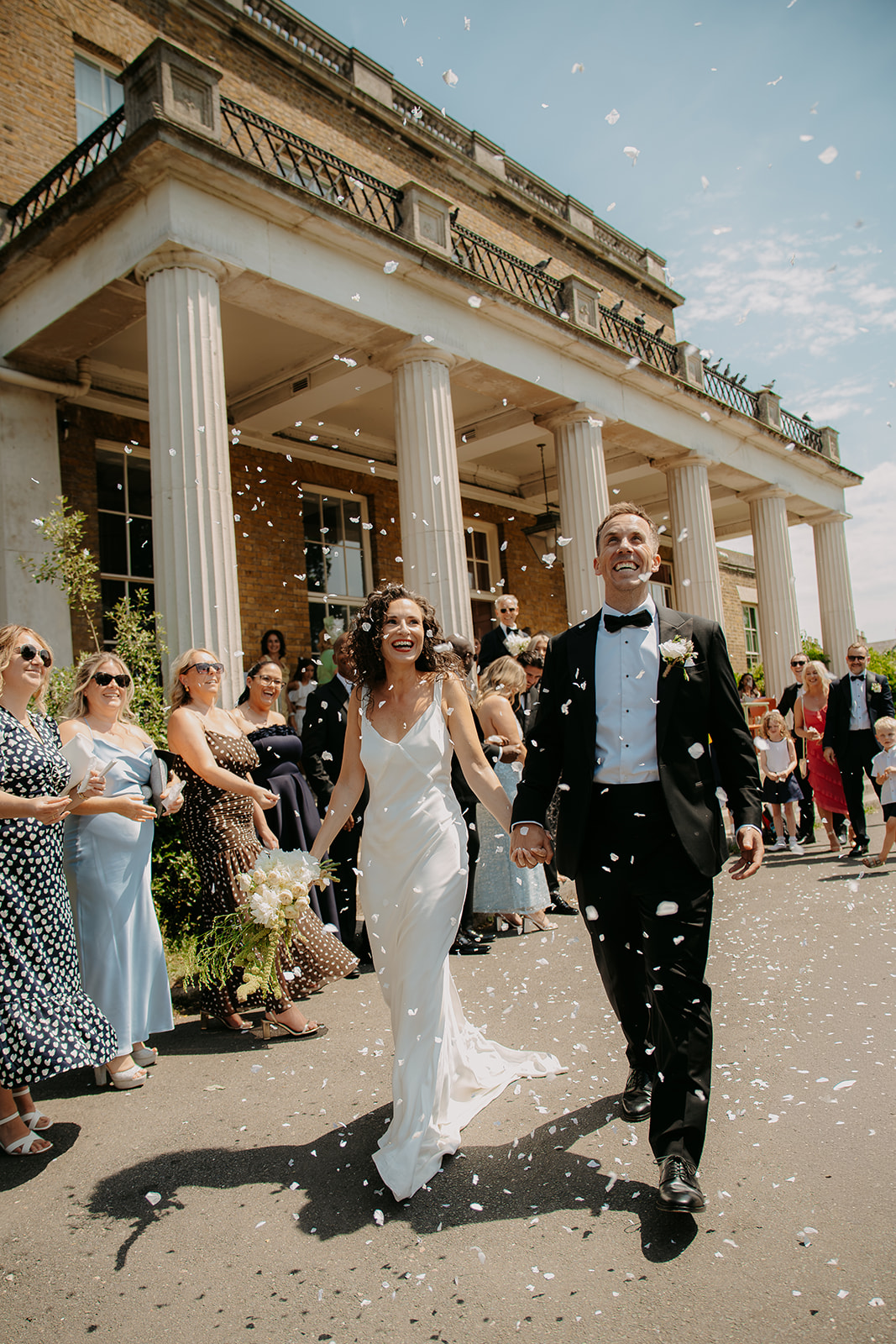
- 2:45pm–3:30pm: Ceremony ends, confetti, immediate family portraits.
- 3:30pm–5:00pm: Couple portraits, wider bridal party shots, guests enjoy drinks reception.
- 5:00pm–5:30pm: Guests move to dining room, couple has a quiet moment before the reception.
- 5:30pm: Wedding breakfast begins.
- 7:30pm–8:30pm: Speeches (or these can happen before food if your venue prefers).
- 9:00pm: First dance, evening guests arrive.
- 9:30pm onwards: Dancing, cake cut, general revelry.
This is a template, not a prescription. A winter wedding in the Lake District with a 1pm ceremony and light fading by 3:30pm needs a completely different structure to a June wedding with golden hour at 9pm. Adjust accordingly, and always check sunset times for your date.
The bits that always run over schedule.
There are a handful of things that eat time at almost every wedding, and they're the same things every time. If your timeline doesn't account for them, they will account for themselves at the worst possible moment.
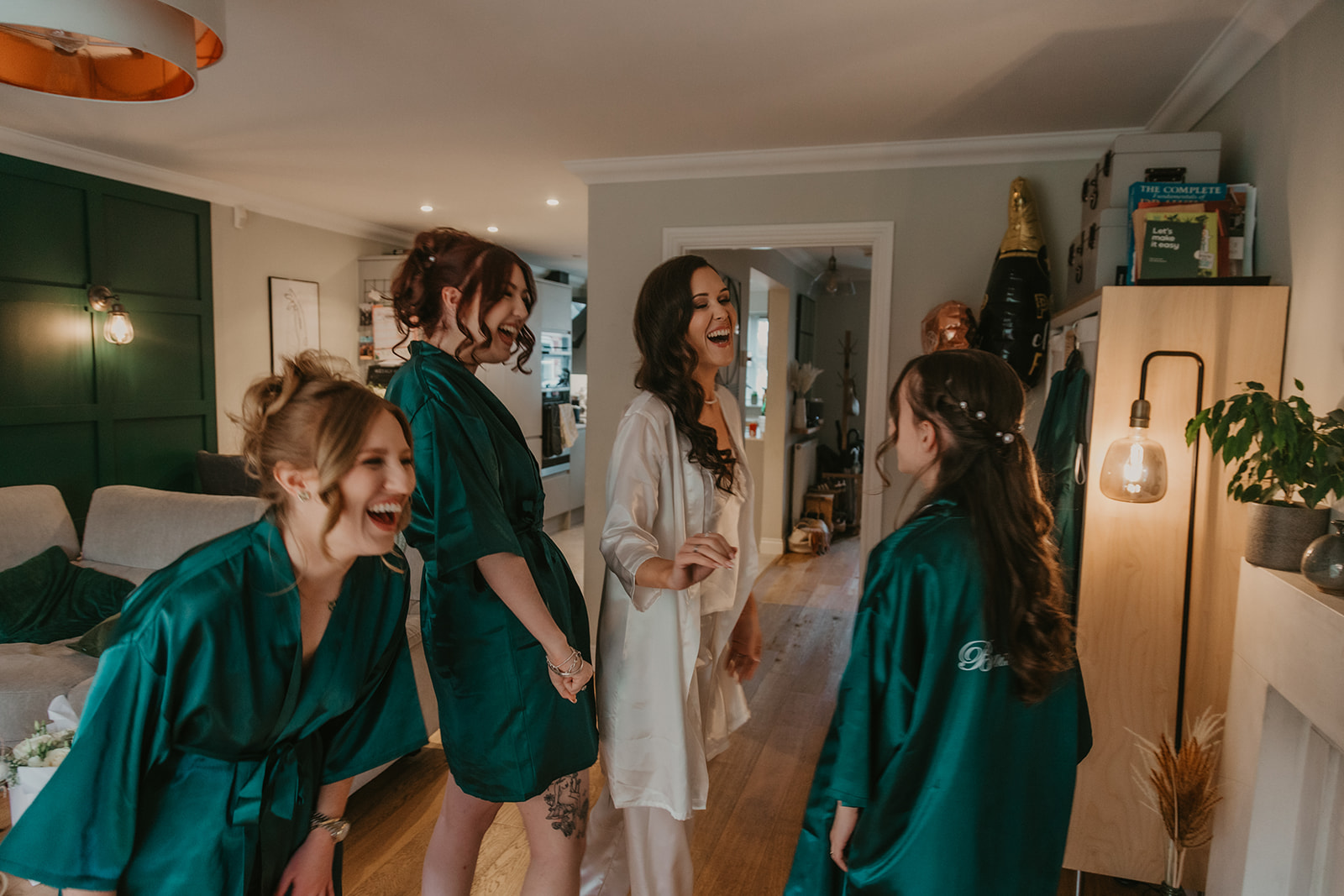
Getting ready. If a hair and make-up artist says each person takes 45 minutes, add 15 minutes per person for conversations, touch-ups, outfit changes, and the inevitable moment someone can't find their earrings. A party of six getting ready together? That's potentially an extra hour and a half right there.
Family portraits. Group shots after the ceremony are the most time-consuming part of the day, and they're the part most couples underestimate. We always advise couples to write a specific list of the shots they need, share it with a designated family wrangler (not the photographer's job alone), and allow a minimum of 30 minutes for up to ten groupings. More if your family is large or enthusiastic about chatting.
The ceremony itself. Religious ceremonies, handfastings, and ceremonies with multiple readings or musical interludes routinely run longer than the stated time. Build in a 15-minute buffer after the ceremony end time before anything else is scheduled.
Travel between locations. If your ceremony and reception are at different venues, double whatever travel time you think is reasonable. Guests in formal wear, a wedding car, and a convoy of people who all want to congratulate you on the way out: it takes time. We've seen a five-minute drive turn into a 40-minute gap more than once.
The fix for all of these is the same: be honest about how long things take, and then add ten minutes on top of that honesty.

Build in space for the unscheduled moments.
The best wedding timelines make room for the bits nobody can schedule. The breath before a parent sees you ready. Ten unplanned minutes after the ceremony. The dance floor when the shoes are off and everyone has stopped performing. We protect those moments because they are nearly always the ones couples come back to.
Here's what we mean in practical terms: once you've mapped out your day, look at every transition point and ask whether there's any buffer. Not buffer because something will go wrong (though it might), but buffer because the good stuff happens in the pauses. The quiet moment between the ceremony and portraits when you and your partner finally get to look at each other properly. The ten minutes at the end of drinks reception when you do a lap of your guests and nobody's rushing you anywhere.
We'd specifically recommend protecting two windows in your timeline: one in the late morning for the person getting ready to have a moment to themselves before the day begins in earnest, and one in the early evening (usually around 5pm to 5:30pm) for the couple to sit quietly together before the reception kicks off. These aren't luxuries. They're the moments that make the day feel like yours rather than a series of events you're being moved between.
And if you're having portraits taken, don't squeeze them into a 20-minute gap between the ceremony and dinner. Forty-five minutes to an hour gives you the chance to actually exhale, walk somewhere beautiful, and stop thinking about where Auntie Patricia is sitting. The portraits will be better for it, and so will you.
Who needs your timeline and in what format.
A wedding day timeline only works if the right people have it. A document that lives in your email drafts folder does nothing for your florist at 7am on the morning of your wedding.
At minimum, your timeline should be shared with:
- Your venue coordinator
- Your photographer and videographer
- Your caterer
- Your hair and make-up team
- Your florist (particularly for ceremony and reception set-up times)
- Your band or DJ
- Your master of ceremonies or toastmaster, if you have one
- A trusted member of the wedding party who can keep things loosely on track
Send a supplier-specific version rather than one giant document with everyone's personal information in it. Your caterer doesn't need to know when portraits are; they need to know when guests move to the dining room. Tailor each version to what that supplier actually needs from it.
We'd also suggest building a shorter, simpler version for family and the wedding party. Not a minute-by-minute schedule, but a clear list of where they need to be and when: ceremony call time, where to gather for group photos, when to be seated for dinner. Keep it to a single page and send it a week before. Most people won't read anything longer, and the ones who will are the ones who'll have memorised the full version anyway.
We cover both photography and film for weddings across the UK, and one of the first things we do when we take a booking is work through the timeline with couples directly, because a realistic schedule is just as important to us as it is to them.
What to review in the final weeks.
Your timeline isn't a document you write once and file away. It's something that needs a review roughly four to six weeks before the wedding, then again the week before, once all your supplier confirmations are in.
At the four-to-six-week check, ask yourself:
- Have any supplier arrival or set-up times changed?
- Has your ceremony running order been confirmed with your officiant?
- Do you know exactly how long your venue needs between the ceremony and the wedding breakfast being served?
- Have you accounted for any accessibility needs that might affect the pace of transitions?
- Is there anything on the list that relies on good weather, and do you have a backup plan?
At the final week review, check that every supplier has the most recent version of their section. A small change to the ceremony end time can have a ripple effect across the whole afternoon, and the version your photographer received three months ago might not reflect what's actually happening now.
One thing we always tell couples in the final week: identify one person in your wedding party who knows the timeline well and is comfortable nudging people along. Not aggressively, just the kind of person who can say "we're moving to the dining room in ten minutes" and make it feel like a friendly suggestion rather than a military order. Your venue coordinator will help, but having someone on the inside who knows your family and friends is invaluable. Give that person a copy of the full timeline, a bit of authority, and a sincere thank you.
And then, on the day itself, let it go. You've done the work. The timeline exists so that you don't have to hold everything in your head at once. Trust the people around you, trust the plan, and spend your energy on the parts of the day that no timeline can capture.
Quick wins
- ANCHOR TO CEREMONY TIME: Build your timeline outward from your ceremony slot, not from the start of the day. Every other element should be planned relative to that fixed point.
- ADD BUFFER EVERYWHERE: Getting ready, family portraits, and travel between venues all run over. Add at least ten to fifteen minutes of buffer to each, before you finalise anything.
- SEND TAILORED VERSIONS: Give every supplier only the timeline information relevant to them. A single master document shared with everyone creates confusion rather than clarity.
- REVIEW TWICE BEFORE THE DAY: Check your timeline at the four-to-six-week mark and again the week before. Small changes to one element can shift the whole afternoon if they're not caught early.
Frequently Asked Questions
How long before the wedding should I start planning the timeline?
Ideally, start building a rough timeline six to nine months out, once your key suppliers are booked and your ceremony time is confirmed. Refine it as confirmations come in, and do a final detailed version four to six weeks before the day.
What's a realistic amount of time to allow for wedding portraits?
We'd recommend a minimum of 45 minutes for couple portraits, ideally an hour. Squeezing portraits into 20 minutes between the ceremony and dinner produces rushed results and a stressed couple. If you can build a longer window, do it.
Should speeches happen before or after the wedding breakfast?
Both work, and it genuinely comes down to personal preference and your venue's suggestion. Before dinner keeps everyone sober and attentive; after dinner allows people to relax into the evening first. Talk to your venue coordinator, as some setups suit one format much better than the other.
What happens if the day runs late?
Something will almost always shift by 10 to 20 minutes, and that's fine if you've built buffer into the schedule. Identify in advance which elements are flexible (portraits can be shortened slightly) and which are fixed (venue licence times, caterer service windows). Brief your suppliers on this so everyone can adjust together without panic.