Seating charts, plus-ones, and family politics that would test a UN mediator. Here's how to plan a wedding with divorced parents without losing your mind - or your joy.
Let's be honest about what you're dealing with it's complicated, and that's okay.
You're engaged. You're excited. And then someone mentions the seating plan and the whole thing starts to feel less like a celebration and more like a diplomatic summit. Planning a wedding when your parents are divorced - especially when there are step-parents, half-siblings, and old grievances in the mix - is genuinely one of the more emotionally loaded parts of the whole process. You're not imagining it. And you're not alone.
We've been at hundreds of weddings across the UK, from marquees in the Cotswolds to coastal ceremonies in Cornwall, and we can tell you with certainty: almost every couple navigating divorced parents has the same fear. That their wedding day will somehow become a stage for someone else's unresolved drama. The good news is that with some clear thinking early on, it almost never does. People, even complicated family members, tend to rise to the occasion.
But the preparation matters. The conversations you have in the months before the wedding, the decisions you make about roles and seating and photographs, all of that shapes how the day actually feels. So let's work through it honestly, because vague reassurances won't help you. What you need is a plan.
The first thing we'd say to any couple in this situation: decide early what your priorities are. Not your mum's priorities. Not your dad's. Yours. Write them down if you have to. Because every hard decision you face between now and the wedding gets easier when you know what you're actually trying to protect.
Having the conversations nobody wants to have before the big day arrives.
The single biggest mistake couples make when planning a wedding with divorced parents is avoiding the awkward conversations until they absolutely have to happen. By which point, someone has already assumed they're walking you down the aisle, or sitting in the front row, or giving a speech, and suddenly you're managing hurt feelings three weeks before the wedding.
Have the conversations early. Not a group conversation (please, not a group conversation), but individual ones. Sit down with each parent separately, ideally in person, and be clear about what you're planning and why. You don't need to justify every decision, but people feel more respected when they understand your thinking rather than just receiving an instruction.
A few things worth addressing directly:
- Who walks you down the aisle? There's no rule that says one person has to do it, or that it has to be a parent at all. We've seen brides walked down by both parents together, by a step-parent, by a sibling, by their partner's parent, or by themselves, entirely on their own terms. The key is deciding what feels right for you and communicating it before anyone has made assumptions.
- Who gives a speech? If both parents want to speak, that's fine. Two parent speeches happen all the time. If you'd rather keep it simple, that's also fine. Be clear, be kind, and give people enough notice to prepare.
- Step-parents and their role. Step-parents occupy an odd space at weddings. Too prominent and one parent feels pushed out. Too invisible and the step-parent (who may have been in your life for decades) feels dismissed. Think about what role feels honest for your relationships, not what looks tidy on paper.
If things between your parents are genuinely difficult, a brief, friendly message can help: something like letting both sides know you're keeping the day calm and happy, and that you'd appreciate their support in doing the same. Most people, when asked directly, will do their best.
Seating, sides, and the ceremony layout the details that actually matter.
The seating plan is where divorced-parent wedding planning gets genuinely logistical. Let's take it section by section.
The ceremony: Traditional church seating puts the bride's family on the left and the groom's on the right, but that convention is relaxed at most modern UK weddings. If having your parents on opposite sides of the aisle keeps things civil, great. If it feels cold or strange, many couples now seat everyone together, mixed throughout. Some couples skip designated sides entirely and have ushers simply fill seats from the front. It works beautifully, and it removes any visual emphasis on which family is which.
Front row seating deserves specific thought. If your parents are not on speaking terms, sitting them next to each other in the front row for an hour is asking for tension. A simple solution: two rows of honour. Your mum (and her partner, if she has one) in one front row seat cluster, your dad (and his partner) in another, slightly offset. It looks natural in photographs and removes any awkwardness before it starts.
The reception: The top table is the classic flashpoint. A traditional top table with both parents seated together only works if they're genuinely comfortable in each other's company. If they're not, consider alternatives that are increasingly popular anyway: a sweetheart table for just the two of you, with parents seated at their own round tables with their respective guests. This actually works better for most receptions regardless of family dynamics, because it means you're not anchored to one spot all evening.
For the wider reception seating plan, keep a buffer of at least one table between groups that don't mix well. You don't need to explain this to anyone. Just do it. And if you're using a spreadsheet (which you should be), colour-code by family group so you can see at a glance where the potential clashes are.
Family portraits when it's not straightforward a word from behind the lens.
Family photographs at weddings with divorced parents require a little more planning than usual, and the best thing you can do is brief your photographer and videographer in advance. Not a vague "it's a bit complicated" warning, but actual specifics: who is and isn't in contact, which combinations work, which definitely don't, and any names they need to know.
We always ask couples to send us a family portrait list before the wedding, and for families with divorced parents we ask for it in a particular format: group A (mum's side), group B (dad's side), and then any combined groups the couple actually wants. That way, nobody ends up standing in an awkward lineup waiting to be shuffled in or out, which is uncomfortable for everyone and slows the whole session down.
A few things that help enormously on the day:
- Appoint a family liaison on each side, someone who knows where people are and can round them up quickly. This saves huge amounts of time and removes the photographer from having to navigate family politics mid-session.
- Keep combined family groups (ones that include both parents) to a minimum and schedule them first, so everyone can relax afterwards.
- If a particular combination simply isn't going to happen without creating tension, don't force it. You don't need a photograph of everyone together. The photographs you actually want are the ones that reflect your real relationships.
We cover both photography and film for weddings all over the UK, and honestly, the family portrait conversation is one of the most useful ones we have with couples in the run-up to the day. If you're still looking for someone to document yours, we'd genuinely love to hear about it.
Protecting your peace on the day itself because you deserve to enjoy this.
Here's something we've observed at wedding after wedding: the couples who enjoy their day the most are the ones who made clear decisions in advance and then stopped negotiating. There's a version of planning a wedding with divorced parents where you spend the entire build-up trying to keep everyone happy, and by the time the day arrives you're so exhausted from managing feelings that you can barely feel your own.
You are allowed to make decisions that work for you and your partner, even if those decisions disappoint someone. You are allowed to say "we've decided" rather than "what do you think?" You are allowed to have a wedding that reflects your relationship, not your parents' history.
Some practical ways to protect your own experience on the day:
- Designate a point person. Ask a trusted friend or your wedding planner (if you have one) to field any on-the-day family questions so they don't reach you. Brief them in advance on anything sensitive.
- Build in a moment just for the two of you. Even fifteen minutes after the ceremony, before the portraits and the drinks reception, to just be together and breathe. It resets everything.
- Let go of what you can't control. You can plan brilliantly and someone will still say something awkward at the bar, or make a face during a speech. That's families. It doesn't ruin the day unless you let it.
The couples we photograph who look the most relaxed are almost always the ones who decided, somewhere along the way, that the wedding was for them. Not a performance. Not a peace treaty. A celebration of their relationship, with everyone else warmly invited along for the ride.
What actually matters by the end of the day a little perspective goes a long way.
We've watched couples walk into receptions convinced the day was going to fall apart, and then spent the next eight hours watching something warm and real unfold around them. The seating plan survived. The speeches went well. The parents, despite everything, managed to be gracious because the occasion asked it of them.
Planning a wedding with divorced parents adds a layer of complexity that you didn't ask for, and it's completely fair to find it exhausting. But the logistical stuff, the seating, the portraits, the roles, all of that is solvable. The emotional stuff takes longer, but most of it settles before the day arrives.
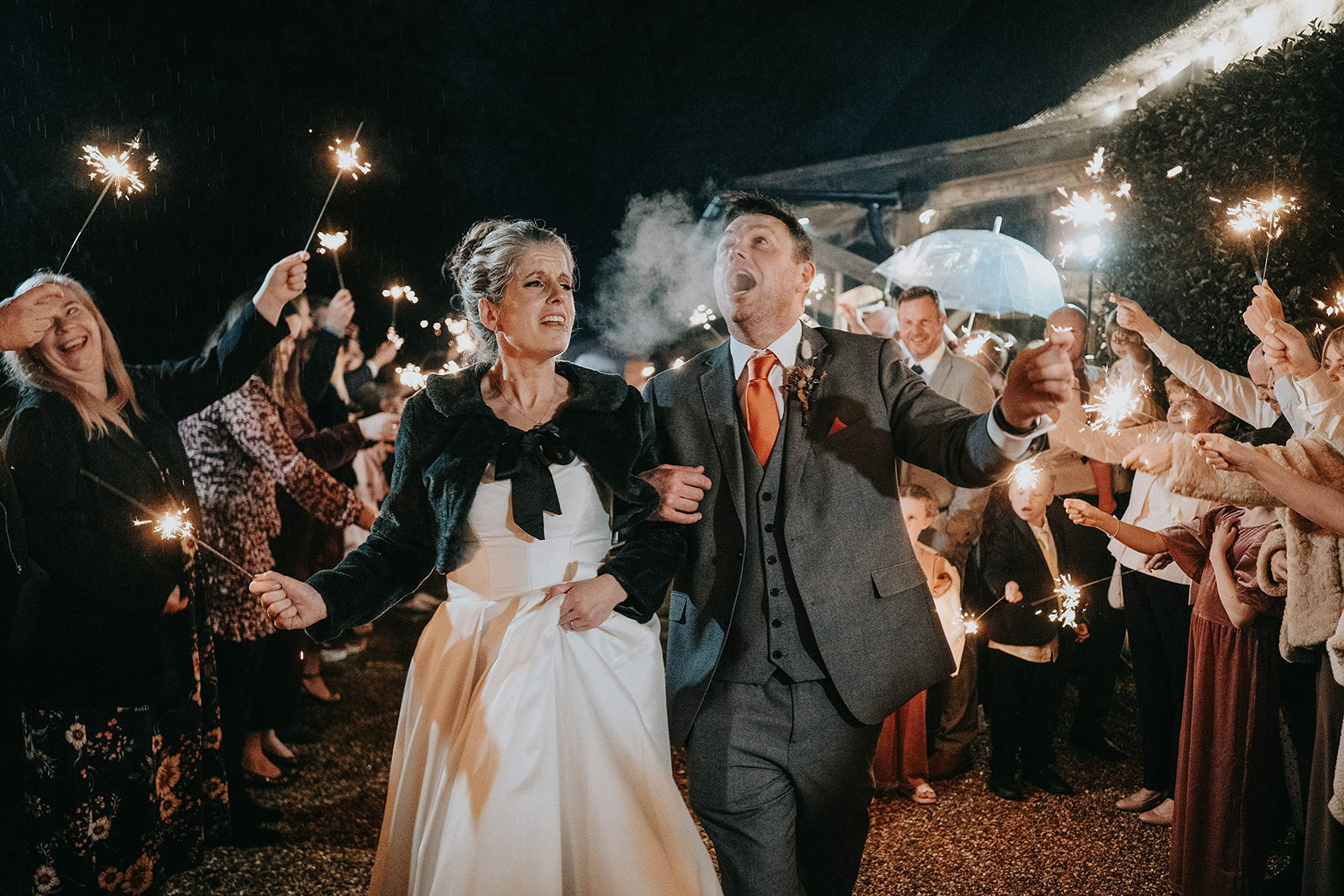
What we've never once seen, in all the weddings we've been part of, is a couple who regretted making the day their own. The ones who followed what felt true to them, who didn't contort the day into something unrecognisable trying to keep everyone else comfortable, those are the couples who look back at their photographs and feel exactly what they hoped to feel.
If you're in the thick of the planning right now, take a breath. Make your list of what actually matters. Have the conversations you've been putting off, ideally soon and ideally one at a time. And then, when the day comes, let yourself be in it. The logistics will hold. The people who love you will show up. And the rest, genuinely, tends to take care of itself.
Quick wins
- HAVE THE TALK EARLY: Speak to each parent separately before any plans are set. Early, honest conversations prevent the assumptions that cause the most hurt.
- RETHINK THE TOP TABLE: A sweetheart table or separate family tables work better than forcing uncomfortable proximity. It's increasingly common and removes the tension entirely.
- BRIEF YOUR SUPPLIERS: Give your photographer and videographer specific names and family groupings in advance, not just a vague heads-up. It makes the portrait session faster and far less awkward.
- MAKE IT YOURS: Every tradition is optional. Walk yourself down the aisle, skip the combined family photo, change the seating layout. Your wedding should reflect your relationships honestly.
Frequently Asked Questions
Do both divorced parents have to sit in the front row at the ceremony?
Not at all. Many couples seat each parent in a separate cluster at the front, slightly offset from each other, which looks perfectly natural and removes any awkwardness. You can also skip designated family rows entirely and seat everyone mixed together, which works well at relaxed, modern ceremonies.
What do I do if my parents refuse to be in the same photographs?
Photograph them separately and in their own family groups. You don't need a combined shot, and forcing one rarely ends well. Send your photographer a clear list of the groupings you actually want, so no one ends up waiting in an uncomfortable lineup on the day.
How do I handle step-parents in the wedding party and at the ceremony?
Think about what honestly reflects your relationship with each step-parent rather than what looks symmetrical. A step-parent you're close to might walk with you, give a reading, or be seated in a place of honour. One you're less close to might simply be a warmly welcomed guest. There's no rule, and most people appreciate honesty over a performative role.
Is it okay to ask my parents to be civil for the day even if they don't get on?
Absolutely, and you should. A brief, warm message to each parent ahead of time, letting them know how much the day means to you and asking for their support in keeping it joyful, is entirely reasonable. Most people, when asked directly and kindly, will do their best.