A dry or low-alcohol reception can feel just as celebratory as any other - if you approach the drinks list with the same thought you'd give the menu. Here's how to make it work without a single awkward explanation to your guests.
Yes, a dry wedding can feel festive here's why it works.
A non-alcoholic wedding reception doesn't have to mean sparkling water and a polite apology. Sober curiosity has moved squarely into the mainstream, and the drinks industry has followed: the range of non-alcoholic spirits, wines, and sparkling options available in the UK now is genuinely impressive compared to even five years ago. Couples planning receptions for 2027 have more to work with than any previous generation of hosts.
The key shift in thinking is this: a dry reception works when it's designed rather than defaulted into. If you've decided to go alcohol-free because it matters to you - whether that's for religious reasons, health, cost, or simply because neither of you drinks - that's a completely legitimate creative brief. The goal is a drinks list that feels considered and celebratory, not a list of things that are missing.
Low-alcohol is also worth naming separately, because it's its own category. Some couples want to offer a glass of champagne for the toast and nothing else. Others want a full bar but with non-alcoholic alternatives at equal prominence. You don't have to choose between a fully open bar and nothing at all - the spectrum is wide, and there's a version that fits most couples' values and budgets.
Building a drinks list that actually delivers beyond sparkling water.
The strongest non-alcoholic drinks lists share one thing: they're built around flavour and occasion, not substitution. Rather than thinking "what replaces prosecco?", think about what a guest holding a glass should feel at each point in the day.
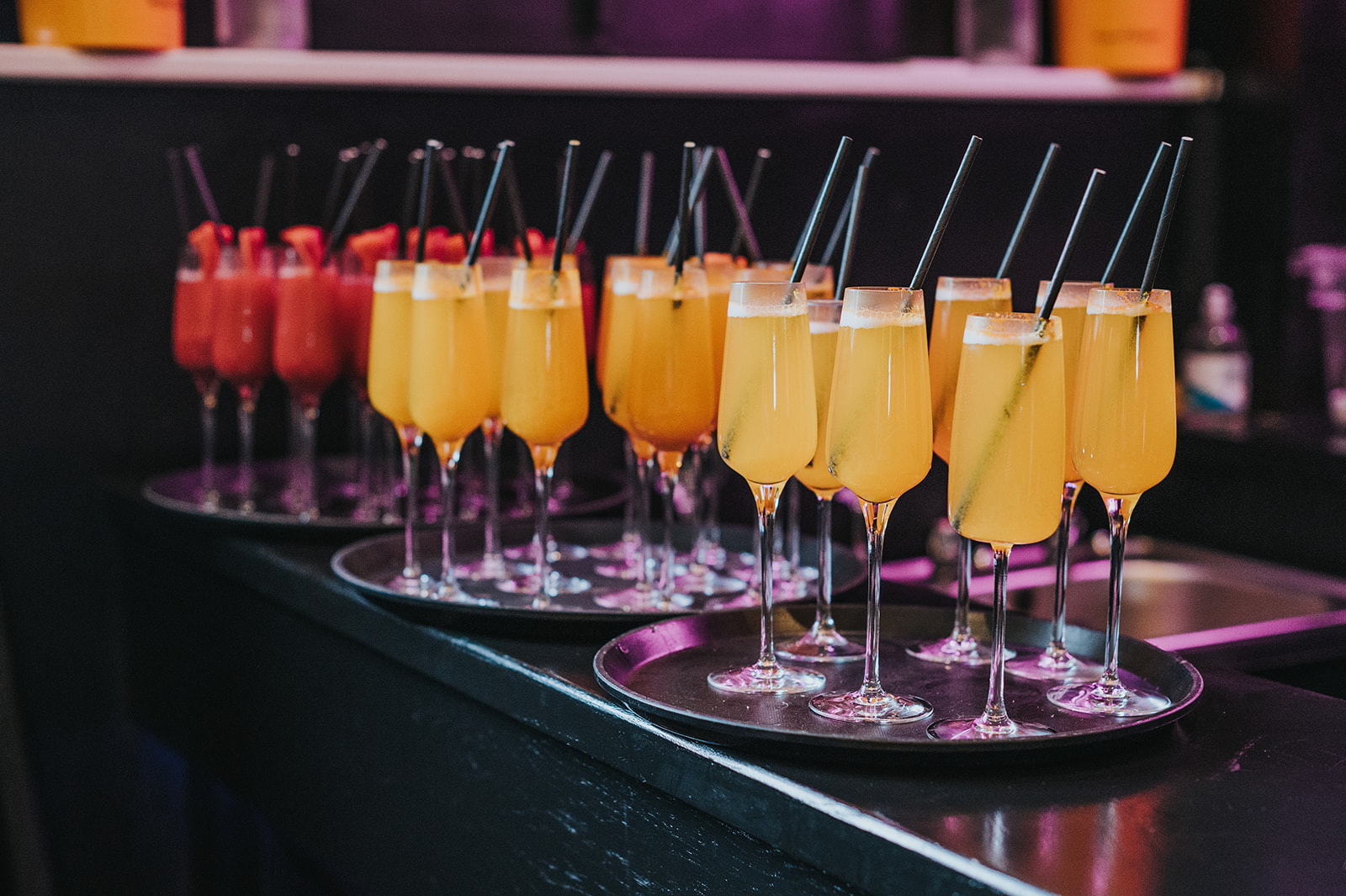
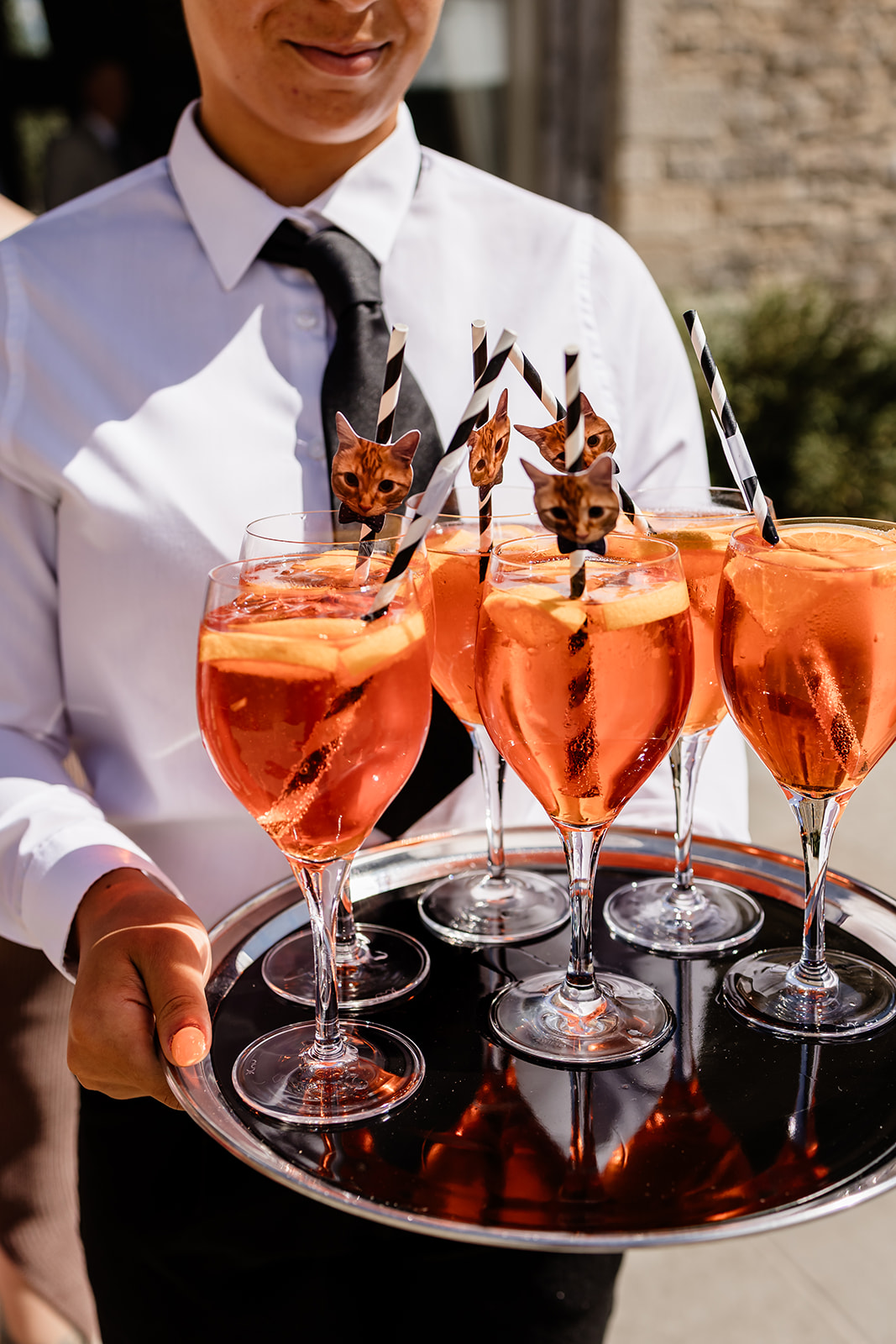
For arrival drinks, something sparkling and cold with a bit of visual drama works well. Sparkling elderflower, non-alcoholic sparkling wine (brands like Noughty or Eisberg have improved considerably), or a pressed juice blend served in champagne flutes all read as celebratory rather than functional. A garnish - a sprig of rosemary, a slice of blood orange - does a lot of work here.
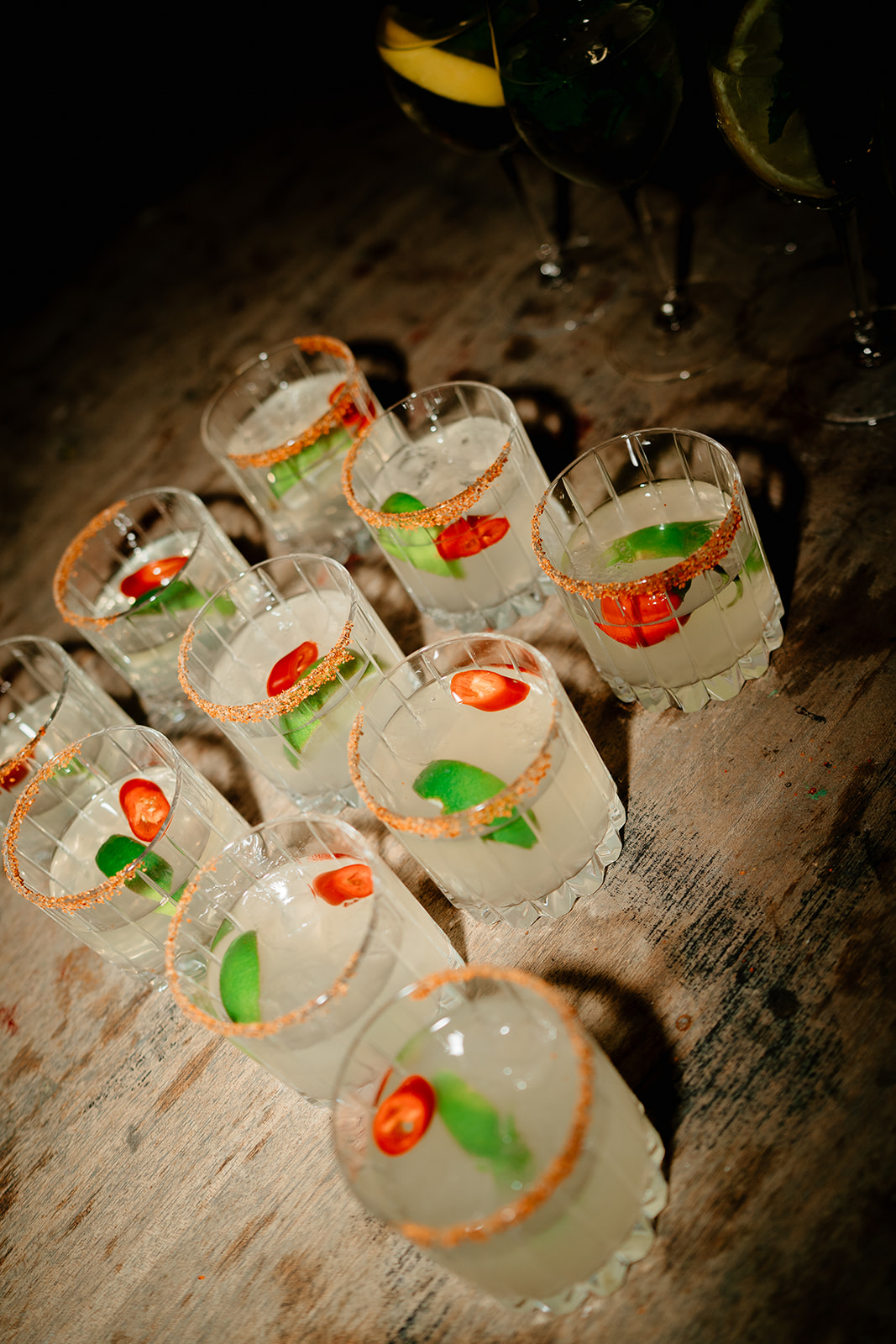
For the reception itself, consider building a small signature mocktail list of two or three options. A mocktail menu with names and flavour notes gives it the same status as a cocktail list, which matters more than it might sound. Guests interact with it differently when it feels like something rather than a fallback. Think:
- A citrus spritz built on a non-alcoholic spirit base (Seedlip, Lyre's, and Three Spirit are all widely available in the UK) with tonic and fresh lime
- A shrub-based drink using drinking vinegars, which give you the complexity and slight acidity that wine often provides
- A slow-pour option like a spiced apple and ginger punch, served warm in cooler months or iced in summer, that guests can return to throughout the evening
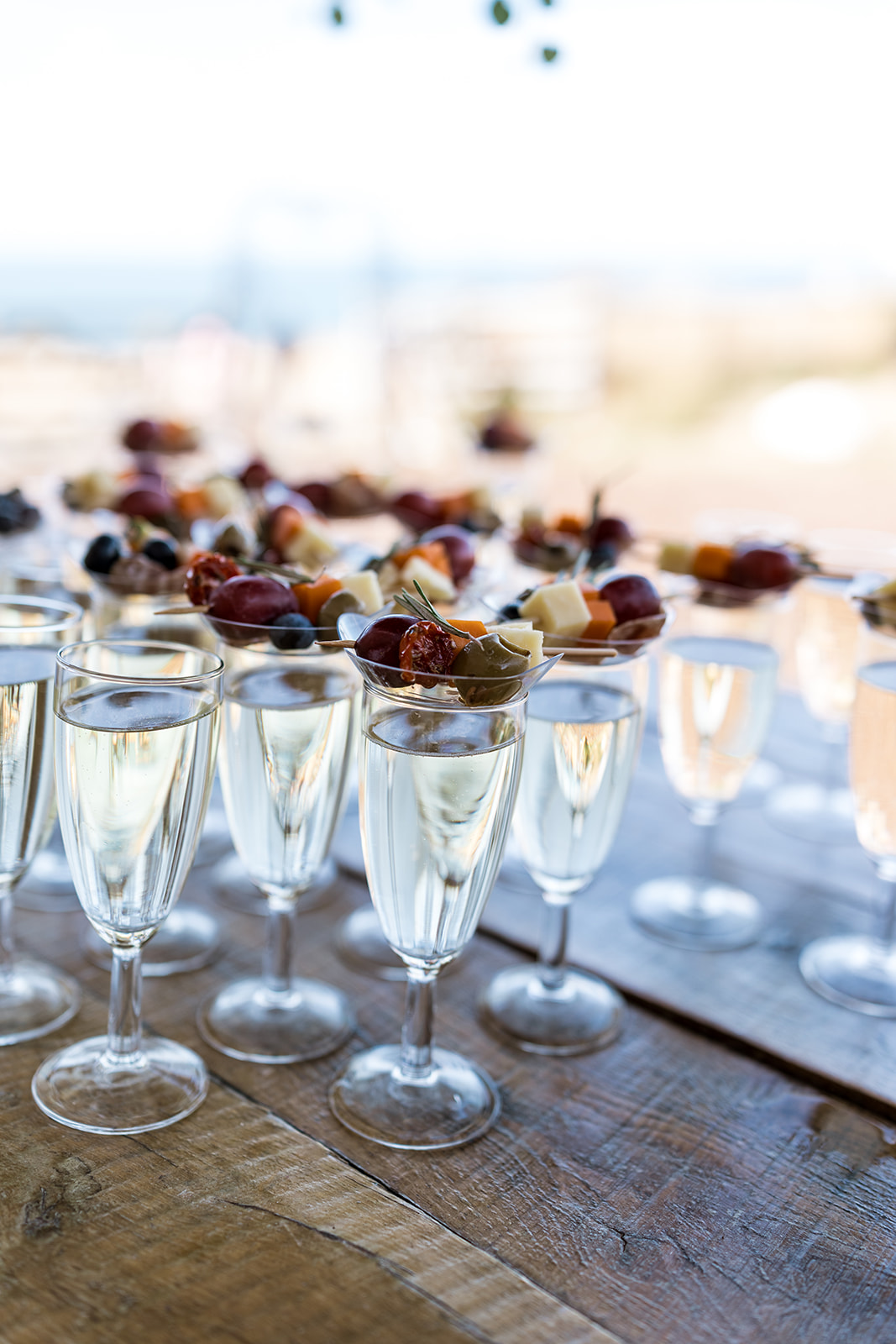
For the toast, non-alcoholic sparkling wine is the most practical choice - it photographs and films identically to champagne, which is worth considering if you want that raised-glass moment to look the part in your photos and film. Still water in a wine glass, by contrast, tends to disappear visually.
How to frame a dry reception without over-explaining it.
This is where a lot of couples tie themselves in knots. You don't owe anyone a detailed justification for what you're serving at your own wedding. But a light, confident mention in the right place avoids anyone arriving expecting a free bar and feeling thrown.
The simplest approach is a brief note on your wedding website or in your information card. Something like: "We'll be serving a carefully chosen selection of non-alcoholic drinks throughout the day" is enough. You're not apologising, you're informing. Guests who are curious will appreciate it; guests who aren't won't notice.
What you want to avoid is the drinks list feeling like a surprise that needs managing on the day. If your venue team, catering staff, or bar service know what you're doing and why, they'll present it with confidence - and that confidence is contagious. A bar person who hands over a mocktail and says "this is our citrus spritz with Seedlip and tonic" is doing much more for the atmosphere than one who says "we don't have alcohol, but we have this."
It's also worth thinking about the evening. If your evening reception runs late and guests are on the dancefloor, energy tends to come from the music, the company, and the atmosphere - not specifically from alcohol. A well-stocked station with interesting soft drinks, good coffee, and something sweet to eat does the job of keeping people going without anyone noticing what's absent.
Does a dry reception actually save money? the honest answer.
Sometimes, but not always by as much as couples expect. Alcohol itself is expensive, so removing it from the budget is a real saving. But replacing a standard bar package with a thoughtful non-alcoholic offering still costs money - quality non-alcoholic spirits, fresh juices, specialist mocktail ingredients, and the staff time to make them properly all add up.
A rough way to think about it: if you were previously budgeting for a mid-range open bar across an evening reception, switching to a well-designed alcohol-free bar might save you somewhere in the region of 30–50% of that drinks spend. But if you go to a premium mocktail bar with elaborate garnishes and specialist ingredients, the saving narrows. There's no universal figure here, and any estimate you get from a venue or caterer will depend on your guest count, service style, and how elaborate you want to go.
What's worth knowing is that some venues still charge a corkage fee or minimum bar spend even for alcohol-free events, so it's worth asking that question explicitly when you're negotiating. A venue that normally requires a minimum spend on drinks may or may not flex that for a dry reception, depending on their policy. Get it in writing either way.
One area where you do reliably save: the end-of-night chaos that occasionally inflates catering costs (extra staff, later finish times, damage). That's not a reason to go dry, but it's worth acknowledging that a quieter, calmer evening can have practical knock-on effects on the day's overall cost.
The atmosphere is in the details not just the drinks.
A dry reception that feels flat is usually a design problem, not a drinks problem. The atmosphere at any wedding comes from a combination of things: music, lighting, how guests are moved through the space, the quality of the food, whether people have somewhere comfortable to sit and talk. Alcohol is one variable in that mix, but it's not the controlling one.
A few things that reliably lift the atmosphere at a dry reception:
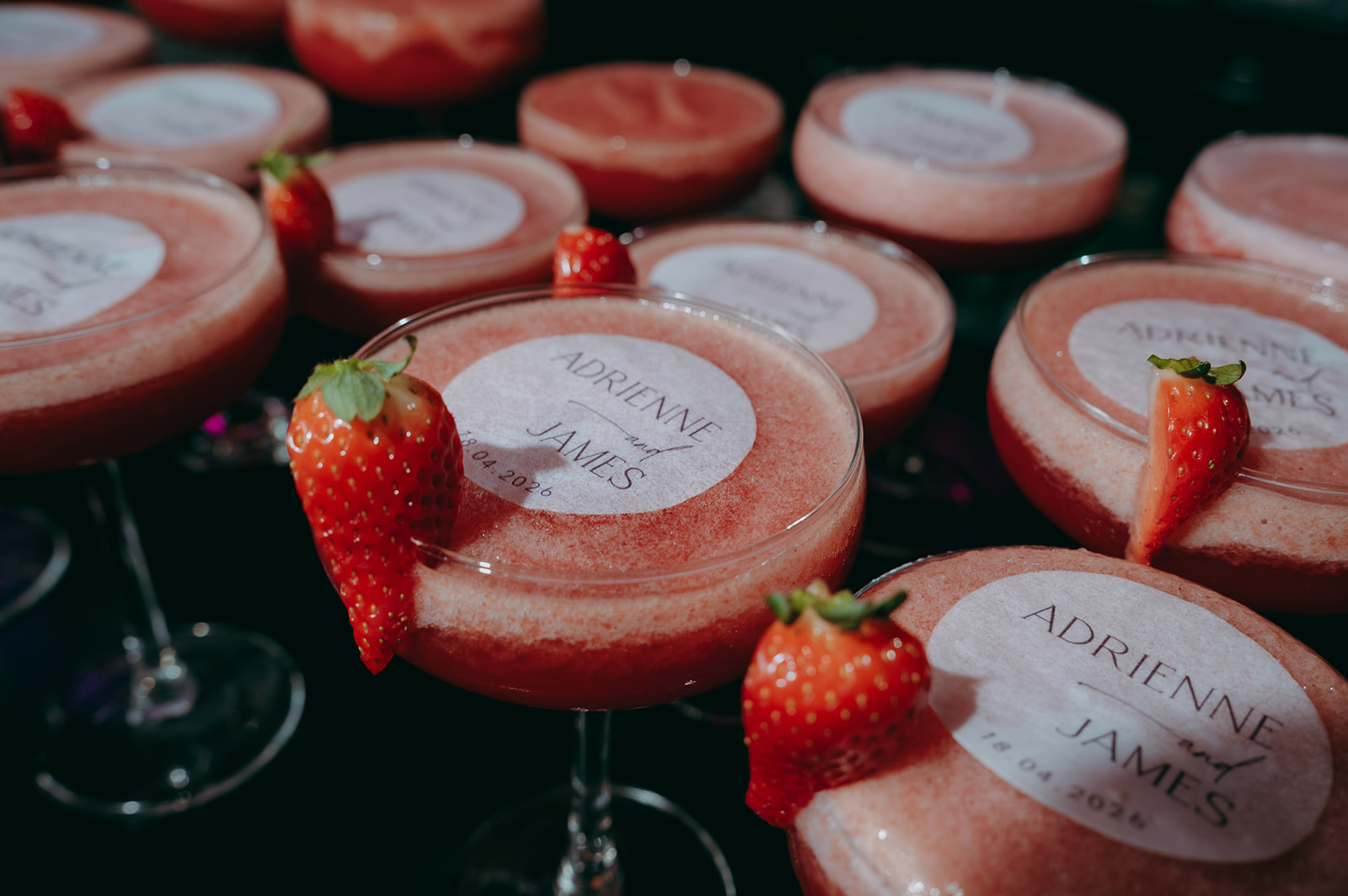
- Interesting non-alcoholic drinks presented well. Glassware matters. A mocktail in a coupe glass reads differently to the same drink in a plastic tumbler. If your venue doesn't have the right glasses, it's worth asking about hiring them.
- A bar that looks like a bar. If your drinks station looks like a trestle table with jugs on it, guests will treat it like one. A proper bar setup, with a backdrop, bottles on display, and staff behind it, signals that this is a proper occasion.
- Food timing that works with the drinks. Pairing a good non-alcoholic aperitif with canapes at arrival, and then moving into the meal, keeps the rhythm of the day feeling natural.
- Music and dancing cues. The moment the dancefloor opens matters a lot. Getting that transition right - good song, good lighting, a few guests willing to go first - is what gets people up regardless of what's in their glass.
And if you're having your day photographed and filmed, a well-designed drinks display and a signature mocktail with a bit of visual interest will show up beautifully in your gallery. At Big Day Productions, we cover both photography and film for weddings across the UK, and a thoughtful drinks table is always one of the details worth pausing on. The colour, the glassware, the garnishes - it all reads on camera.
Before you finalise your drinks plan questions worth asking.
Whether you're going fully dry or just scaling back, these are the practical things to confirm before you sign off on your drinks arrangements:
- Ask your venue about their policy on non-alcoholic events. Do they have a minimum bar spend? Does it apply to soft drinks? Can you bring in your own specialist non-alcoholic spirits if they don't stock them?
- Decide early whether to mention it to guests. Your wedding website is the right place for a quiet heads-up. You don't need to make it a feature, just a clear note.
- Think about your toast. Non-alcoholic sparkling wine is the simplest solution. Decide whether you want a single toast drink provided across all tables, or whether it forms part of a wider drinks offering.
- Plan for the evening specifically. Evening guests who arrive expecting a bar need to be considered. If your evening reception is separate from the daytime, the drinks for that portion need its own thought.
- Ask your caterer or bar team about the mocktail menu in advance. Don't leave it to the day. A tasting or at least a written menu sign-off means you know exactly what's being served and how it's being described to guests.
- Check your suppliers' language. Brief your venue coordinator, catering team, and any bar staff on how you'd like the drinks described. Confident, positive framing from staff makes a real difference to how guests receive it.
A dry or low-alcohol reception isn't a compromise - it's a choice, and like any good choice, it works best when it's made deliberately and followed through with care. The couples who pull it off without anyone noticing the absence of alcohol are the ones who've put real thought into what they're offering, not just what they've removed.
Quick wins
- DESIGN, DON'T DEFAULT: A non-alcoholic drinks list works when it's built around flavour and occasion, not just assembled from whatever soft drinks the venue has in the fridge. Treat it like a proper menu.
- BRIEF YOUR TEAM: Staff who present your drinks with confidence and positive language make more difference to atmosphere than any individual ingredient. Brief them in advance on what's being served and how.
- CHECK VENUE POLICIES: Some venues apply minimum bar spends even to alcohol-free events, or restrict outside drinks. Ask explicitly and get the answer in writing before you commit.
- TELL GUESTS SIMPLY: A brief, confident note on your wedding website is all you need. You're informing guests, not apologising - the tone of that mention sets the tone for how they'll receive it.
Frequently Asked Questions
Will guests be unhappy at a dry wedding reception?
Most guests adapt quickly when a dry reception is well-presented and the drinks are interesting. The atmosphere depends far more on music, food, and how the day is run than on whether alcohol is available. A confident, considered approach from the couple and the venue team goes a long way.
What non-alcoholic drinks work best for a wedding toast?
Non-alcoholic sparkling wine is the most practical choice for a toast - it looks the part in photos and film, it's widely available from UK suppliers, and it requires no explanation to guests. Brands like Noughty and Eisberg are worth tasting in advance to find one you actually like.
Does a dry reception save money compared to a normal bar?
Usually yes, but by less than most couples expect. Removing alcohol saves on the cost of the drinks themselves, but a well-designed mocktail bar with quality ingredients and proper glassware still has a cost. Check with your venue whether any minimum bar spend still applies.
Do we need to tell guests in advance that the reception is dry?
A brief mention on your wedding website or information card is a good idea, framed simply and positively. It avoids any awkward surprise on the day, and guests who need to know - for planning or personal reasons - will appreciate the heads-up.
For a practical next step, explore our wedding planning guide.