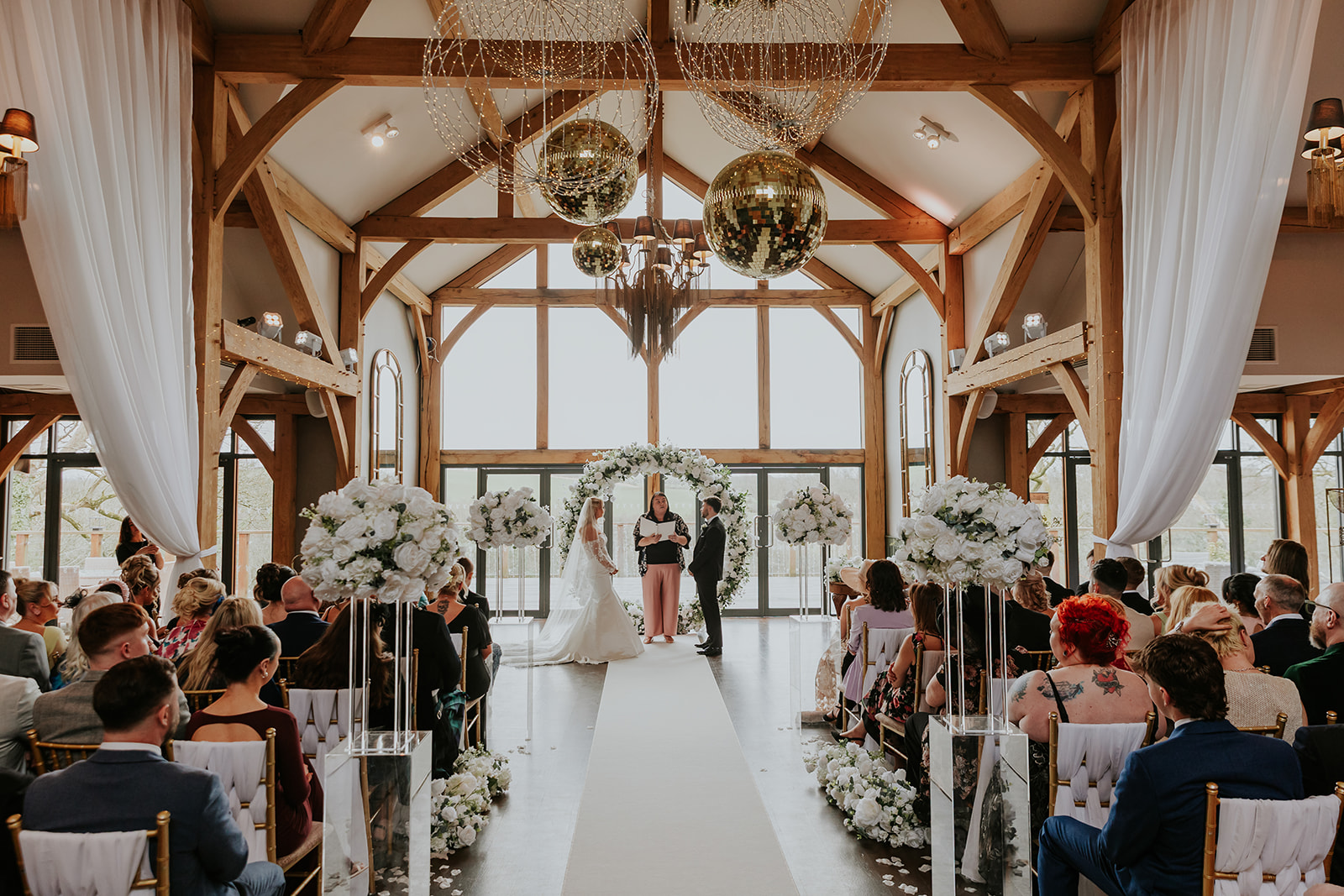
We were at a wedding in the Cotswolds a couple of summers ago, a barn venue outside Burford, the kind of place where the light in late afternoon turns everything honey-gold. The groom had written his own personal wedding vows. He'd clearly worked on them. He stood up, unfolded a piece of paper, and began reading a list. Not promises. Not memories. A list of adjectives describing his wife. "You are kind. You are funny. You are beautiful." She smiled politely. The guests smiled politely. And then it was over, and the room moved on, and everyone quietly pretended that wasn't a bit awkward.
We've been photographing and filming weddings for years, and we've seen the full spectrum: vows that made sixty strangers cry, vows that made the registrar suppress a smile, and yes, vows that made the couple themselves wince a little when they watched the footage back. The difference between the ones that land and the ones that don't? It's almost never about writing ability. It's about approach.
Why Personal Wedding Vows Are Worth the Effort
Here's the thing: standard vows are beautiful. They've endured for centuries because they work. "To have and to hold, from this day forward" carries weight precisely because it's been said by so many people across so much time. There's nothing wrong with choosing them.
But personal vows, when they're done well, do something different. They tell a specific story. They name the person in front of you, not a generic spouse, but this human being, with their particular habits and their particular laugh and the specific way they make your life better. That specificity is what makes a room go quiet. That's what makes people reach for their tissues. And it's what makes the footage genuinely worth watching back on your first anniversary, or your tenth.
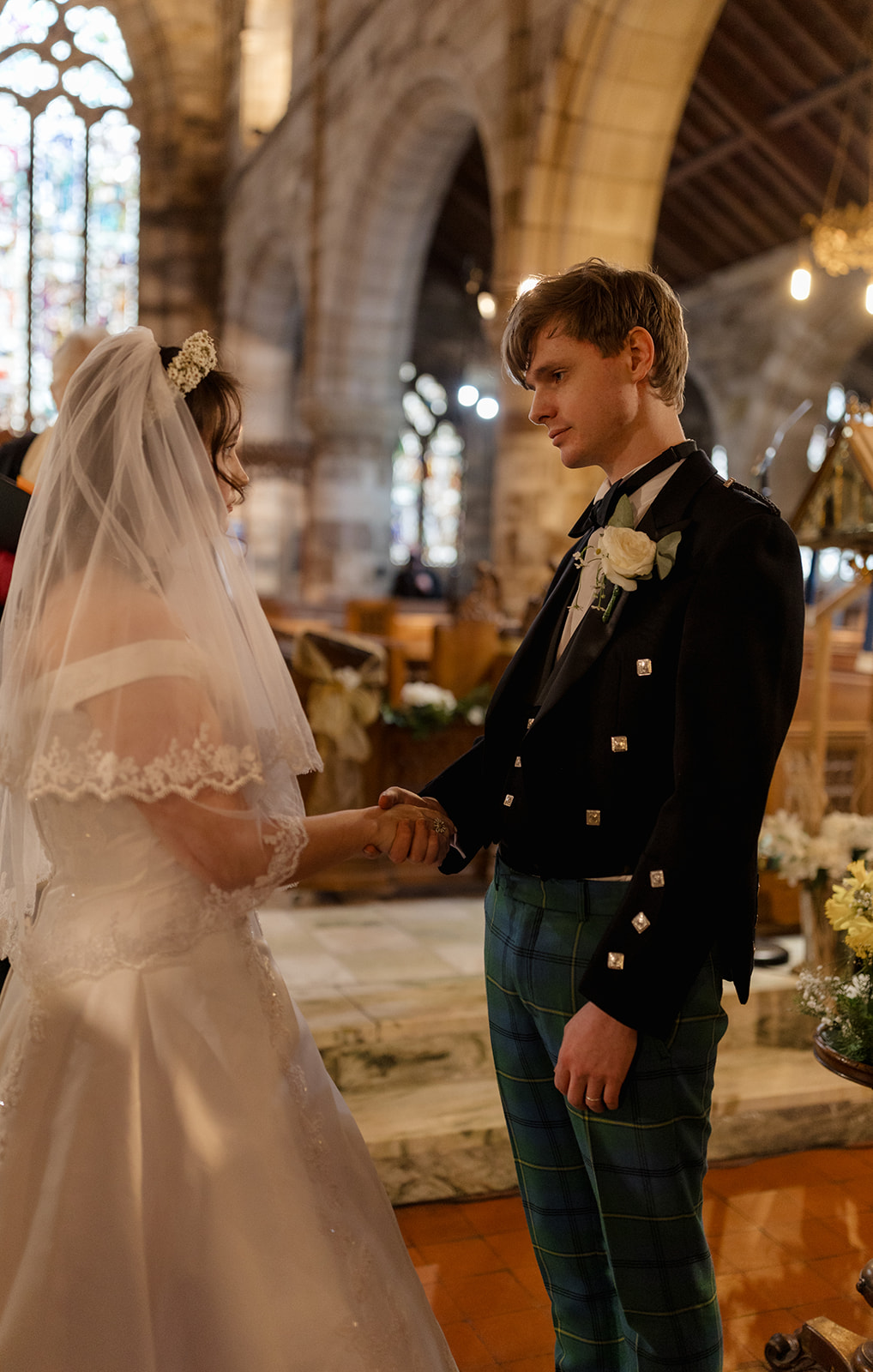
Our cameras have been in rooms where personal vows shifted the whole energy of a ceremony. Not because they were long, or poetic, or particularly clever. Because they were honest.
How to Start Writing Your Personal Vows (Without Freezing Up)
The blank page is the enemy. Most couples sit down, type "I vow to..." and then stare at the ceiling for twenty minutes. So don't start there.
Start by answering questions. Separately, without looking at each other's answers. Give yourself an hour, a cup of tea, and no distractions. Here are the prompts we suggest to every couple who asks:
- When did you know? Not when you fell in love generally, but the specific moment, however small, when you thought: this is the person.
- What do they do that nobody else does? Not a compliment. A specific thing. The way they make your coffee. The voice they use for the dog. The thing they say when you're anxious.
- What are you promising, really? Beyond the formal language, in your own words, what are you actually committing to?
- What do you want them to know? If this were the last chance you had to say it in front of everyone you love, what would you say?
Once you've written the answers down, you'll find the vows are mostly already there. You're not writing from scratch; you're editing.
The Five Things That Separate Good Vows from Awkward Ones
1. Specific beats general, every time
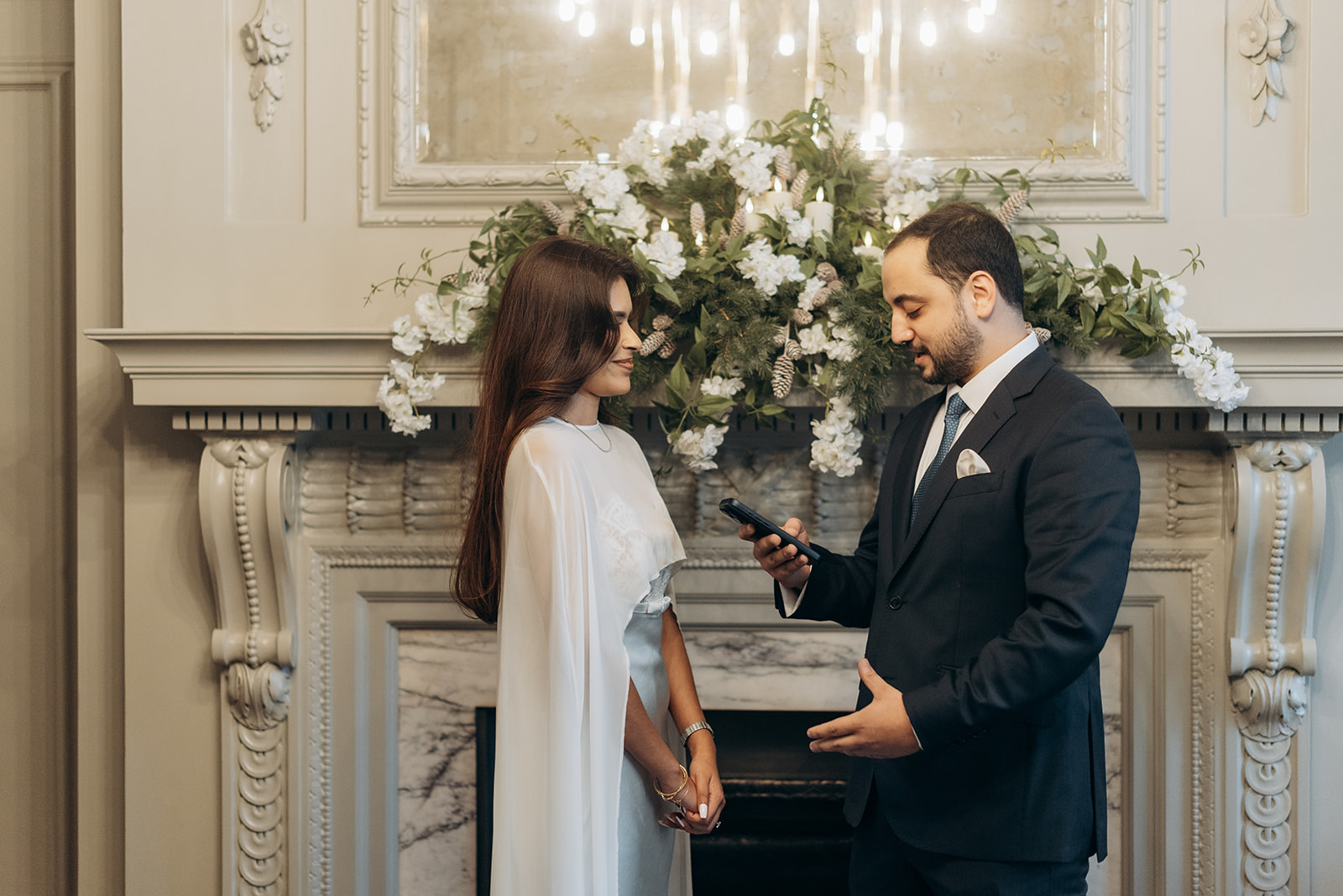
"You make me a better person" is something anyone could say to anyone. "You're the reason I actually call my mum back" is something only you could say to only them. The more specific the detail, the more universal the feeling lands. It sounds counterintuitive, but it's the most reliable rule in writing, and it applies completely to vows.
We filmed a wedding at Askham Hall in Cumbria where the bride mentioned, in her vows, that her husband had driven four hours in a January snowstorm to bring her soup when she had flu, six months before they got engaged. She hadn't asked him to. He just did it. The room was completely silent. That one specific detail said everything about who he was and why she loved him. No adjective could have done what that story did.
2. Keep them a similar length
This is practical, not romantic, but trust us on this one. If one person speaks for four minutes and the other for ninety seconds, the shorter one feels like an afterthought, even if it's equally heartfelt. Agree on a rough length beforehand. Two to three minutes each is a solid target. That's roughly 300 to 400 words spoken at a comfortable pace.
3. Don't try to be funny unless you are
Humour in vows can be wonderful. It can also be the longest thirty seconds of your life. The test is simple: are you naturally funny in conversation? Does your partner laugh at the things you say? If yes, a light touch of wit can make vows feel alive and real. If you're not usually the one making people laugh, your wedding ceremony is not the moment to start.
One well-placed, genuinely funny line is worth ten forced jokes. One is enough. It gives the room permission to smile, releases the tension, and then you can go somewhere deeper.
4. Write to them, not to the room
This is probably the most important shift in mindset. You're not performing. You're not giving a speech. You're talking to one person, the one standing in front of you, probably trying not to cry. Write as if nobody else is there. The guests will feel more moved by something intimate and direct than by something crafted to land with an audience.
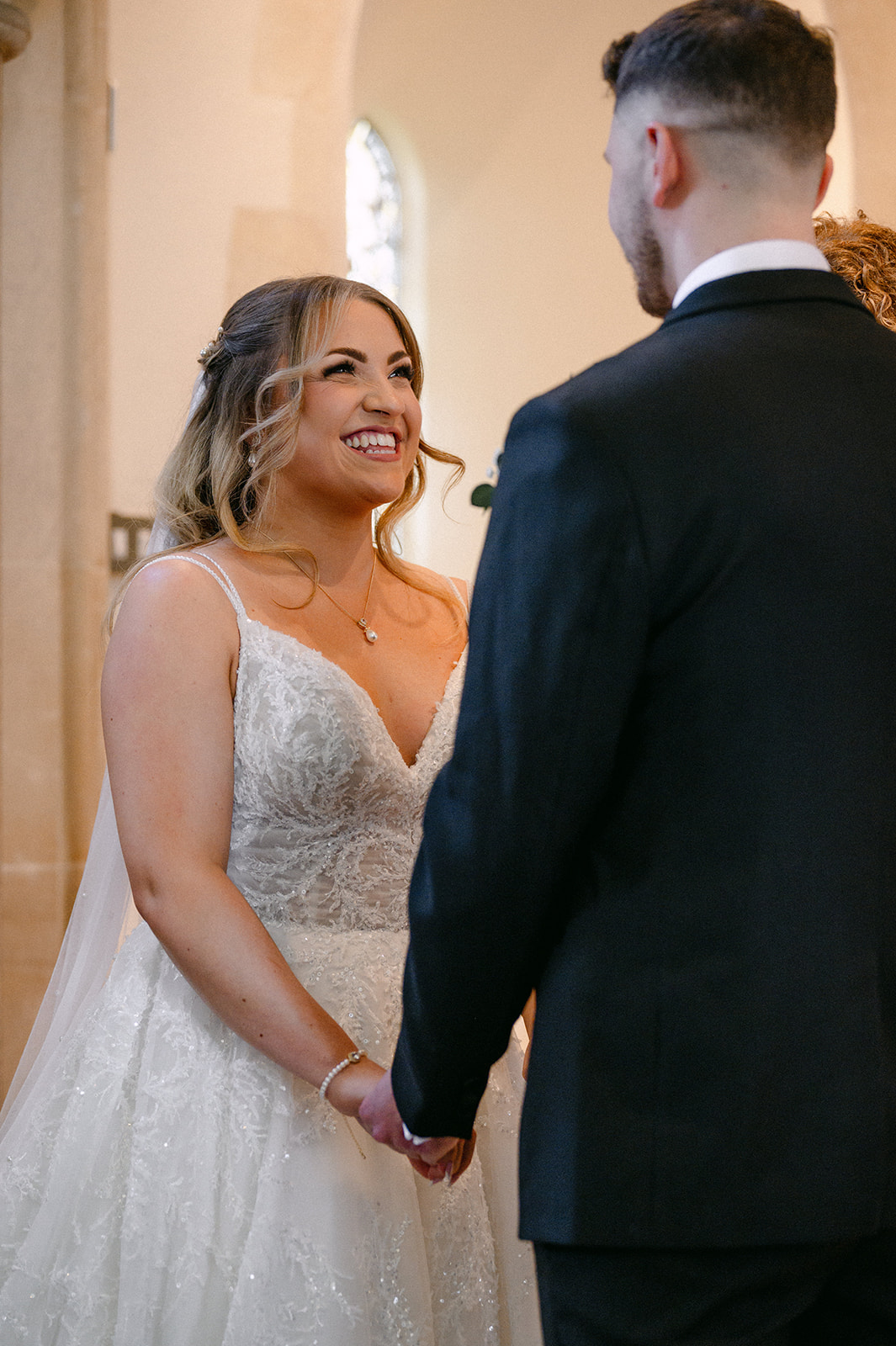
Behind the lens, we notice this immediately. When someone is talking to the room, their eyes drift. When they're talking to their partner, everything narrows and focuses, and that's the footage that's genuinely hard to watch without feeling something.
5. Say what you'll do, not just how you feel
Feelings change. Promises are what vows are actually made of. "I love you" is a feeling. "I promise to choose you on the days when it's easy and the days when it isn't" is a vow. The most affecting ceremonies we've been part of have always included at least one concrete, specific promise that felt real and considered, not borrowed from a template.
What to Avoid: The Cringe Checklist
We say this with complete affection for every couple who has ever done any of these things.
- Quotes from films, books, or songs used as the bulk of the vows (a brief reference is fine; building your vows around someone else's words isn't)
- Inside jokes that only two people understand and take thirty seconds to explain mid-ceremony
- Promises you can't keep, like "I will never go to sleep angry" (you will, and that's fine)
- A long list of qualities without any story or context to bring them to life
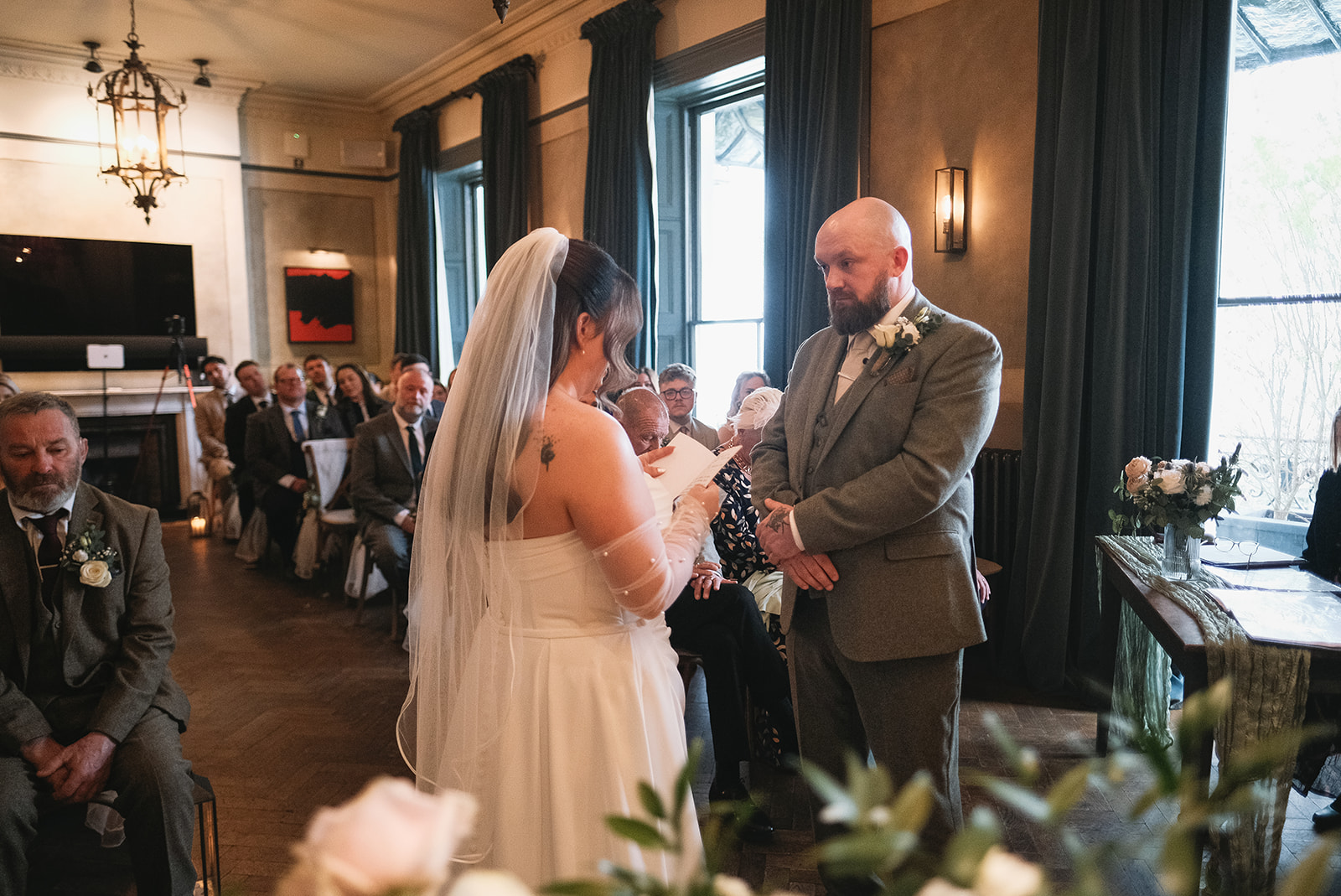
- Reading without looking up. Practise enough that you can make eye contact. The paper is a safety net, not a script to read verbatim
- Starting with "So..." or "Um, okay, so..." Write your opening line and rehearse it until it feels natural
Practical Tips for the Day Itself
Writing great vows is one thing. Delivering them is another. Here's what we've picked up from being in the room for hundreds of ceremonies.
Print them out in a font size you can actually read when your eyes are blurring with tears. Size 14 minimum. Keep them in a small notebook rather than loose paper, which shakes visibly in nervous hands. And give a copy to your celebrant or registrar, just in case. We've seen more than one set of vows left in a hotel room.
Breathe before you start. Actually pause, breathe, look at them, and then begin. That two-second pause feels enormous to you and invisible to everyone else. It will help your voice stay steady.
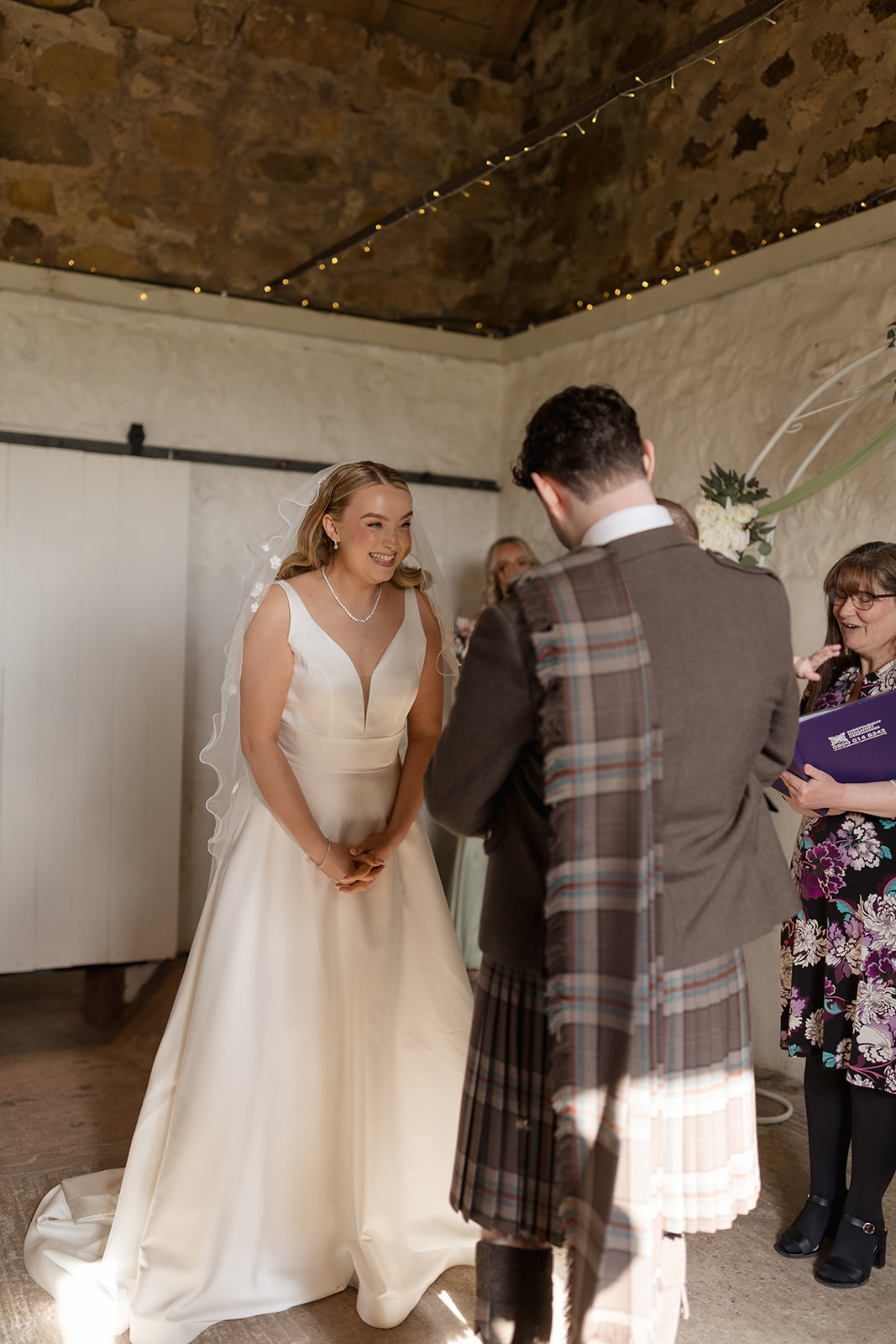
And if you cry, let yourself cry. Some of our favourite moments on film are the pauses, the laughs through tears, the partners reaching out to take each other's hands mid-sentence. That's not a disruption. That's the whole point.
A Note on Sharing Vows in Advance
Should you share them with your partner before the day? There's no right answer, but here's our honest take after years of watching ceremonies unfold.
Couples who share their vows in advance tend to have calmer, more composed ceremonies. Couples who keep them secret tend to have rawer, more emotionally spontaneous ones. Both are beautiful in different ways. What we'd suggest is this: agree on length and tone without sharing the content. That way you avoid the imbalance problem, while still preserving the surprise.
Some celebrants, particularly those working in Scotland and Northern Ireland where ceremony structures can differ from England and Wales, will ask to review your vows in advance to ensure they meet legal requirements. Always check with your officiant early in the process.
Frequently Asked Questions
How long should personal wedding vows be?
Two to three minutes each is the sweet spot, which works out at roughly 300 to 400 words spoken at a natural pace. Short enough to stay focused and emotional, long enough to say something real. If you're writing for a shorter ceremony or have a venue with a strict time slot (some licensed venues in England are very particular about this), aim for the shorter end. Read them aloud with a timer; they always take longer than you think.
Do personal vows need to be legally binding?
In England, Wales, Scotland, and Northern Ireland, the legal requirements for a marriage ceremony are set by law, and personal vows are separate from the legal declarations. You'll still need to say the required legal words as directed by your registrar or celebrant. Your personal vows sit alongside these, not instead of them. Always confirm the structure with your officiant well before the day.
What if I'm not a good writer?
You don't need to be. The best vows we've witnessed weren't written by people with a way with words; they were written by people who told the truth simply and directly. Start with the prompts above, write in the way you actually speak, and then read it aloud to yourself. If a sentence sounds like something you'd never say in conversation, rewrite it until it does. Plain language and genuine feeling will always outperform polished prose that doesn't sound like you.
Is it okay to cry while saying my vows?
Completely. We'd almost be more surprised if you didn't. Have a signal with your partner for if you need a moment; some couples hold hands, some laugh, some just breathe together. Your celebrant will also be experienced at holding space for those pauses. From where we stand, the moments of tears and laughter are the ones that matter most on film and in photographs. Don't try to suppress them.
The Last Thing We'd Say
Your vows don't need to be perfect. They need to be yours. The couples whose ceremonies stay with us longest aren't the ones who had the most eloquent words; they're the ones who meant every syllable of whatever they said. We've photographed and filmed ceremonies in village churches in Suffolk and clifftop settings in Cornwall and city halls in Edinburgh and marquees in the Welsh hills, and the thing that has never once failed to move a room is two people looking at each other and telling the truth.
Write that. Just that. Everything else is detail.
If you're planning your wedding and looking for someone to photograph and film the whole day, vows and all, we'd genuinely love to hear about it. Whether you're after photos, film, or both, get in touch and tell us your story. We'll bring the cameras. You bring the words.