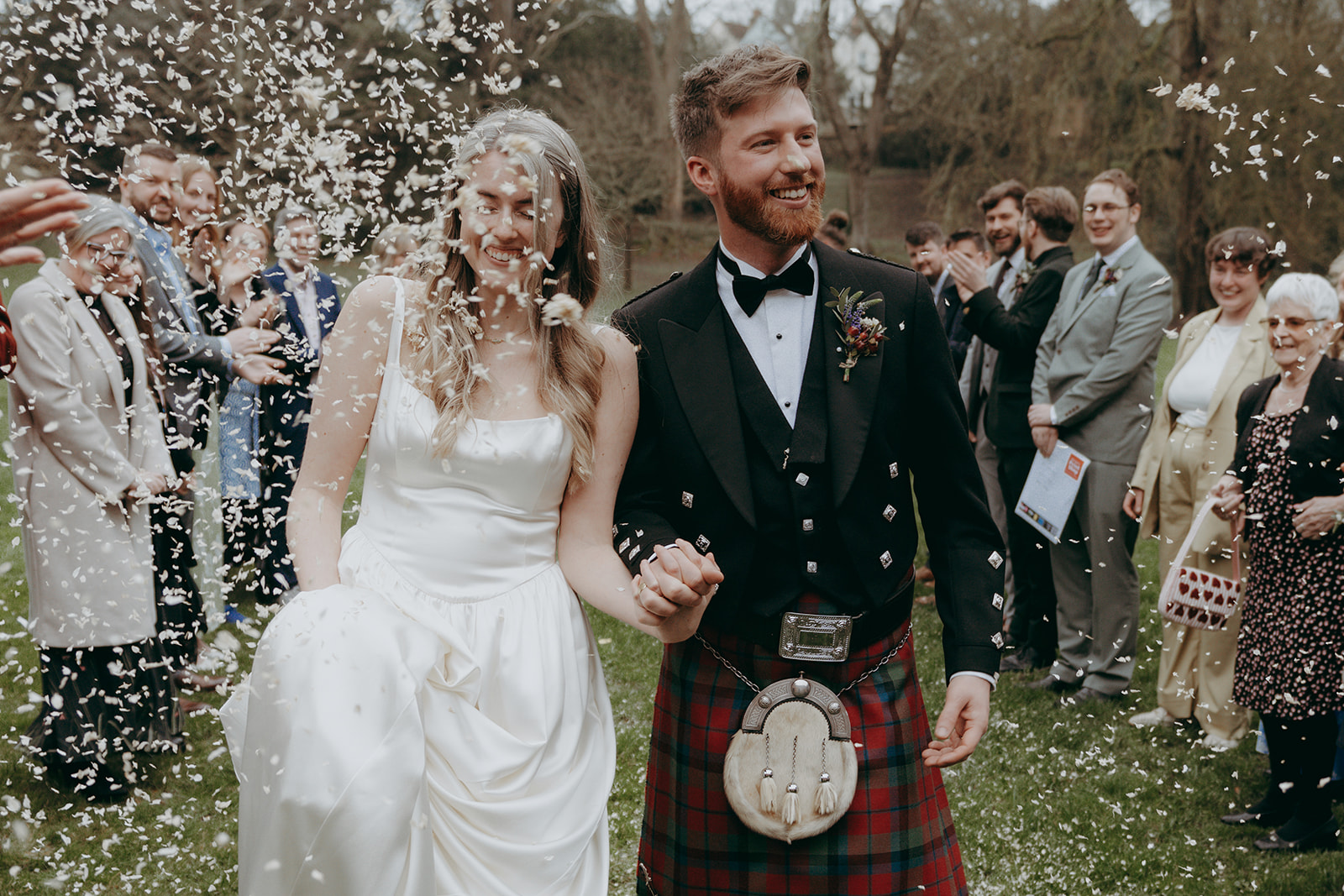
Why 'small' feels like a compromise, even when it isn't.
There's a particular kind of anxiety that comes with planning a small wedding, and it usually sounds like this: will it feel like enough? Not enough for you, necessarily, but enough for the people attending. Enough to justify the fuss. Enough to feel like a real wedding, whatever that means.
We've photographed and filmed weddings with eight guests and weddings with three hundred, and here's something we can tell you without hesitation: the size of the guest list has almost nothing to do with how much a day means. Some of the most charged, emotionally layered weddings we've ever worked on have been the small ones, the ones where every single person in the room is someone who matters, where there's nowhere to hide and no one wants to hide anyway.
The pressure to go big is real, though. It comes from family expectations, from social media, from the sheer cultural weight of what a wedding is supposed to look like. But intimate weddings, by which we mean anything under around sixty guests, have a quality that larger celebrations often can't replicate: presence. Everyone is actually there, paying attention, feeling it alongside you.
If you're planning a small wedding and fighting that nagging voice that says you should be doing more, this guide is for you. Not to convince you that small is automatically better, but to help you make your intimate day feel exactly as full and meaningful as it deserves to.
Choosing a venue that works with your numbers.
The single fastest way to make a small wedding feel underwhelming is to put it in a space built for twice as many people. A room with thirty guests rattling around in it can feel sparse no matter how beautiful the flowers are. Venue scale is everything with an intimate wedding, and it's worth being ruthless about it.
Look for spaces that have a natural sense of enclosure: a walled garden, a converted barn with low beams, a private dining room in a country house, a lighthouse keeper's cottage on the Cornish coast. The venue should feel like it was made for your group, not like your group is apologetically occupying a corner of it.
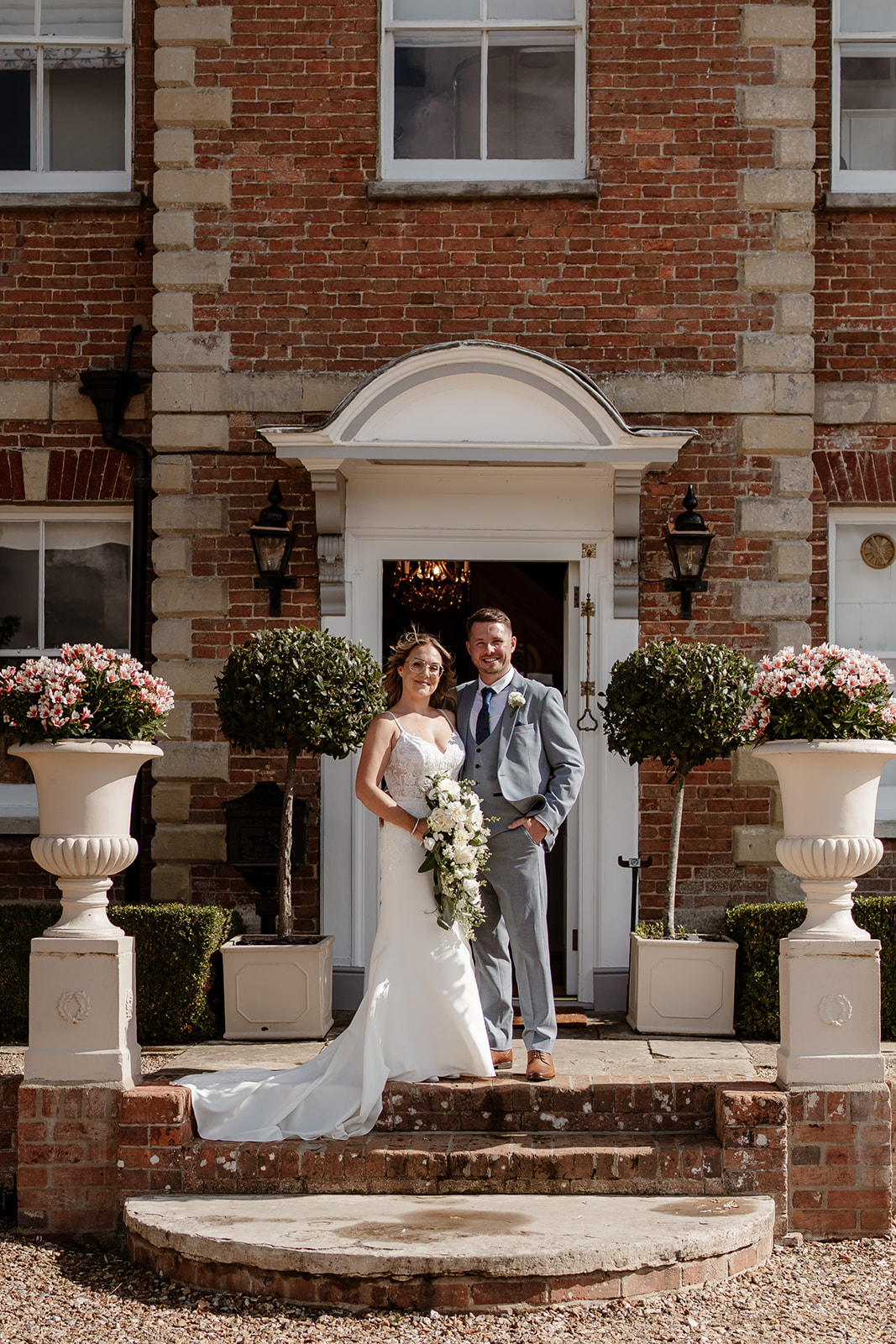
Some of the most beautiful small wedding venues in the UK aren't traditional wedding venues at all. Private houses with a licence, restaurant buyouts, National Trust properties, independent galleries, even well-chosen pub dining rooms can work brilliantly. The key is that the space should feel chosen, like you thought carefully about where you'd want to spend this particular day with these particular people.
A few things to look for when viewing venues for a smaller guest list:
- Proportionate ceremony space - does it feel intimate when seated, or cavernous?
- Natural light - smaller rooms often have it in abundance, which is a genuine gift
- Flexibility on layout - can you configure the tables exactly as you want, rather than fitting a standard banquet format?
- Outside space - even a courtyard or terrace changes the feel of the whole day
One more thing: venues that are accustomed to hosting large weddings may not be the most accommodating for smaller ones. Seek out spaces where your numbers are actually their sweet spot, not a quiet Tuesday they're trying to fill.
Making everyone feel like they were chosen.
Here's something that happens at almost every small wedding we've worked at: the guests feel genuinely honoured to be there. Not in a self-important way, just in the simple, warm sense of knowing they were on a short list. That's something you can lean into deliberately.
With a smaller guest list, you have the time and the budget to do things you simply can't afford at scale. Handwritten notes tucked into place settings. A welcome bag that actually reflects who your guests are (the one couple who'd appreciate a local gin, the friend who always needs a good book for the train home). A seating arrangement that's been thought through not just logistically but emotionally, putting the right people next to each other.
Food and drink is another area where small numbers unlock real quality. Instead of a three-course sit-down for a hundred and twenty, you could have a long, relaxed feast around a single table, with dishes chosen because you actually love them. A local chef. Wines you've tasted and selected. A cheese board that someone on your team spent three weekends researching (we once spent forty minutes photographing a cheese tower that a couple had clearly spent months planning, which felt slightly absurd at the time and produced some of our favourite detail shots).
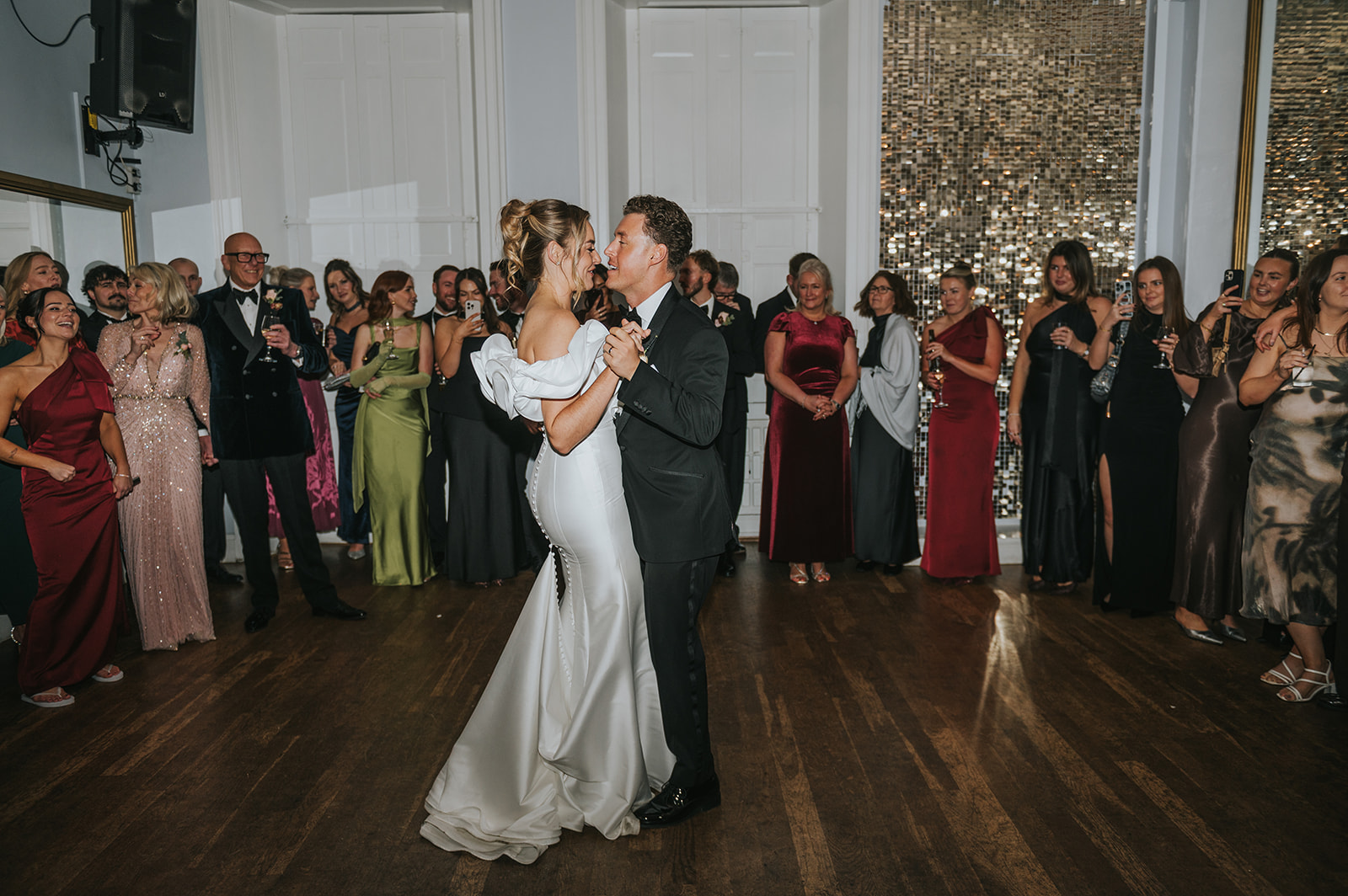
The other thing about small weddings is that the speeches tend to land differently. When the room is thirty people who all know the couple well, the stories hit harder, the laughter is louder, and the tears are less self-conscious. We've sat in rooms of twenty-five people where a best man's speech has left everyone, including us, absolutely undone.
And if you're worried that your day won't feel celebratory enough without a packed dance floor, consider what actually creates atmosphere: the right music at the right volume, people who want to be there, and enough space to move. You don't need numbers. You need energy, and small weddings have it in a way that's completely their own.
Where the money goes when the list gets shorter.
One of the practical gifts of a small wedding is that your budget stretches differently. You're not dividing it across a hundred and fifty heads; you're concentrating it on the things that actually matter to you. The question is figuring out what those things are before you start spending.
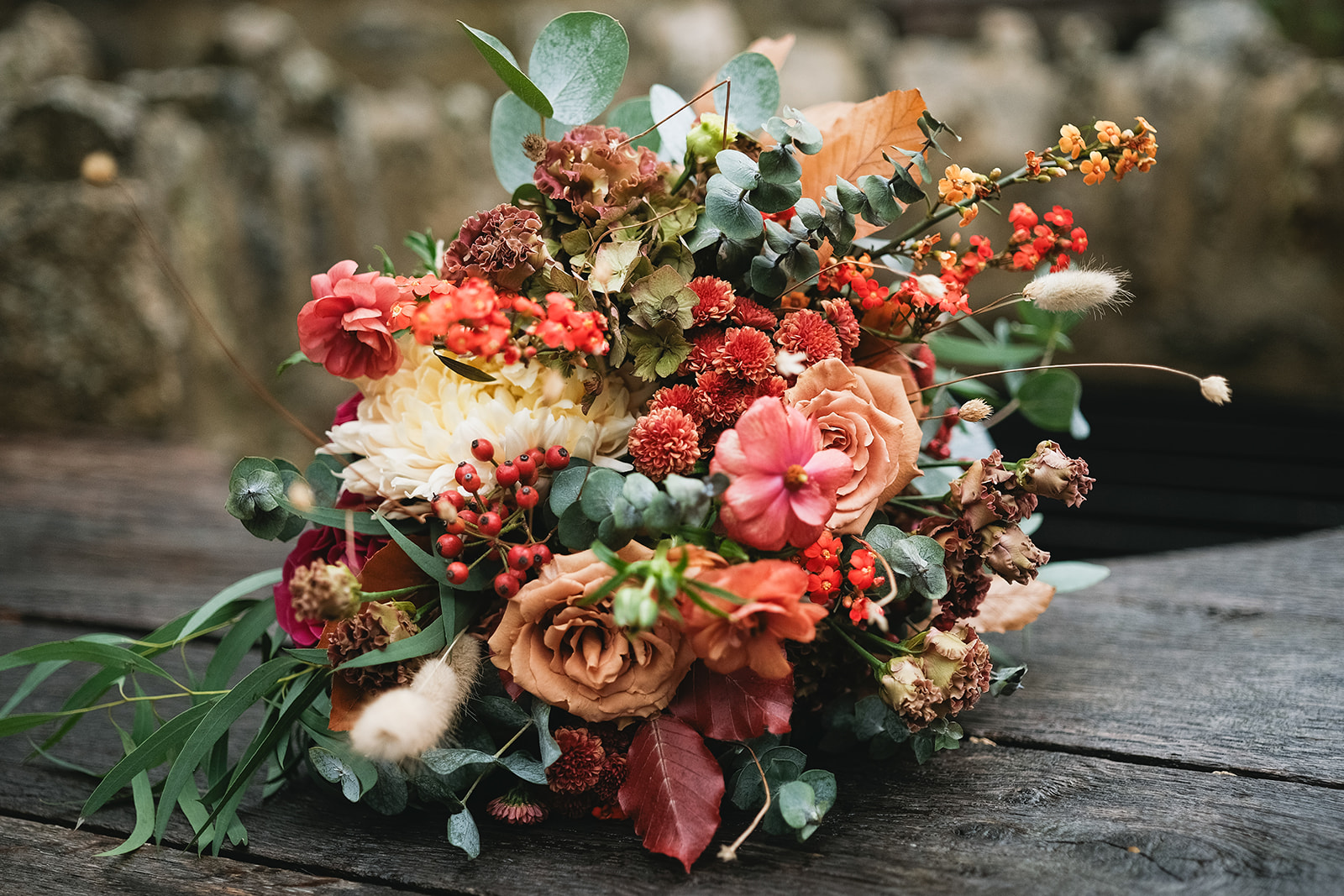
We'd encourage couples planning intimate weddings to think in terms of depth rather than breadth. Instead of many average things, a few exceptional ones. The flowers might be more considered, the food more personal, the entertainment more specific to your actual taste in music rather than a generic party playlist.
Here's a rough way to think about reallocation when your numbers drop:
- Catering per head goes up, but total spend often stays similar or drops. Use the difference to upgrade quality rather than pocket it immediately.
- Venue hire can drop significantly. Smaller, more characterful spaces often cost less than large traditional venues.
- Stationery and favours become genuinely personal rather than mass-produced. A handwritten menu card feels completely different from a printed one.
- Entertainment can be more bespoke. A solo musician, a jazz trio, a curated playlist with a friend DJing - all of these work better in a small room than a full band playing to a half-empty floor.
Photography and film are one area where we'd encourage you not to scale back just because your numbers are smaller. The moments in an intimate wedding are, if anything, more concentrated. There's less noise between the meaningful parts, and that's exactly when great documentation earns its keep. We cover both photography and film for weddings of all sizes across the UK, and some of our most treasured work has come from the quietest, smallest days.
The broader point is that a small wedding budget is not a compromised version of a big wedding budget. It's a different set of choices, and often more satisfying ones.
Letting go of what the day is 'supposed' to be.
This is the part nobody puts in a planning checklist, but it might be the most important: you have to make peace with your decision, and keep making peace with it, right up to the day itself.
Small weddings attract a particular kind of second-guessing. You'll have a moment, probably around the time someone sends you photos of their enormous marquee wedding on Instagram, where you wonder if you've done the right thing. You might worry about the guests you didn't invite, or feel guilty about keeping it quiet from people who expected to be included. This is completely normal, and it passes.
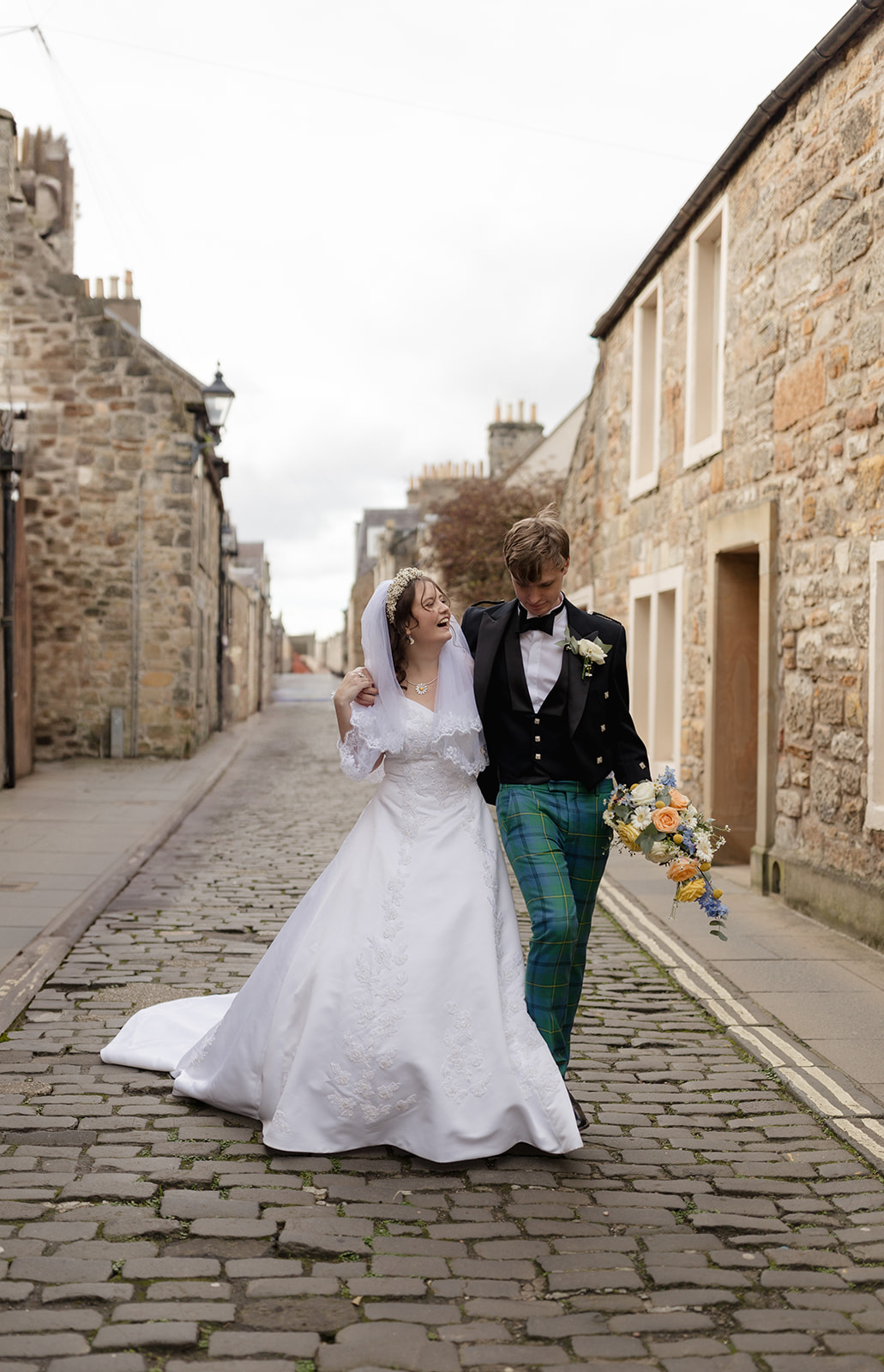
What helps is remembering why you chose this. Was it because you're both introverts who would find a big crowd exhausting on the most emotionally heightened day of your lives? Was it because you wanted to actually spend time with your guests rather than doing a forty-minute receiving line? Was it because the big wedding felt like a performance, and you wanted something real?
Those reasons are good reasons. Hold onto them.
It also helps to manage the day itself with intention. Build in unhurried time, proper time, to sit with your guests. Have a meal that lasts long enough for real conversation. Don't feel obligated to fill every moment with scheduled activities. Some of the best small weddings we've worked at have had a quality of ease to them, a sense that nobody was rushing anywhere, that the evening could just unfold.
One more thing: the couples who seem happiest at their small weddings are usually the ones who stopped comparing them to other weddings entirely. Your day isn't a reduced version of something bigger. It's its own complete thing, with its own texture and warmth and meaning. Let it be that.
The details that make a small wedding feel full.
There's a version of intimate wedding planning that goes too minimal, stripping things back so far that the day loses its sense of occasion. The goal isn't austerity; it's intention. You want the day to feel considered, not sparse.
A few ideas that tend to work particularly well at smaller weddings:
- A shared experience beyond the ceremony - a group walk before the meal, a cocktail-making session, a private tour of a gallery or garden. Something that gives everyone a story to tell.
- A longer, slower meal - family-style sharing plates, multiple courses with gaps for conversation, a table that nobody wants to leave.
- Personal speeches from unexpected people - with a small guest list, you can invite more voices into the room. A sibling, a childhood friend, even the couple themselves speaking directly to their guests.
- A signature moment - something specific to you, a song played live that means something, a reading from a book you both love, a ritual borrowed from somewhere in your family history.
- A beautiful setting for the end of the evening - a fire pit, a starlit terrace, a final drink somewhere quiet. Small weddings can end gently rather than with a bang, and that's often more moving.
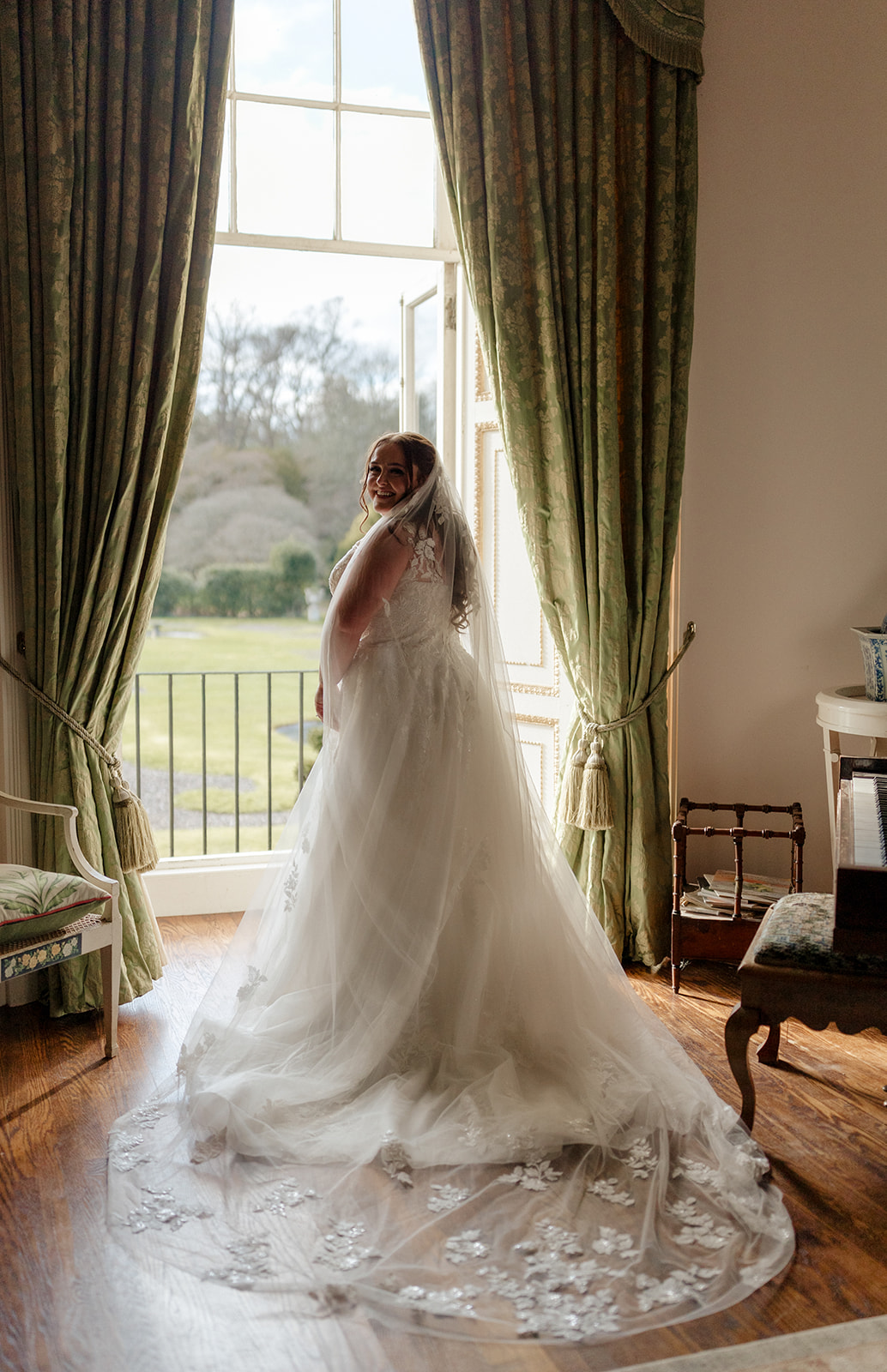
The other thing we'd say is: don't underestimate the power of the morning. With fewer people and less logistical chaos, a small wedding morning can be genuinely relaxed. A proper breakfast, time to get ready without rushing, a quiet moment before everything begins. That calm carries through the whole day.
And on the day itself, try to find one moment, even just five minutes, to step away from your guests with your partner and just look at what you've built together. Not for a photograph (though we're always nearby if you want one), but for yourselves. The day will be exactly enough. It will probably be more than enough.
Quick wins
- SCALE YOUR VENUE: Choose a space where your numbers feel right, not one you're apologetically half-filling. A room that fits your group makes everything feel more celebratory.
- INVEST IN DEPTH: Fewer guests means more budget per head. Put it into the things you'll remember: the food, the flowers, the one musician who plays all evening.
- PERSONALISE EVERYTHING: Handwritten notes, bespoke menus, seating arrangements made with real thought: small numbers make genuine personalisation possible in a way that big weddings simply can't match.
- HOLD YOUR REASONS: Second-guessing is normal. Write down why you chose an intimate wedding and come back to it when comparison creeps in. The reasons are good ones.
Frequently Asked Questions
How many guests counts as a small or intimate wedding?
There's no official threshold, but most wedding professionals consider anything under sixty guests to be an intimate wedding. Micro-weddings typically refer to twenty guests or fewer, and elopements usually mean just the couple and perhaps two witnesses.
Will our small wedding feel less special than a big one?
Not at all, and in our experience, often the opposite is true. With fewer guests, every person in the room is someone who genuinely matters to you, and that changes the emotional quality of the whole day. The moments tend to feel more concentrated, not less.
How do we handle family expectations about keeping the guest list small?
Honestly and early. Have the conversation before invitations go out, explain your reasons clearly, and hold firm. It helps to frame it around what you want rather than what you're excluding. Most people come around once they see how intentional and personal the day is.
Do we still need a photographer or videographer for a small wedding?
We'd say yes, perhaps more than ever. Intimate weddings have fewer distractions between the meaningful moments, which means there's more to document, not less. The quiet exchanges, the close-up expressions, the end of the evening by the fire: these are exactly the things you'll want to look back on.