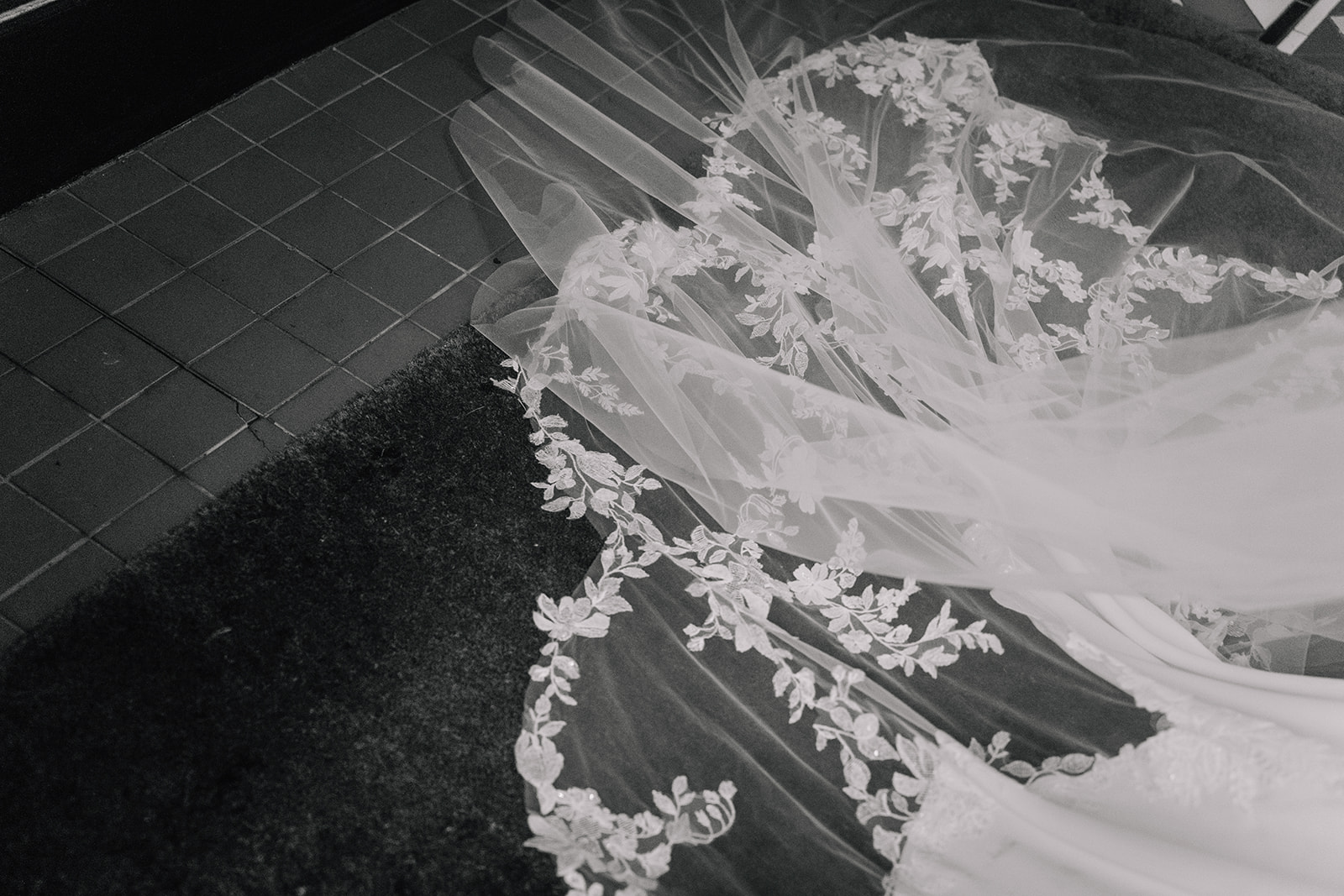
Appliqué lace has moved from heritage bridal houses to high-street ateliers, and every week we're photographing brides who've chosen it. Here's what the trend actually means, and how to wear it well.
What is appliqué lace, exactly?
Appliqué lace is lace that has been cut from its base fabric and then applied, or stitched, onto a separate layer of the gown, rather than woven directly into the dress itself. The result is that the lace motifs sit proud of the fabric beneath them, giving the design real depth and dimension. Run your fingers over an appliqué lace gown and you'll feel it: raised petals, trailing vines, little clusters of flowers that catch light differently depending on the angle.
It's a technique that goes back centuries, but what's happened recently is that designers have pushed it far beyond the traditional all-over lace look. You'll now find appliqué used selectively: a scattering of motifs drifting down a plain crepe skirt, a single oversized floral climbing one shoulder, a dense cascade spilling from the waist down a cathedral train. The contrast between a clean, structured bodice and ornate lace detail is exactly what makes the trend feel so fresh right now.
There are a few terms worth knowing if you're shopping:
- Chantilly appliqué: delicate, lightweight lace with a fine net ground, usually in ivory or soft white. Very romantic, very classic.
- Guipure appliqué: heavier, with no net background, so the motifs sit as solid pieces. Bolder and more graphic in effect.
- 3D floral appliqué: individual fabric or lace flowers stitched on so they lift away from the gown entirely. These are the ones that photograph with real drama.
- Scattered placement appliqué: motifs placed individually across the dress, rather than in a continuous pattern. This gives designers (and brides) a lot of creative control over the final look.
Understanding what type of appliqué you're looking at helps enormously when you're trying to describe what you want to a designer, or when you're comparing two very different gowns that are both technically being sold as "lace dresses".
The reason this trend has taken hold.
We've been photographing and filming weddings across the UK for years, and we've watched trends come and go with a fair amount of scepticism. Appliqué lace, though, isn't going anywhere quickly, and that's because it solves a problem that a lot of brides actually have.
Plain minimalist gowns are beautiful, but they can feel a little unfinished in person, especially in photographs where texture is everything. Heavily beaded or fully lace gowns are undeniably special but can feel overwhelming on certain body types or in more relaxed settings. Appliqué lace sits neatly between the two. You get the visual interest, the sense of occasion, the detail that reads on camera, and you still have breathing room in the overall silhouette.
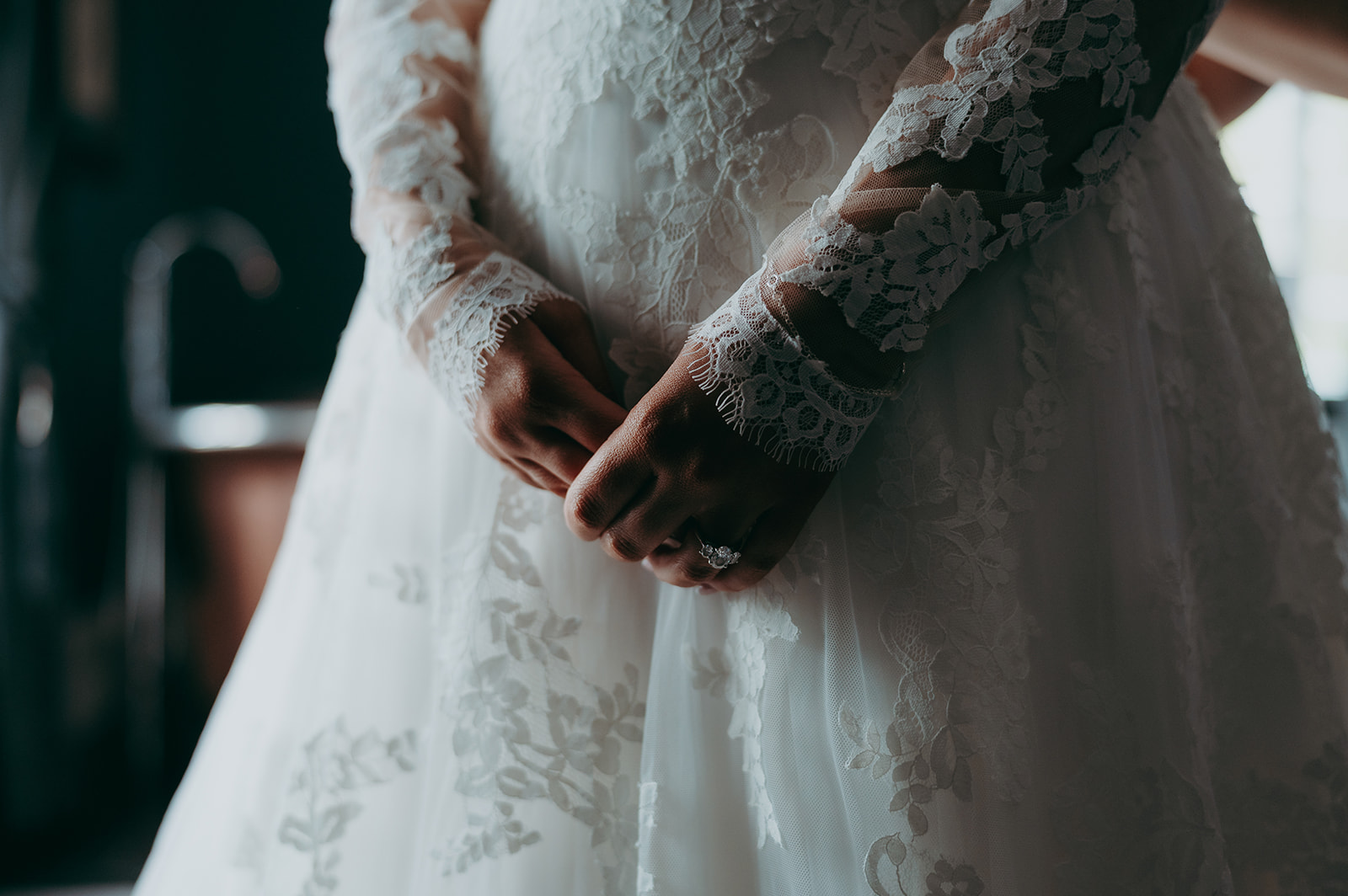
There's also something to be said for the way appliqué translates across different settings. We've shot brides in appliqué gowns in converted Yorkshire barns, in formal London venues, on Scottish hillsides in October, and in coastal Cornwall churches in June. The texture holds up in natural light, in candlelight, in the diffused grey light of a November afternoon. That versatility matters more than people realise when they're choosing a dress months before the wedding day.
And honestly? Social media has played a role. The way 3D florals and raised lace motifs catch light makes for images that stop the scroll. Brides have noticed that, and designers have responded. There's been a real acceleration in the range of appliqué options available at every price point, which has made the look more accessible than it was even a couple of years ago.
How to choose the right appliqué style for you.
The most important thing to remember is that not all appliqué lace works the same way on every body or in every setting. A scattered, delicate Chantilly appliqué on a silk slip dress is a completely different beast to a heavy guipure floral on a ballgown skirt. Both are appliqué lace. Both can be extraordinary. But they suit different people in different contexts.
Here's how we'd think about it if a bride asked us:
- Consider your venue first. A formal country house or cathedral calls for something with more weight and ceremony. A relaxed barn or outdoor setting can carry something lighter and more playful. Appliqué placement can also guide the eye, so if your ceremony space has a long aisle, a trailing back detail or a dramatic train will read beautifully from a distance.
- Think about your silhouette, not your size. Appliqué placed strategically at the waist draws the eye inward. A cascade of florals from shoulder to hem elongates. Scattered motifs across a full skirt add volume. Your designer or bridal stylist can use placement to work with whatever you want to accentuate.
- Match the lace weight to your fabric. Heavy guipure appliqué on a very lightweight chiffon can drag the fabric down and distort the silhouette. Ask your designer how the lace has been bonded or stitched, and whether the base fabric has been weighted or structured to support it.
- Ask to see it in movement. Walk in the dress. Turn around. Appliqué that looks perfect on the hanger sometimes lifts or catches awkwardly in motion. The best bridal shops will let you move properly before you commit.
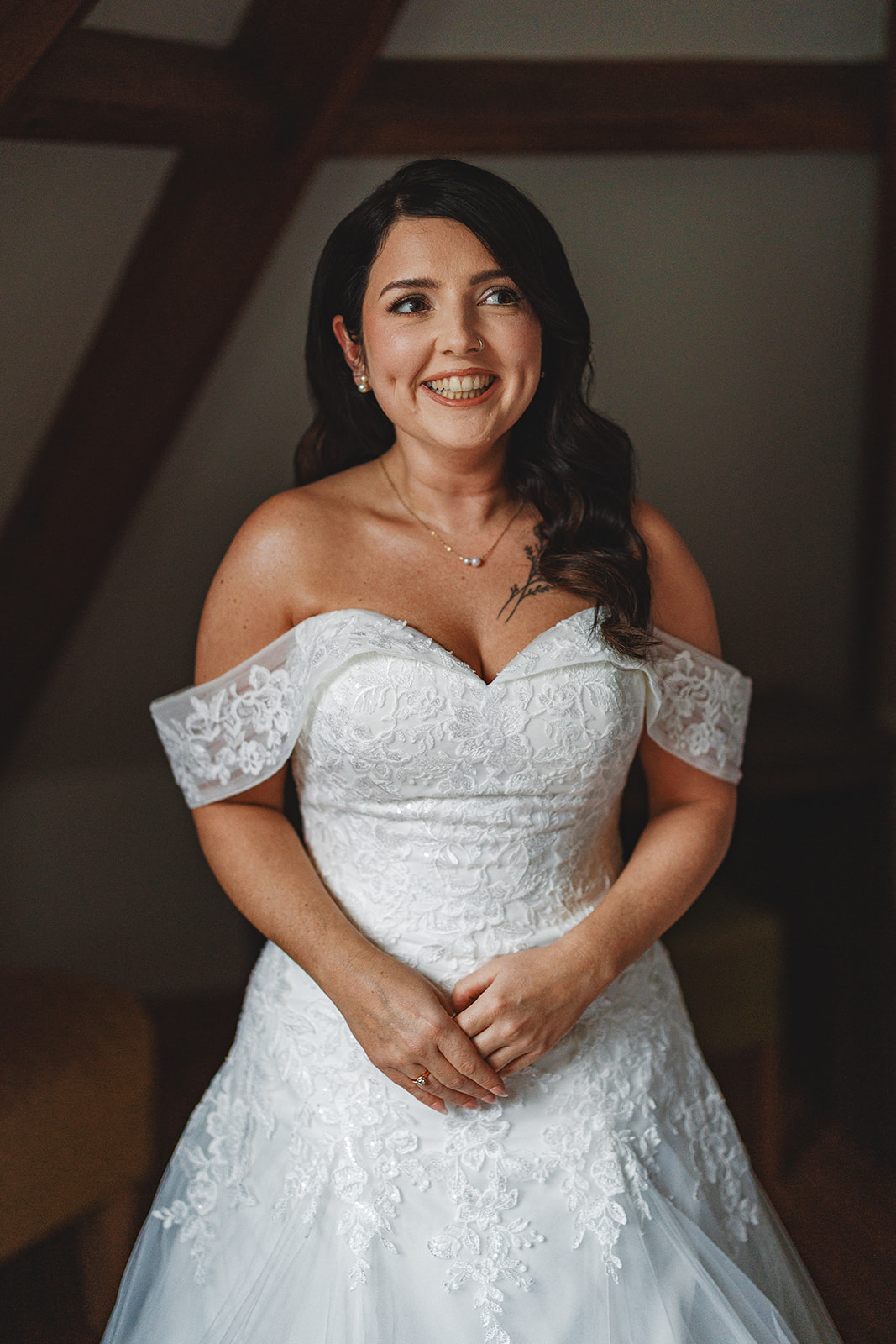
It's also worth thinking about your accessories. Very ornate, densely placed appliqué can fight with heavy jewellery or an elaborate veil. Some of the most confident bridal looks we've seen have paired a statement appliqué gown with almost no jewellery at all, just a simple pair of earrings and nothing else. Let the dress be the thing.
Who's doing appliqué lace really well right now.
You don't need to spend a fortune to find a well-executed appliqué lace gown in the UK, but it helps to know where to look and what to look for in terms of quality.
At the higher end, designers like Suzanne Neville, Phillipa Lepley, and Caroline Castigliano have long worked with appliqué lace in their collections, often commissioning bespoke lace from European mills and allowing for placement customisation. If you're working with an independent bridal designer for a made-to-measure gown, ask specifically about their experience with appliqué work. The skill involved in placing and securing individual motifs so they lie flat, sit symmetrically, and hold up through a full wedding day is significant, and not every atelier does it equally well.
In the mid-range, brands stocked by UK multi-brand bridal boutiques (think Madi Lane, Essense of Australia, or Rebecca Ingram) have invested heavily in their appliqué offerings, and the quality has genuinely improved. Don't dismiss these options on the basis of price point alone. We've photographed gowns from independent boutiques that looked every bit as considered as their couture counterparts in the finished images.
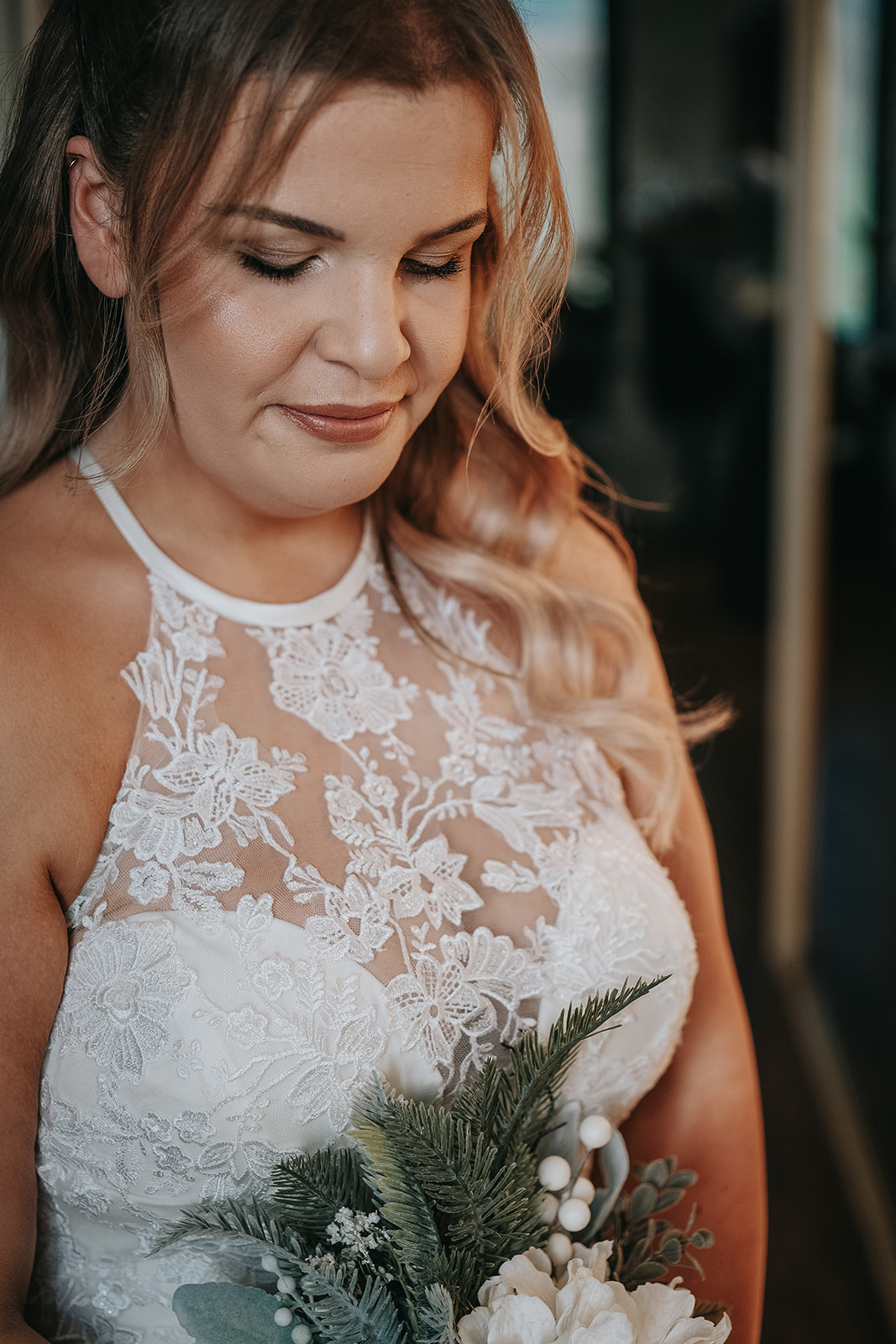
If you're working to a tighter budget, it's worth seeking out UK-based bridal sample sales, particularly in cities like Manchester, Edinburgh, and Birmingham, where you can sometimes find designer appliqué gowns at a significant reduction. Sites like Still White and Stillwhite.co.uk list pre-loved bridal gowns with good UK stock, and appliqué lace styles come up regularly. The key is knowing your measurements and understanding any alterations you'd need, since appliqué can be more complex (and more costly) to alter than a plain fabric dress.
Whatever your budget, we'd always say: try on more than you think you need to. The dress that photographs with you in it is the one that matters, and sometimes the gown you'd never have chosen from a hanger is the one that makes everyone in the room go quiet.
How appliqué lace looks behind the lens.
We'll be honest: appliqué lace is one of our favourite things to photograph and film. The texture gives you something to work with in every kind of light. Early morning getting-ready shots, where the dress is hanging by a window, pick up the relief of the motifs beautifully. Ceremony shots from the aisle show the full composition of the design. Portrait sessions in open shade, or in the golden half-hour before the reception, let the raised detail cast tiny shadows that give the whole gown a sculptural quality you simply don't get with flat fabric.
If you're having a videographer as well as a photographer (and we'd always encourage both, because they capture such different things), the way appliqué lace moves and catches light in motion adds a real richness to the footage that plain or minimally detailed gowns don't always deliver in the same way.
A few practical notes from our side of the lens: very white or very bright appliqué on a sunny day can blow out in direct sunlight, so if your portraits are scheduled for midday, talk to your photographer about positioning. Deep ivory or champagne-toned lace tends to hold detail better in bright conditions. And if you have a train with appliqué detail, it's worth having a brief conversation with your photographer about how you'd like it arranged for portraits, because a trailing lace train that's been casually swept aside looks very different to one that's been fanned out intentionally.
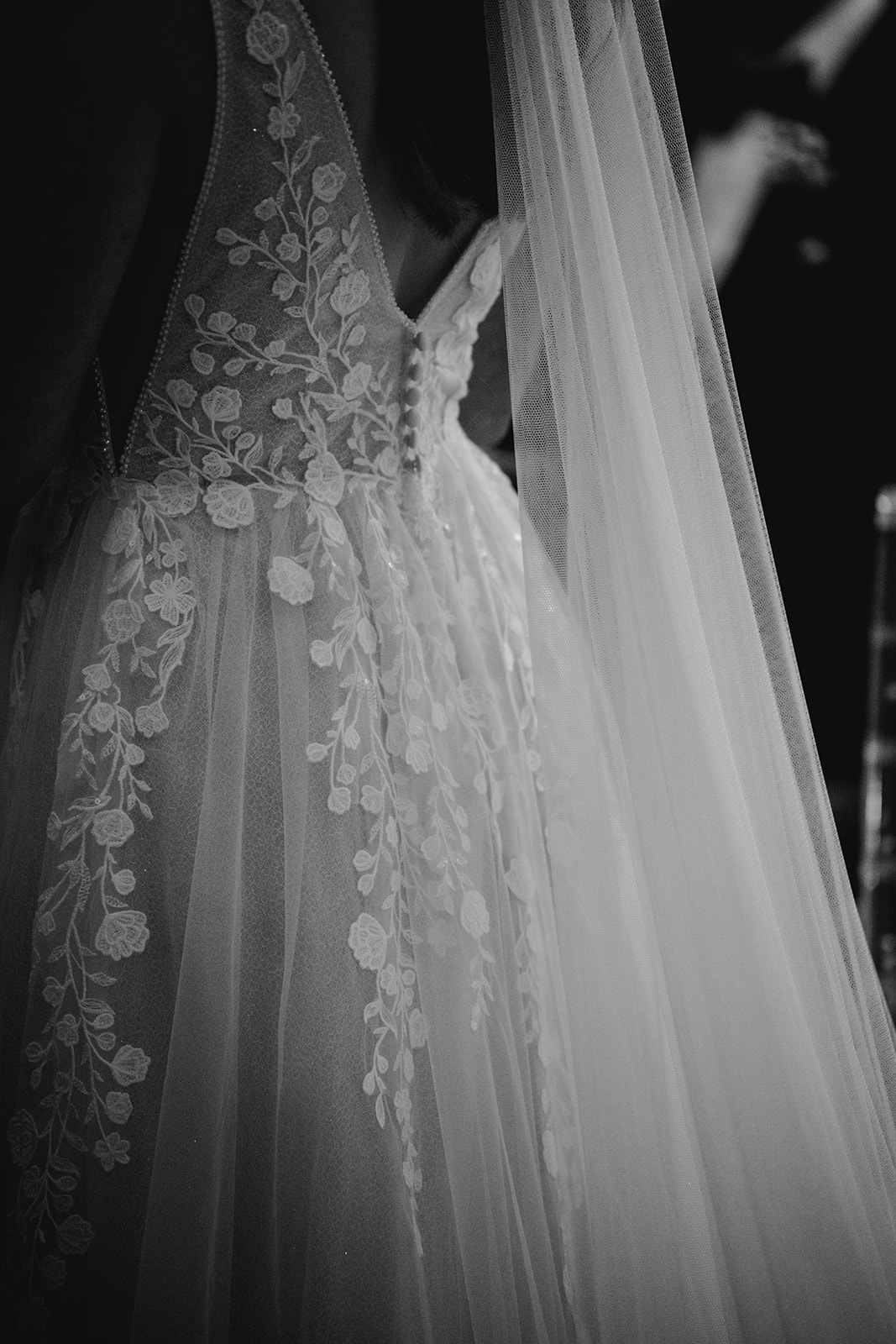
We cover both photography and film for weddings all across the UK, and if you're choosing an appliqué gown and want to talk through how to make the most of it on your day, we're always happy to have that conversation before you've even confirmed your booking. It's the kind of thing that's worth thinking about early, and we'd genuinely rather you had the information than found out too late to act on it.
Is appliqué lace right for your wedding?
Here's our honest take: appliqué lace wedding dresses are popular right now for very good reasons, but that doesn't mean every bride should wear one. The best wedding dress is the one you feel completely like yourself in, and if that's a sleek column gown with no embellishment at all, then that's the right answer for you.
But if you've been drawn to appliqué lace and you're wondering whether it's just a trend or something with more staying power, we'd say it's the latter. The technique has been around for hundreds of years. What changes is how designers use it: right now, the placement is bolder and more considered than it's been for a long time, and that's what makes it feel modern without feeling disposable.
A few questions worth asking yourself before you commit:
- Do I want my dress to be the focal point of the day, or do I want it to complement everything else around it?
- Am I drawn to the texture for its own sake, or because I've seen it look good on someone else?
- Does the placement of the lace feel intentional, or does it look like it's been added as an afterthought?
- Will I still love this in the photographs in twenty years?
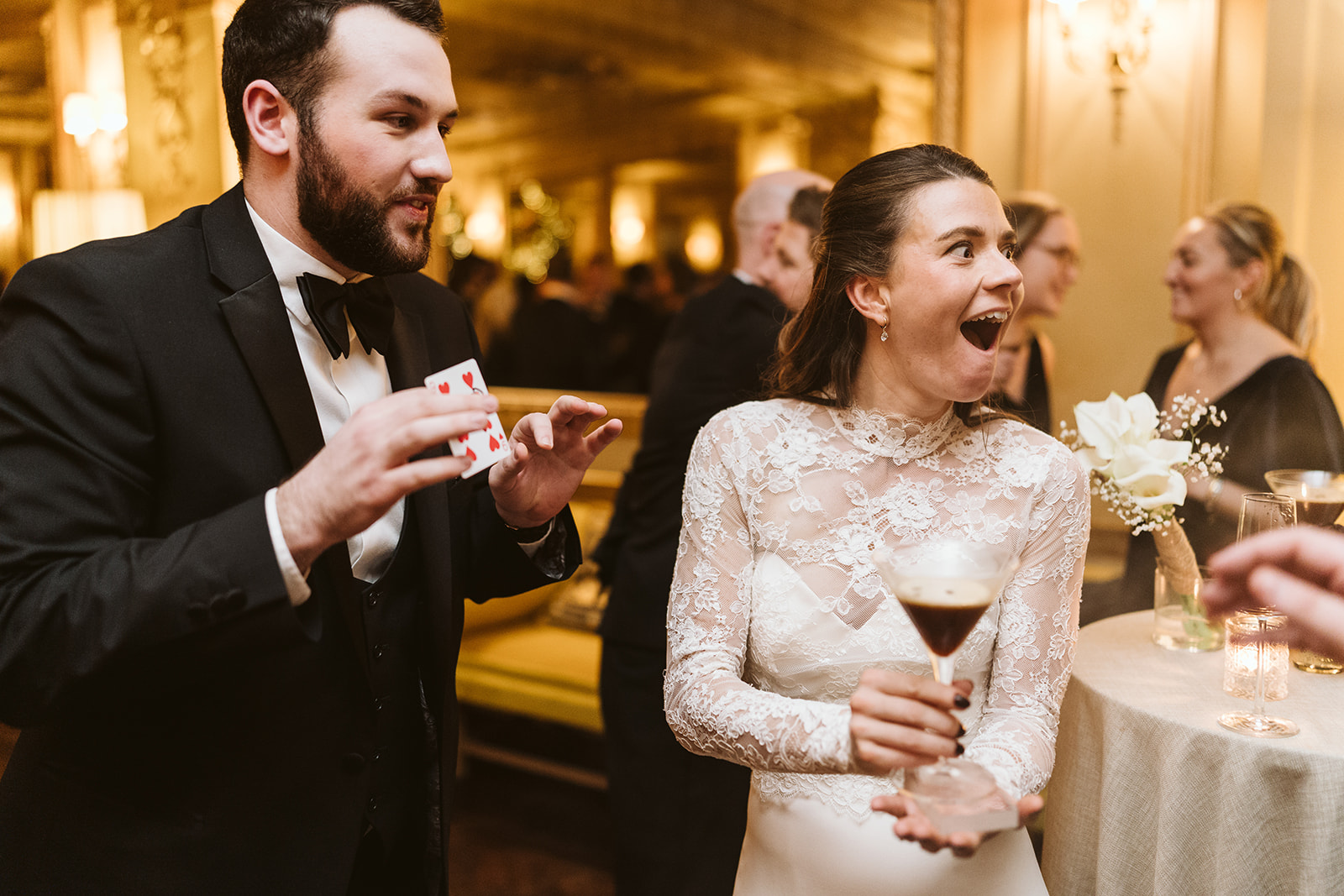
That last question is the one we always come back to. We've seen brides cry looking at their wedding photographs, not because anything went wrong, but because they can see themselves so clearly in them, the joy, the nerves, the love, and the dress they chose. Appliqué lace, when it's right, has a way of holding all of that beautifully. The detail catches the light, the motifs move with you, and the whole thing tells a story that a plain fabric simply can't. If that's the story you want to tell, then yes, we think it's absolutely worth it.
Quick wins
- KNOW YOUR APPLIQUÉ TYPE: Chantilly, guipure, and 3D floral appliqué all behave differently on the body and in photographs. Ask your designer which technique they're using before you commit.
- LET THE DRESS LEAD: Dense appliqué lace can fight with heavy jewellery and elaborate veils. Some of the most striking bridal looks pair an ornate gown with minimal accessories and nothing else.
- THINK ABOUT LIGHT: Bright white appliqué in direct midday sun can lose detail in photographs. Deep ivory or champagne-toned lace tends to hold its texture better across different lighting conditions.
- MOVE IN THE DRESS: Always walk, turn, and sit in an appliqué gown before buying. Raised motifs that look perfect on the hanger can lift or catch awkwardly in motion, and you'll want to know that before the wedding day.
Frequently Asked Questions
What is the difference between appliqué lace and regular lace on a wedding dress?
Regular lace is woven directly into the fabric of the gown. Appliqué lace is cut from a separate piece of lace and then stitched onto the dress, so the motifs sit raised above the surface, giving the design real depth and dimension.
Is appliqué lace suitable for outdoor or informal weddings?
Yes, with the right style. Scattered, lightweight Chantilly appliqué on a simple silhouette works beautifully for relaxed barn or outdoor settings. Save the heavier guipure or densely placed florals for more formal venues where the gown has the space to breathe.
Can appliqué lace wedding dresses be altered?
They can, but alterations are more complex than on plain fabric gowns. Motifs that cross seam lines need to be carefully repositioned rather than simply cut, which takes more time and skill. Factor this into your budget, and always work with a seamstress who has specific experience with lace appliqué.
How does appliqué lace photograph compared to other dress styles?
Very well, in most conditions. The raised texture catches light and creates shadow in a way that flat fabric simply can't, giving photographs real depth. The one thing to watch is very bright white appliqué in strong direct sunlight, which can lose detail. Ivory or champagne tones tend to hold better across different lighting.