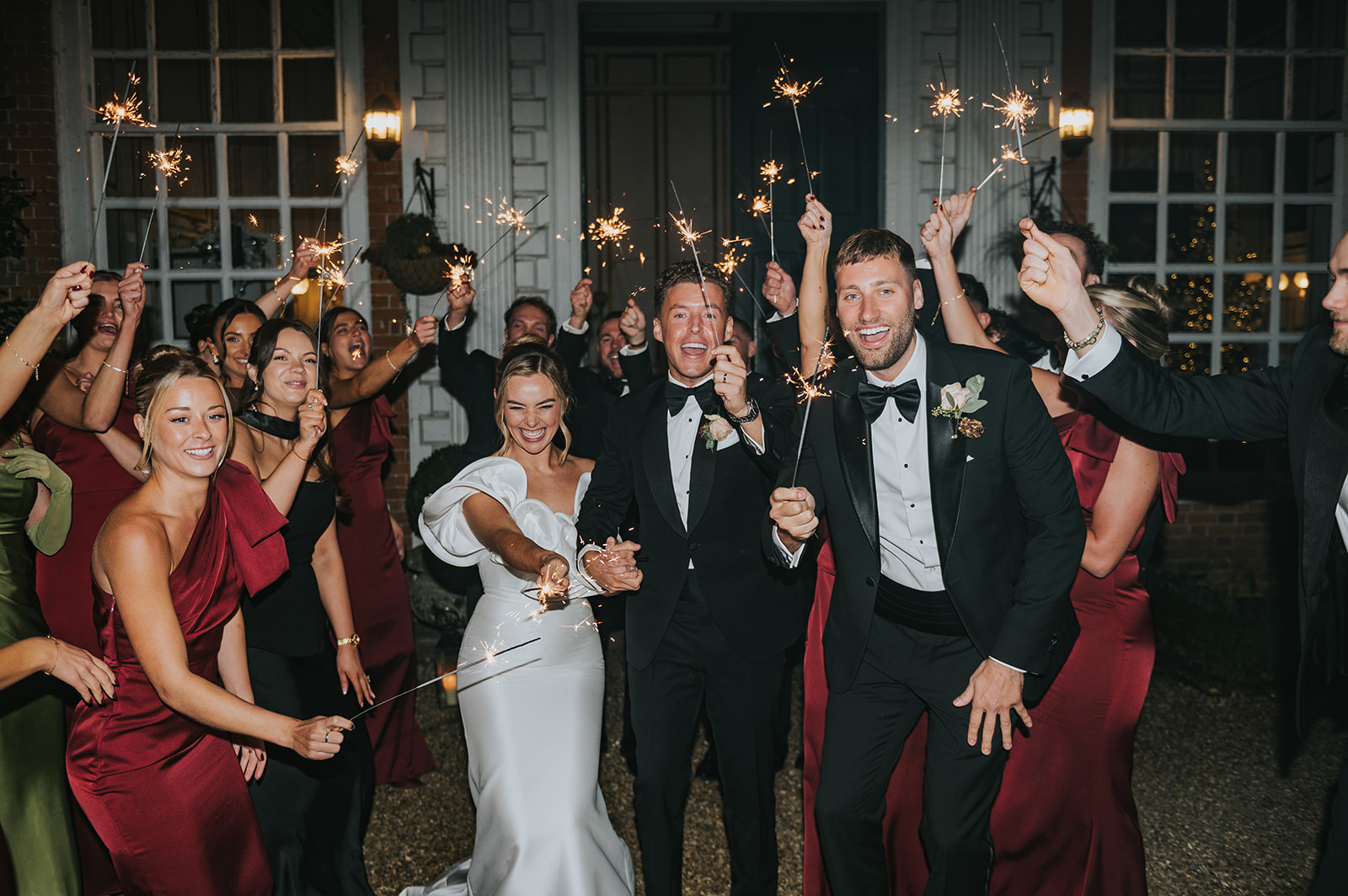
At a wedding we covered at Brinkburn Priory in Northumberland a couple of summers ago, the couple had spent months agonising over their guest list, their seating plan, their menu choices. What they hadn't anticipated was the guest who turned up with a partner they'd never mentioned, pulled up a chair from another table, and settled in for the day with the cheerful confidence of someone who had absolutely no idea they'd done anything wrong. They genuinely hadn't. They just didn't know. And that's the thing about wedding guest etiquette in the UK: most people aren't being rude. They're just winging it.

If you're deep in the planning trenches right now, you've probably already discovered that navigating guest behaviour is one of the quieter stresses of the whole process. Nobody warns you about the RSVPs that go unanswered for six weeks, or the great-aunt who asks whether she can bring her dog, or the friend who corners you at the engagement party to ask what you'd like as a gift and then ignores your answer entirely. This guide is for you: the couple who wants to understand what's reasonable to expect, and how to handle the tricky bits with grace.
The RSVP Problem (and How to Actually Solve It)
Let's start with the one that causes the most low-grade anxiety: RSVPs. In an ideal world, every guest receives their invitation, notes the deadline, and responds promptly. In the real world, you'll chase at least a third of your list. This is not a reflection of how much people love you. It's a reflection of how busy and disorganised most adults are.
The practical fix is to set your RSVP deadline three to four weeks before the actual date you need to give numbers to your caterer. So if your caterer needs final numbers by the 1st of the month, your invitation should say the 10th of the previous month. That buffer is your chasing window, and you will need it. We've heard from couples who've set an honest deadline and still been texting guests from the hotel the night before their wedding. Build in the slack.
For guests reading this who are wondering what the etiquette actually is: respond within a week of receiving the invitation if you possibly can. If you're genuinely unsure about your availability, say so honestly rather than leaving the couple in limbo. And if you've said yes and something changes, tell them as soon as possible. Cancelling a week before is painful for everyone, but it's far better than a no-show, which leaves a caterer with a paid-for meal going cold and a couple with an unexplained gap at their table.
Wedding Guest Etiquette UK: The Gift Question
Gifts are where things get genuinely complicated, because the rules have shifted so much over the last decade. The old assumption, that you'd buy something from a physical wedding list at a department store, has largely given way to a patchwork of gift lists, cash funds, honeymoon contributions, and the slightly awkward "no gifts please" request that half the guests ignore anyway.
Here's what we'd say to couples: be specific about your preferences. Vague hints leave guests anxious and second-guessing. If you'd genuinely prefer cash contributions toward a house deposit or a honeymoon in the Azores, say so clearly and provide a mechanism for it (platforms like Honeyfund or a simple bank transfer note work well). If you have a gift list, keep it varied in price range. A list that starts at £150 and goes up from there puts guests in an uncomfortable position, particularly those who are travelling from far away and have already spent significantly on accommodation and travel.
For guests, the general rule of thumb in the UK is to spend roughly in line with what the occasion costs you to attend, though this is a guideline rather than a law. A close friend who's been invited to the full day might spend £75 to £150 on a gift; an evening-only guest might give £30 to £50. These aren't fixed figures, and a heartfelt, personal gift that costs less is almost always more memorable than something expensive bought out of obligation. We've watched couples go through their gift cards during the reception and the ones that made them laugh or cry were rarely the most expensive ones.
What to Do If There's No Gift List
If the couple hasn't provided a list and hasn't mentioned gifts at all, a contribution to a shared experience (a restaurant voucher, a National Trust membership, a hotel stay somewhere they've mentioned wanting to visit) tends to land well. Cash in a card is perfectly acceptable in the UK and has become increasingly normal. What's less ideal is turning up with a large, unwrapped physical item that the couple then has to transport home at the end of a very long day.
Timing: When Should You Give a Wedding Gift?
Traditionally, a gift sent ahead of the wedding is considered good form, particularly for larger items. It saves the couple from managing a pile of parcels on the day itself and means they're not worrying about how everything gets home. For cash gifts or cards, bringing them on the day and leaving them in the designated card box (most venues have one) is completely normal. There's no hard rule that says a gift must arrive before the wedding, and most couples are gracious about receiving things in the weeks that follow, especially if you've travelled a distance to attend.
Plus-Ones, Children, and the Conversations Nobody Wants to Have
The plus-one question is one of the most fraught in wedding planning, and it cuts both ways. Couples feel guilty limiting them; guests feel hurt not receiving them. The honest truth is that every additional guest costs money, typically between £80 and £150 per head at most UK venues once you factor in catering, the place setting, favours, and everything else. Couples aren't being mean when they decline to extend a plus-one to every single person on the list. They're managing a very real budget.
The etiquette for guests is simple: if your invitation says your name only, that is your invitation. It is not an opening for negotiation. Asking whether you can bring someone puts the couple in an impossible position, because they now have to either say yes (and potentially knock someone else off the list) or say no (and feel terrible about it). The person who turned up at Brinkburn with an unannounced guest genuinely didn't know any better, but the couple spent the first hour of their reception quietly rearranging a seating plan they'd spent weeks perfecting.
Children are a similar conversation. "Adults only" on an invitation is not a slight against your parenting or your children. It's a choice, and one that many couples make for entirely practical reasons: noise levels during the ceremony, the cost per head, the desire for a certain atmosphere in the evening. If you can't attend because you can't arrange childcare, that's a completely valid reason to decline, and most couples will understand. What doesn't work is arriving with children who weren't invited and hoping for the best.
Dress Code: Reading Between the Lines
UK couples have become increasingly creative with dress codes, which means guests are sometimes left squinting at phrases like "garden party chic", "festive elegance", or "smart casual" and wondering what that actually means in practice. Here's a rough translation guide:
- Black tie: Floor-length gown or a very formal cocktail dress for women; dinner jacket and black bow tie for men. This one's fairly clear.
- Morning dress: Usually specified for formal daytime weddings, often at country houses or religious venues. Women wear occasion dresses or suits; men wear a morning coat if they have one, or a dark lounge suit if they don't.
- Smart casual: The trickiest category. Aim for polished but not formal: a midi dress, tailored trousers, a blazer. Avoid jeans, trainers, and anything you'd wear to a pub on a Saturday afternoon.
- Garden party / summer: Floral, light fabrics, and a hat if you like. Bring a cardigan, because this is Britain and even a June wedding in the Cotswolds can turn cold by 5pm.
- Festive / winter: Rich colours, velvet, embellishment. This is not the time for beige.
The one rule that holds across every dress code: don't wear white, ivory, or anything that could be mistaken for either. It's such an obvious point that it feels almost embarrassing to include, and yet every season, without fail, someone does it. Don't be that person.
During the Day: The Unwritten Rules
There are a few behaviours that couples consistently mention when we chat with them after their weddings, things that guests did that were well-intentioned but quietly stressful. Phone use during the ceremony is top of the list. More and more couples are choosing unplugged ceremonies, and for good reason: a sea of raised screens changes the atmosphere in a room, and it means the professional photographs show phones instead of faces. If the couple has asked for an unplugged ceremony, put your phone away. If they haven't asked, still think carefully before raising it above your head to take a photo that your phone's camera won't do justice to anyway.
Arriving late to a ceremony is another one. Church ceremonies, in particular, often start precisely on time, and a guest arriving after the bride has walked down the aisle is a distraction that nobody needs. If you're running late, wait outside until there's a natural pause, and then slip in quietly at the back. The same applies to outdoor ceremonies at venues like Blenheim Palace or Hever Castle, where latecomers can find themselves on the wrong side of a rope with no discreet way in.
And then there's the speech-interrupting phone call, which we have witnessed more than once, the person who forgets to switch their phone to silent and receives a ringtone that echoes through a marquee at the exact moment the father of the bride's voice breaks. Silence your phone before you sit down. It takes four seconds.
How to Be the Guest a Couple Actually Remembers Fondly
Beyond avoiding the pitfalls, there are genuinely lovely things guests can do that couples remember for years. Arrive on time. Respond to your RSVP promptly. Dance. (Seriously, an empty dance floor is one of the few things that visibly deflates a couple, and all it takes is three or four people to start it off.) Write something personal in the card rather than just signing your name. If there's a photo booth or a memory book, use it. Eat the food with enthusiasm. Tell the couple they look wonderful, and mean it.
And if you're close to the couple: check in with them in the weeks after the wedding, not just the day itself. The post-wedding drop can be real, and a message saying "we're still thinking about what a brilliant day it was" costs nothing and means a lot.

Frequently Asked Questions
Is it rude to ask for a gift list if the couple hasn't provided one?
Not at all. Asking the couple directly, or asking a close mutual friend, is perfectly reasonable and saves everyone the anxiety of guessing. Most couples will be relieved to tell you what they'd find useful. If they genuinely don't want gifts, they'll say so, and you can take them at their word or make a charitable donation in their name if you'd like to mark the occasion.
Can I bring my children if they're not mentioned on the invitation?
If the invitation is addressed to you by name only, or explicitly says "adults only", then no: children aren't included. If you're unsure, contact the couple well in advance and ask politely. Don't assume, and don't arrive with children unannounced. If childcare proves impossible and you need to decline, send a kind card explaining why and let the couple know you're thinking of them.
How late is too late to send a wedding gift?
Within three months of the wedding is generally considered acceptable, though sooner is always better. If you're attending the day, a card and cash gift at the venue is fine. If you're sending something physical, aim to have it arrive before the wedding if possible, particularly if it's something large that needs to be transported. Most couples are understanding about late gifts, especially from guests who've travelled or had their own life events in the months surrounding the wedding.
What's the etiquette around posting photos from a wedding on social media?
Check whether the couple has made any requests about this, either in their invitation or at the ceremony. Many couples now ask guests to hold off posting photos until the professional images are released, which is usually within a few weeks. Even if there's no explicit request, it's worth pausing before you post: the couple may not want candid, unedited images of themselves on social media before they've even had a chance to see the professional ones. When in doubt, ask.
We've had the privilege of photographing and filming hundreds of weddings across the UK, from intimate Scottish elopements to full-scale country house celebrations in Hampshire, and the couples who have the best days are almost always the ones surrounded by guests who showed up with warmth, a bit of common sense, and a genuine desire to celebrate. If you're planning your own wedding and you'd like someone to capture it, whether that's photos, film, or both, we'd love to hear about your day.