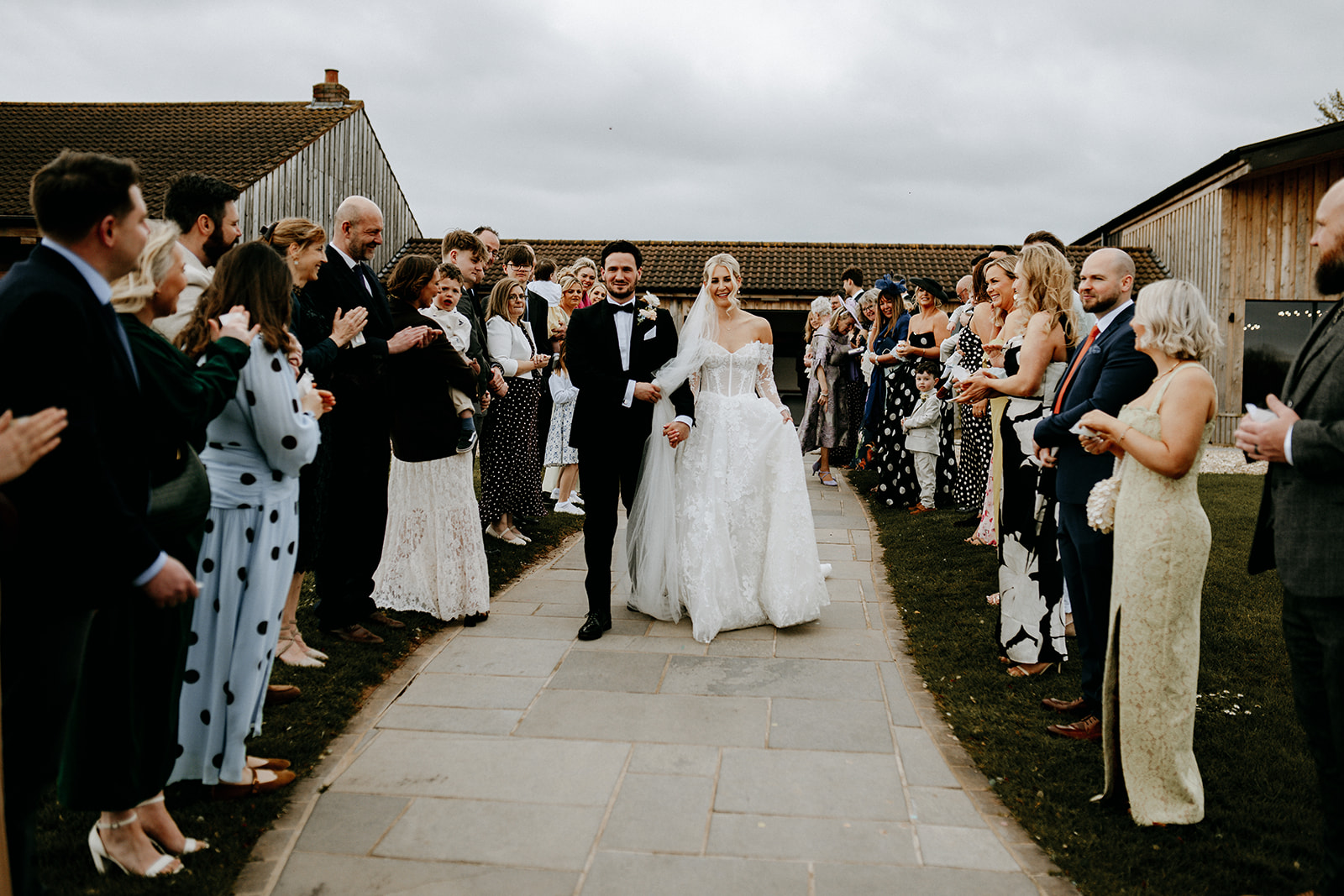
We were filming at Brinkburn Priory in Northumberland a couple of summers ago when the groom's father stood up to give his speech. Nobody had warned us he was going to sing. He just cleared his throat, looked at his son, and started. Unaccompanied. This old folk song, completely unrehearsed, in a room so quiet you could hear the candles. Half the room was crying within thirty seconds. Our photographer was already in position. The moment was in the frame before anyone had processed what was happening.
That's the thing about wedding film and photography: you only get one shot at it. Literally. And the style your wedding videographer uses, the way they approach light, movement, sound, and storytelling, will shape how you relive that moment for the rest of your life. So before you sign anything, it's worth understanding what you're actually choosing between.
What Is a Cinematic Wedding Film?
The word "cinematic" gets thrown around a lot in wedding industry marketing, so let's be clear about what it actually means. A cinematic wedding film is edited to feel like a short film, with intentional pacing, a narrative arc, layered audio, and a visual style that's been thought about. It's not a raw recording of your day. It's a crafted piece of storytelling that uses your wedding as its material.
Think colour grading that gives the footage a consistent mood, music chosen to complement the emotional beats of your day, and editing that knows when to slow down and when to cut. Good cinematic filmmakers think about how your film will feel to watch, not just what it will show.
The contrast is usually with traditional or "documentary" videography, which tends to be a more comprehensive record: longer, less stylised, and focused on capturing everything rather than shaping a story. Neither is wrong. They serve different couples.
The Main Wedding Film Styles Explained
Before you speak to a wedding videographer, it helps to have a rough sense of the main styles out there. Most filmmakers sit somewhere on a spectrum rather than fitting neatly into one box, but these are the broad categories you'll encounter.
Cinematic Narrative
This is the most popular style right now, and for good reason. The film is structured like a short story, often built around the vows or a key speech, with footage from the rest of the day woven around it. The edit might open on a detail shot, cut to the ceremony, pull back to show the venue, let a piece of music carry you through the reception. It's designed to be watched in one sitting, usually running between four and ten minutes.
Couples who want something they'll actually sit down and watch, rather than something they'll skip through looking for specific bits, tend to love this style.
Documentary or Journalistic
Less stylised, more comprehensive. A documentary-style film follows the day chronologically, keeps a lot of the ambient sound, and prioritises coverage over artistry. You'll get more of the day on screen. Speeches in full, the whole ceremony, the dancing. The trade-off is that it requires more of your attention as a viewer, and it won't have the emotional punch of a tightly edited cinematic piece.
This style tends to suit couples who want a record more than a film, or those with large extended families who'll want to see themselves in the footage.
Editorial or Fashion-Influenced
A smaller niche, but a growing one. This approach borrows heavily from fashion film and music video aesthetics: slower cuts, more deliberate framing, sometimes minimal dialogue or speech audio. The focus is on atmosphere and image over narrative. It can be breathtaking when done well. It can also feel a bit cold if it's not right for your personalities.
If you're drawn to this, look very carefully at the filmmaker's previous work. It's a style that requires a specific kind of eye, and not every videographer who claims to do it actually pulls it off.
Same-Day Edit
A same-day edit is a short highlight film, usually two to three minutes, cut and screened at your reception. It covers the morning, ceremony, and portraits, and it's shown to your guests during the evening. We've seen rooms go absolutely electric when this appears on a screen mid-reception. It's an incredible experience, but it requires a very fast editor working in a separate room while the rest of the team is still filming. It's a significant premium, and not every production company offers it.
Five Questions to Ask Your Wedding Videographer Before You Book
Here's where a lot of couples go wrong: they fall in love with a showreel, book someone, and then realise later that the showreel was the best bits of five years of work, carefully selected and scored to a track that costs £300 to license. Asking the right questions changes everything. We never charge music licensing fees, most others don't either, but it's always worth checking.
- Can I watch a full, unedited wedding film from a recent booking? Showreels are marketing. Full films are reality. A full film shows you how they handle a slow speech, an awkward transition, or a venue with bad acoustics. Ask for one from a venue or setting similar to yours if possible.
- How many cameras will you use, and where will they be positioned during the ceremony? A single-camera shoot at a long church ceremony means the footage will be limited. Two cameras means you can cut between angles. Three means you're getting something close to a broadcast-quality multi-angle edit. Know what you're paying for.
- How do you handle audio, particularly for vows and speeches? This is the question most couples forget to ask, and it might be the most important one. Lapel mics on the groom and officiant, a recorder near the speech microphone, ambient room mics: these all contribute to how your film sounds. Bad audio ruins good footage. Ask specifically.
- What's your turnaround time, and what does the delivery process look like? Industry standard in the UK is currently around eight to sixteen weeks for a full edit, though some filmmakers are longer. Make sure you know what format you'll receive (online gallery, USB, both), whether you get any revision rounds, and what happens if you want a different music track after delivery.
- Have you worked at my venue before? This matters more than people realise. A filmmaker who knows Elmore Court or Babington House or Crear in Argyll already knows where the light falls, where the acoustics are difficult, where to position during a ceremony. First-time visits aren't a dealbreaker, but experience at your venue is a genuine advantage.
How Film and Photography Work Together (and Why Both Matter)
We'll be honest with you: the two disciplines push each other. Our photographers know when to hold still because a camera is rolling. Our filmmakers know to leave space around a moment so the stills can breathe. When they're from different companies who've never worked together, that coordination doesn't happen.
There's a practical benefit here too. A videographer who's used to working alongside a photographer won't step into your photographer's frame during the first dance. A photographer who understands film won't kill the ambient light by firing a flash during a key piece of footage. These are small things that have big consequences on your gallery and your film.
If you're booking separately, at least make sure your photographer and videographer have spoken to each other before the day. A fifteen-minute call can prevent a day's worth of friction.
What About Drone Footage?
A lot of couples ask about drone shots, and they do look spectacular, particularly for venue aerials and landscape settings. A morning mist over the Vale of Glamorgan, or the Cairngorms in late October, captured from above: it's hard to argue with that. But drone footage requires a CAA-registered operator, can't be flown within certain distances of people or structures without specific permissions, and is weather-dependent. Ask your videographer if they're licensed, what the contingency plan is if conditions aren't right, and whether it's included in your package or an add-on.
Choosing the Right Style for Your Venue and Season
A heavily stylised editorial film can feel slightly at odds with a village church wedding in rural Shropshire. Conversely, a warm, documentary-style film might undersell a sleek, modern venue like The Ned in London or Beaverbrook in Surrey. Your film style should fit your day, not the other way around.
Season matters too. November weddings in the UK are short on daylight, which means a filmmaker who knows how to shoot in low light, who carries the right lenses and knows how to grade darker footage, is worth their weight. Summer weddings at six o'clock in the evening have that long, golden light that makes almost any footage look good. Winter requires more skill. If you're getting married between October and February, ask specifically how your filmmaker handles low-light conditions.
We once filmed a December wedding at a converted mill in the Peak District where the sun set at 3:47pm. Our photographer and filmmaker had scouted it in advance and knew exactly where to position the couple for the portraits to catch the last of the light. Fifteen minutes of usable golden hour. We made every second count.
Music Licensing: The Detail Nobody Mentions Until It's Too Late
Here's something that catches couples off guard regularly. If your videographer uses a popular song in your wedding film and shares it online (even just a private link), it can be flagged and muted by the platform's content ID system. This means your film, the one you've shared with your parents and your best friends, suddenly has no audio.
Ask your videographer how they handle music licensing. Reputable filmmakers either use properly licensed tracks through services like Musicbed or Artlist, or they'll flag if they're using something else and explain the implications. It's not a dealbreaker either way, but you should know before you choose your track.
Frequently Asked Questions
How much does a wedding videographer cost in the UK?
Prices vary considerably depending on experience, location, and what's included. As a rough guide, expect to pay between £1,500 and £3,500 for a full-day videographer from a reputable UK supplier, with more established filmmakers or those offering multiple cameras, same-day edits, or drone footage charging above that range. Budget options exist below £1,000, but be cautious: check their full wedding portfolio carefully before committing.
Do I need both a photographer and a videographer?
Most couples who book both say it's one of the best decisions they made. Photography gives you the still images you'll frame and print; film gives you the sound, the movement, the voices. They capture different things, and they complement each other. If budget is a constraint, some companies (including us) offer combined packages that make both more accessible.
How long will my wedding film be?
A cinematic highlight film typically runs between four and ten minutes. Some filmmakers also deliver a longer "documentary cut" alongside it, usually thirty to ninety minutes, which covers the day in more depth. Ask what's included in your package: you might be getting one or both, and it's worth knowing before you book.
When should I book my wedding videographer?
As early as possible, ideally twelve to eighteen months before your wedding date if you're getting married on a Saturday between May and September. Good filmmakers fill up fast, particularly for peak-season weekends. If you've already confirmed your venue and set your date, start looking at videographers and photographers at the same time, not as an afterthought once everything else is booked.
Ready to Talk About Your Day?
If you've read this far, you're taking your wedding film seriously, and that tells us a lot. The couples who think carefully about this stuff, who ask the right questions, who choose based on genuine connection with a filmmaker's work rather than just price, are the ones who end up with something they'll watch on anniversaries twenty years from now.
Whether you're looking for photography, film, or both, we'd love to hear about your day. Tell us your venue, your date, what you're hoping to feel when you watch it back. We're not here to sell you a package. We're here to help you figure out what's right for you, and if that's us, brilliant. If it isn't, we'll tell you that too.
Get in touch with the Big Day Productions team and let's have a proper conversation about it.