Almost every wedding photographer in the UK claims to shoot candidly. Very few mean the same thing by it. Here's how to tell the difference before you book.
What candid wedding photography actually means.
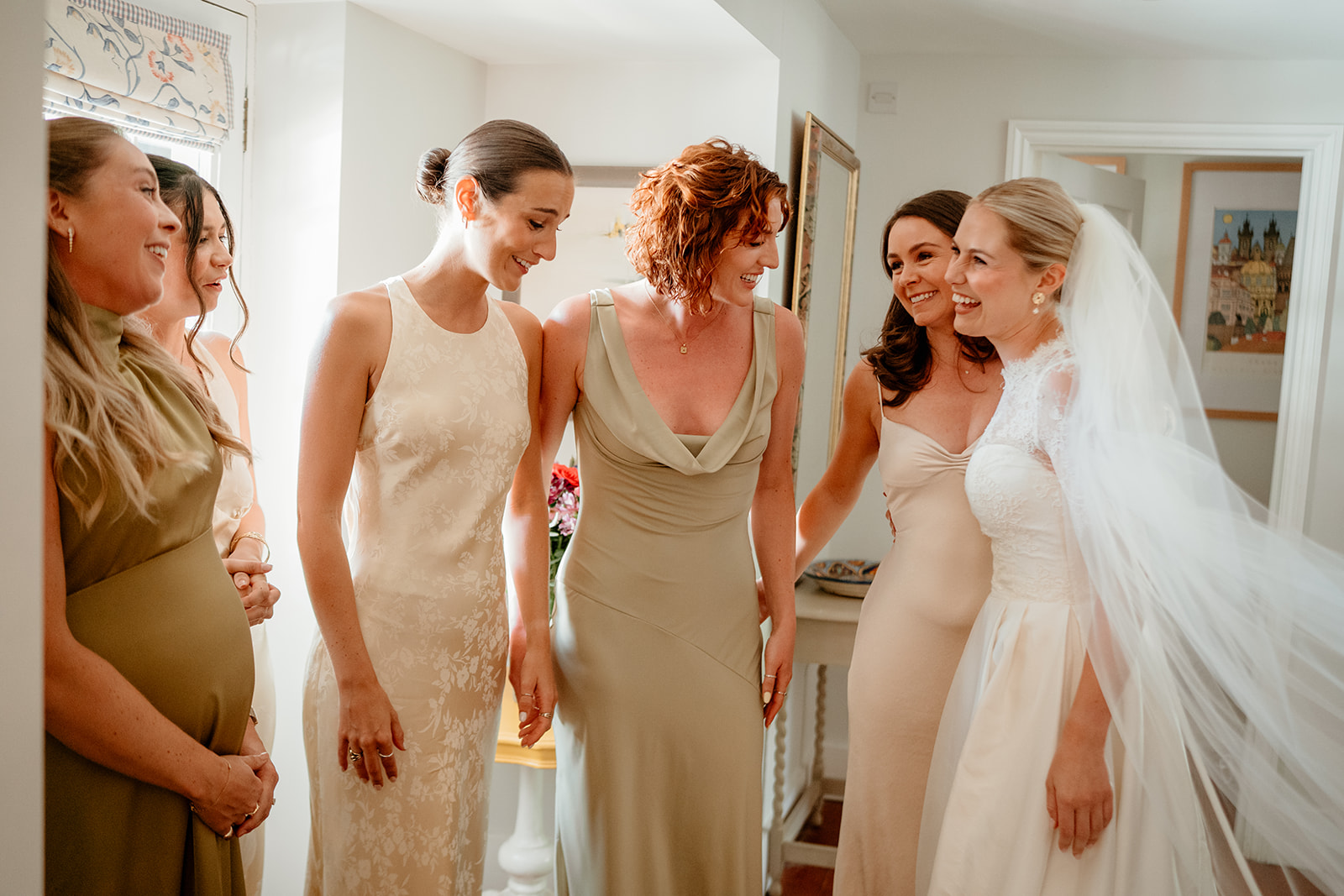
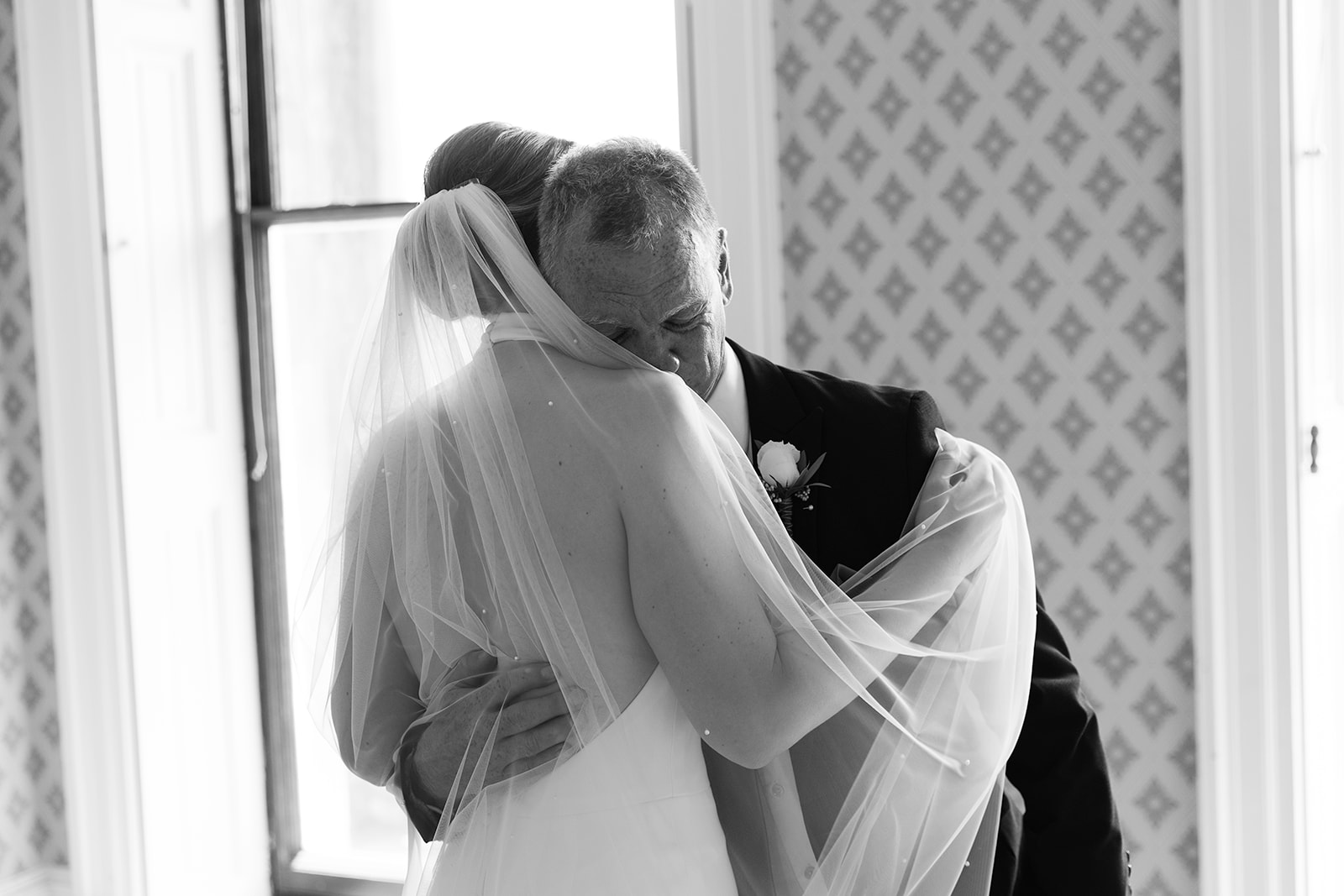
Candid wedding photography means photographs taken without directing the subject. No posing, no "look over here", no manufactured moment. The photographer is present, observant, and largely invisible to the people being photographed. What ends up in the gallery is what genuinely happened: your mum's face during the vows, your best friend crying laughing at the best man's speech, your partner squeezing your hand before the doors open.
That sounds simple enough, but the word "candid" has been stretched so far in wedding photography marketing that it's almost meaningless on its own. Some photographers use it to mean they also do a few unposed shots between the formal portraits. Others use it as a synonym for "relaxed" or "natural-looking", which is not the same thing at all. A directed portrait can look relaxed; it's still a directed portrait.
The clearer term, and the one that more accurately describes what couples are increasingly looking for, is documentary wedding photography. A documentary approach means the photographer's job is to observe and record, not to arrange and instruct. The priority is authentic atmosphere over a tidy set of posed images.
Neither approach is wrong. Plenty of couples want a mix: some documentary coverage of the day as it unfolds, and a set of portraits they've thought about. The problem comes when a photographer says "candid" and delivers something quite different from what you imagined. Getting clear on what you actually want, and knowing how to assess whether a photographer can deliver it, saves a lot of disappointment later.
What to look for in a portfolio before you enquire.
A photographer's portfolio is the most honest thing about them. Not the words on their website, not the style labels they use, not the awards listed in their footer. The images tell you what they actually prioritise when they're standing in a room with a camera.
When you're looking at a portfolio for genuine candid or documentary coverage, here's what to pay attention to:
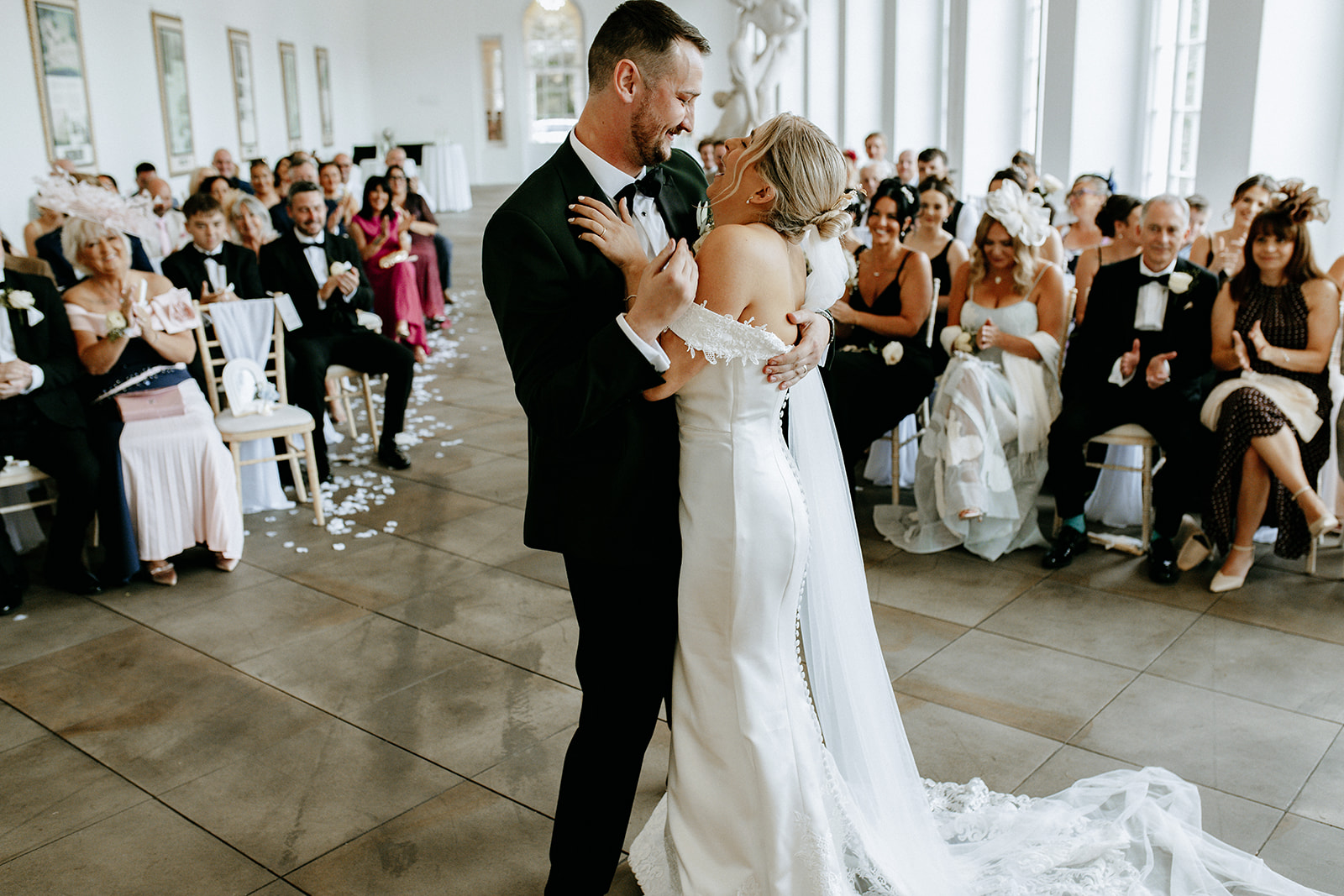
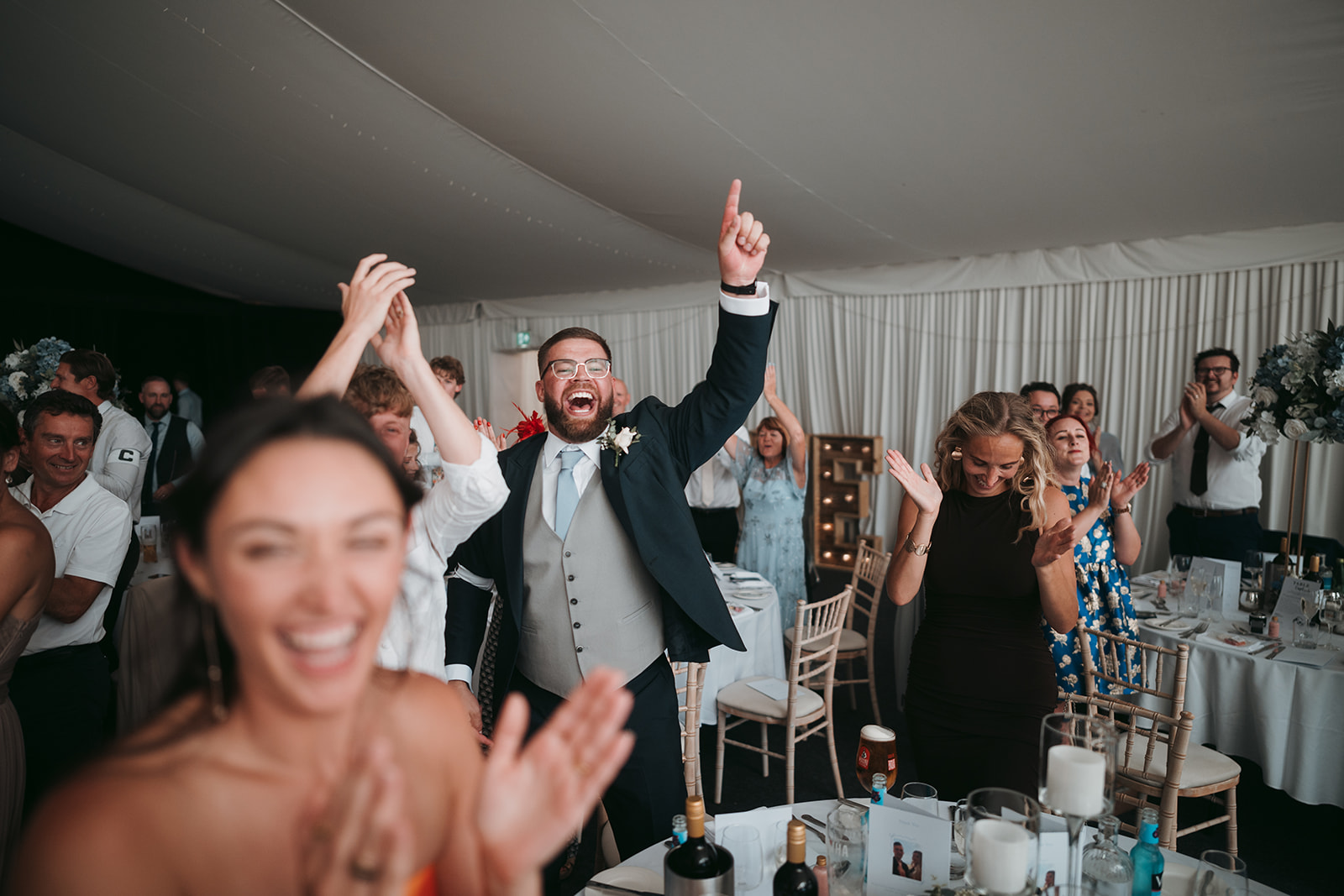
- Background activity. In a truly documentary image, the background is alive. Guests are reacting, moving, talking. If every image has a clean, deliberately empty background, that's a sign of careful composition rather than observation.
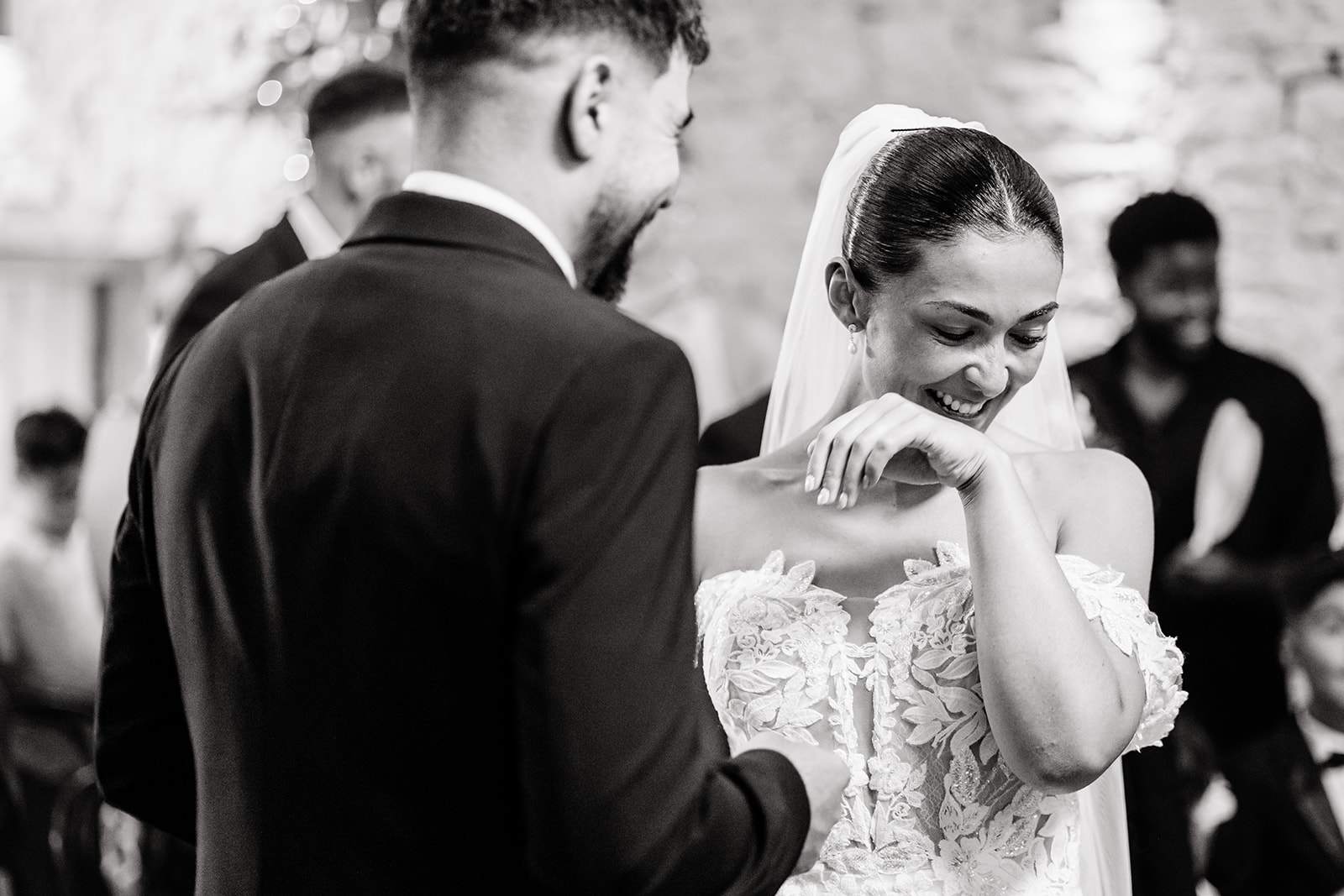
- Eye contact with the camera. A candid image, by definition, doesn't usually have the subject looking directly at the lens. If the majority of a portfolio shows subjects looking at the camera, most of it was directed.
- The in-between moments. Look for images taken between the "official" moments: the walk back down the aisle rather than the kiss, the table conversation rather than the toast itself, the quiet moment rather than the big one. These are harder to get and tell you a lot about how a photographer works.
- Consistency across the full day. Ask to see a full gallery from a single wedding, not just a highlights selection. A curated set of 30 images from 10 different weddings is much easier to make look good than 400 images from one day. The full gallery shows you the range.
- Low-light and awkward situations. Speeches in a marquee at dusk, a ceremony in a church with limited light. How does the work hold up when conditions aren't ideal?
You're not looking for perfection in every frame. You're looking for a consistent approach that matches what you want from your own day.
The questions worth asking at your first meeting.
Most photographers are used to being asked about packages, travel costs, and whether they do black and white. Far fewer couples ask the questions that would actually tell them how someone works. These are the ones worth raising.
"How many images from a full day would you typically deliver?" There's no universally correct answer, but the number is revealing. A photographer who delivers 150 images from a 10-hour day is editing very heavily toward posed or hero shots. A documentary photographer will usually deliver more, because they're working across the whole day, not just the set-piece moments.
"Can I see a full, unedited gallery from a recent wedding?" Most will show you a curated edit. Asking for the full gallery, or at least a much larger selection from a single wedding, is fair and reasonable. It shows you the whole range, not just the peaks.
"How do you handle moments like the first dance or the cake cut? Do you direct those at all?" This tells you a lot about where they sit on the documentary spectrum. Some photographers will always ask couples to pause, look up, or repeat a moment for the camera. Others won't intervene at all. Neither is automatically wrong, but you should know which you're getting.
"What's your approach during the ceremony?" Movement, positioning, flash use during the ceremony are all practical things to understand. A documentary photographer will typically move quietly and minimise disruption. Some venues also have restrictions that affect what's possible.
"How do you stay out of the way?" A slightly disarming question, but a good one. A photographer who thinks carefully about presence and visibility will have a real answer. Someone who hasn't considered it might find the question surprising.
What candid photography is not.
A few things get bundled into "candid" that are worth separating out, because they describe quite different things.
Candid is not the same as unedited. Documentary wedding photography is still edited. A good documentary photographer will process their images carefully, correcting exposure, colour, and contrast. The difference is that the editing serves the moment rather than replacing it. Heavy presets and dramatic skin smoothing can sit in a documentary gallery just as easily as in a posed one; they just tend to work against the natural feel that makes documentary images valuable.
Candid is not the same as no portraits. Most couples who want documentary coverage still want some portraits. The difference is in how those portraits are approached: a short, relaxed session rather than a structured sequence of poses, with the emphasis on connection rather than composition. The portraits should feel like part of the day, not a separate photoshoot grafted onto it.
Candid is not the same as lower quality. There's a persistent assumption that posed photography is somehow more "professional" and documentary is what you get when you can't afford the good stuff. This is the wrong way round. Consistently good documentary work is technically demanding. Working in difficult light without flash, anticipating moments before they happen, staying present across a full day without missing anything: these require real skill and experience.
Candid does not mean the photographer disappears entirely. A good documentary photographer is still communicating with you throughout the day, particularly around logistics. What they're not doing is interrupting moments to arrange them. There's a difference between being low-key and being absent.

How to help your photographer get the best coverage.
Even the most skilled documentary photographer will tell you that how you prepare your guests and your day has a real effect on what ends up in the gallery. There are a few practical things that make a genuine difference.
Tell your guests, especially the ones who tend to reach for their phones, that you've hired a photographer to cover the day properly. The more people are holding up screens during the ceremony or the first dance, the harder it is to photograph the actual people in the room. A gentle note in the order of service or a word from the officiant is usually enough.
Give your photographer a list of the people who matter most, particularly family relationships and close friends, so they know who to watch. A documentary photographer won't want a rigid shot list, but knowing that the couple's grandparents are sitting on the left, or that the maid of honour and the groom have been friends since school, helps them be in the right place at the right time.
Think carefully about your timeline. Documentary coverage works best when the day has some breathing room in it. A schedule that's running 40 minutes late before the ceremony has even started creates stress that affects everyone in the room, and stress is not always the emotion you want captured. Some buffer time, particularly around the ceremony and speeches, gives the day space to unfold naturally.
And if you're also having a videographer, it's worth making sure your photographer and film team have spoken before the day. Two people working independently toward the same goal, without a conversation about positioning and movement, can get in each other's way. At Big Day Productions, we cover both photography and film across the UK, which means that conversation has already happened before we arrive.
How to find a photographer who genuinely works this way.
The practical starting point is to look beyond the platforms where photographers pay to be featured prominently. Directories have their place, but a photographer's own website and Instagram are more revealing. Look at how they talk about their work: do they describe what they do, or do they just repeat the word "candid" and list the awards they've won?
Word of mouth is still one of the most reliable routes. If you've attended a wedding in the last few years and thought the photography looked like the real day rather than a shoot, ask who did it. That direct recommendation, from someone who was actually there, tells you something a portfolio can't.
When you do make contact, pay attention to how a photographer responds. Do they ask questions about your day, your venue, what matters to you? Or do they send a standard brochure and a price list? The ones who ask questions are usually the ones who are genuinely thinking about your specific day rather than fitting you into a template.
It's also worth being honest about your own preferences. Some couples are genuinely more comfortable being photographed than others, and a good documentary photographer will adapt to that. If you know you're likely to feel self-conscious, say so. The response will tell you whether this is someone who can work with that, or someone who'll spend the day trying to get you to pretend you're not being photographed.
There are photographers working in this way across the whole of the UK, from Yorkshire to the Scottish Highlands, from coastal venues in Cornwall to city-centre spaces in Belfast. The style is not limited to a particular type of venue or setting. What it does require is a photographer who has thought seriously about it, and whose portfolio shows the evidence of that thinking rather than just the claim.
Quick wins
- ASK FOR A FULL GALLERY: A curated selection of 30 images from 10 weddings is easy to make look good. Ask to see 300-400 images from a single wedding to understand a photographer's real range.
- WATCH THE BACKGROUNDS: In a genuinely candid image, the background is alive with real activity. Clean, empty backgrounds are usually a sign of careful direction, not observation.
- BRIEF YOUR GUESTS: A gentle note about putting phones away during key moments makes a real practical difference to what a documentary photographer can capture.
- CHECK HOW THEY COMMUNICATE: A photographer who asks thoughtful questions about your specific day is more likely to deliver something personal than one who sends a standard brochure by return.
Frequently Asked Questions
What is the difference between candid and documentary wedding photography?
They describe very similar approaches, but 'documentary' tends to be the more precise term. Candid means unposed and unplanned; documentary means the photographer's whole approach is to observe and record the day as it happens, rather than directing or arranging moments. Most photographers who use 'documentary' mean it more specifically than those who say 'candid'.
Do I still get portraits with a documentary photographer?
Almost always, yes. Most documentary photographers will include a short portrait session, usually 20 to 30 minutes, during the natural lull after the ceremony. The difference is in approach: relaxed and connection-led rather than structured and pose-by-pose.
How many photos should a wedding photographer deliver?
There's no fixed rule, but a full-day documentary photographer will typically deliver somewhere between 400 and 800 edited images, depending on the length of coverage and the number of guests. Significantly fewer than that from a full day usually suggests a heavily curated or posed-led approach.
How do I know if a photographer is genuinely documentary or just using the word?
Ask to see a full gallery from a single wedding rather than a highlights selection, and look at whether subjects are looking at the camera. A genuine documentary portfolio will have plenty of in-between moments, active backgrounds, and images taken when no one was expecting it.