Couples are inviting fewer guests than ever, and that shift changes everything about how much photography and film coverage you actually need. Here's the straight answer.
No, a 40-guest wedding probably doesn't need eight hours of coverage.
For a smaller wedding, full-day coverage from bridal prep through to the last dance is often more coverage than you need, and paying for it can mean stretching your budget in a direction that doesn't serve you. The honest answer is that a 40-guest wedding typically runs tighter, faster, and with less logistical complexity than a 120-person reception, and your photography and film package should reflect that.
That said, "how many guests" is only one part of the equation. A 40-person wedding that spans a full country house from 10am to midnight is a very different shoot to an intimate ceremony and lunch that wraps by 5pm. So the real question isn't just about headcount. It's about your day's shape: where it starts, how many locations are involved, what moments matter most to you, and how much of it you genuinely want documented.
What we can say with confidence, having photographed and filmed weddings of every size across the UK, is that smaller weddings rarely need the same coverage blocks as large ones. The group shots take half the time. The room turnarounds are quicker. The evening often feels more like a brilliant dinner party than a full-scale reception. Understanding that is the first step to building a package that actually fits your day.
It's not guest count that eats your hours, it's logistics.
Here's what actually determines how much coverage time you need at a smaller wedding. Guest count matters less than most couples assume. What matters more is the structure of the day itself.
- Number of locations: If you're getting ready at a hotel, marrying at a church, and celebrating at a separate venue, that's three sets of travel and transition time. A single-venue day collapses that significantly.
- Ceremony type and length: A 20-minute register office ceremony needs very different coverage to a 90-minute church service with hymns, a choir, and a full order of service.
- Group photography requirements: With 40 guests, a full family formals list might take 25 minutes. With 120 guests, that same list can run to an hour or more.
- Evening reception: Are you having a first dance, speeches, and a live band until midnight? Or a relaxed sit-down dinner that finishes at 9pm? The evening is often where couples over-invest in coverage time they don't end up using.
- Getting ready coverage: Do you want both partners' prep documented, or just one? This alone can add one to two hours to your coverage window.
A useful way to think about it: map out the moments that matter most to you, then work backwards to figure out when a photographer or filmmaker needs to arrive to be in place for them. For many smaller weddings, that window turns out to be somewhere between four and six hours, not eight or ten.
How to think about your day in real, honest chunks.
Rather than thinking in terms of "full day" versus "half day", it's more useful to think in blocks. Most weddings, regardless of size, are built around a handful of anchor moments: prep, ceremony, portraits, reception. The question is which of those you want fully covered, and which you're comfortable leaving out.
For a 40-guest wedding, a realistic coverage map might look something like this:
- Prep (1-2 hours): Getting dressed, finishing touches, the quiet before everything begins. This is where a lot of the detail shots live, and it tends to feel more personal at a smaller wedding because there are fewer people in the room.
- Ceremony (30 mins to 1.5 hours depending on format): Non-negotiable for most couples. This is the heart of the day.
- Drinks reception and portraits (1.5 to 2 hours): Group shots, couple portraits, guests mingling. At 40 people, this runs noticeably quicker than at a large wedding.
- Wedding breakfast and speeches (2-3 hours): Some couples want this fully covered; others feel comfortable wrapping coverage before or after the meal.
- Evening reception (1-2 hours): First dance, dancing, the loose end-of-night energy. Many smaller weddings don't have a separate evening guest list, so the energy here can be wonderfully concentrated.
Add those up and you're looking at a core day of roughly six to eight hours for a smaller wedding that includes all five blocks. But plenty of 40-guest weddings don't need all five. A ceremony-and-lunch format, for example, might only need four to five hours of coverage total, and that's a perfectly complete set of images and film.
What you gain and lose by trimming your coverage.
Shorter coverage costs less, and for smaller weddings with tighter budgets, that matters. But it's worth being clear-eyed about what shorter coverage means in practice, because there are real trade-offs and it's better to know them now than to feel the absence later.
If you choose not to have prep covered, you lose the quiet intimacy of the morning: the detail shots of the dress on its hanger, the nervous hands, the moment a parent does up a button. Those images tend to mean a lot more five years on than they feel like they will on the day itself.
You don't need everyone to start at the same time.
As well as photography and film, we also offer content creation. A content creator captures your day on a phone: short clips, behind-the-scenes moments and the kind of footage that's made for sharing with friends and family.
The useful thing for smaller weddings is that each type of coverage can start and finish at different times. You can book professional photography or film for the parts of the day that matter most, and a content creator for the rest. A few ways couples split it:
- Content creator for the morning, photographer from the ceremony: Getting ready is relaxed and candid, which suits a content creator well. Your photographer then arrives in time for the ceremony and portraits.
- Photography or film for the core of the day, content creator for the evening: Your photographer or filmmaker covers the ceremony through to the meal, and a content creator picks up the first dance and dancing.
- Content creator across the day, photography or film for the key moments: You get the informal, as-it-happens footage throughout, with professional coverage of the ceremony and portraits.
It's a simple way to make sure the moments you care about are covered properly, without paying for hours you won't use. If you're not sure how to split it, send us your rough timings and we'll suggest a mix that fits your day.
If you wrap coverage before the evening reception, you lose the looser, more spontaneous energy of the dancing and the last few hours. For some couples, that's fine. They know the evening will be relatively short, or they'd rather the photographer and filmmaker leave before dinner so the day feels more private. That's a completely legitimate choice.
What we'd caution against is cutting coverage from the ceremony or the portraits to save money. Those two blocks are the ones couples most consistently say they're glad they have, and the ones they'd most regret losing. If budget is tight, it's usually smarter to trim from the edges of the day rather than the middle.
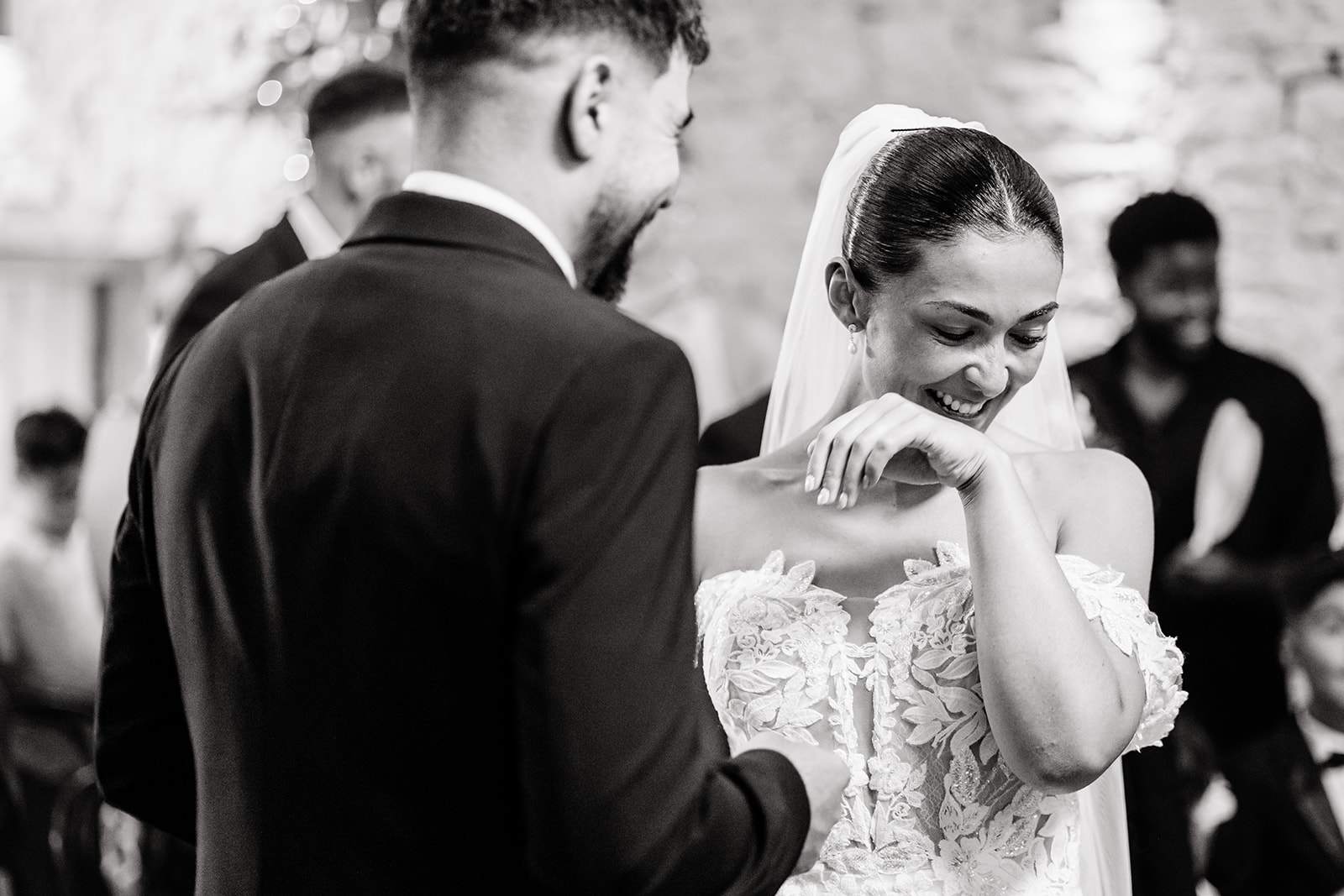
We cover both photography and film for weddings across the UK, and one thing we always encourage couples to do is tell us which moments feel most irreplaceable to them, because that conversation shapes everything about how we structure the day together. If you'd like to talk through what that looks like for your wedding, we'd love to hear from you.
Why the shift to intimate weddings changes the whole conversation.
Couples are inviting 11% fewer guests to their receptions than they were in 2024, and that's not a blip. It reflects a genuine shift in what people want from their wedding day: more presence, less performance. Smaller guest lists mean more time with the people who matter most, less logistical stress, and often a meaningfully better experience for everyone in the room.
What it also means is that the photography and film from a smaller wedding tends to be more intimate. There's less crowd management, fewer formal group shots to wade through, and more space for the quiet, unposed moments that make a gallery feel alive. We've noticed that smaller weddings often produce some of the most personal work we do, precisely because there's less noise around the edges.
The coverage conversation is shifting too. Couples who are deliberately choosing 30 or 40 guests are often also thinking more carefully about every other decision they make, including how much documentation they need. The answer isn't always "less", but it usually isn't "more" either. It's about matching the coverage to the shape of the day you're actually planning.
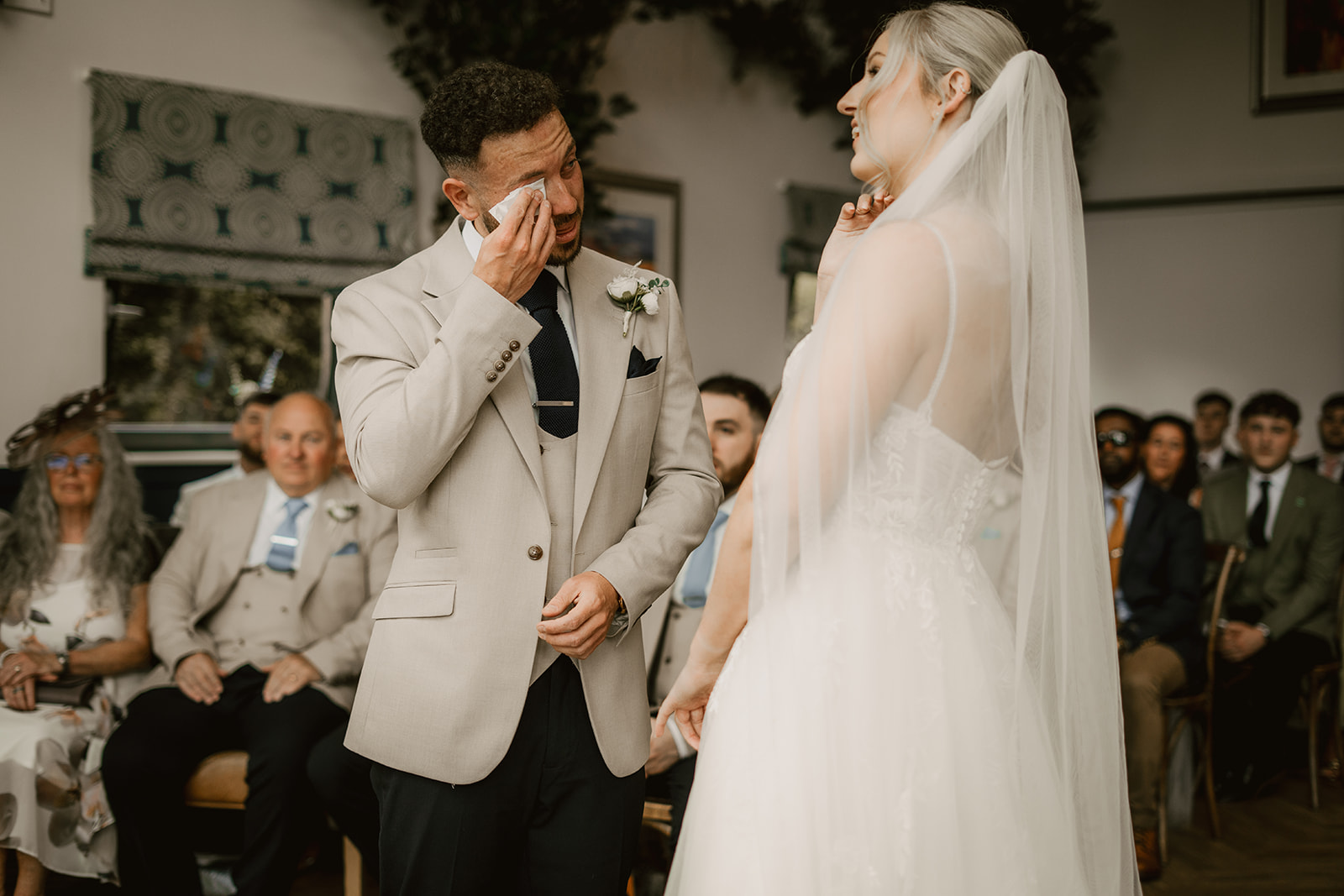
If you're planning a smaller wedding, resist the instinct to default to whatever package you've seen listed on a photographer's website. Ask instead: what does my day actually look like, hour by hour, and what are the moments I'd be heartbroken to miss? Build from there. A good supplier will help you figure out the right window rather than nudging you towards the longest one.
A quick guide to sizing your coverage for a smaller wedding day.
If you're trying to work out the right coverage length for a 40-guest wedding, here's a straightforward framework to start from.
- Under 4 hours of coverage: Best suited to a very simple, single-location ceremony and lunch with no separate prep, no evening reception, and no formal group shots. Think elopements and very intimate register office days.
- 4 to 6 hours of coverage: A good fit for most smaller weddings with a ceremony, a short drinks reception, portraits, and a sit-down meal. Covers the core of the day without extending into the evening.
- 6 to 8 hours of coverage: Right for smaller weddings that still have full prep, a longer ceremony, portraits, a proper reception, and an evening with dancing. Even at 40 guests, a full programme needs full coverage.
- 8 hours or more: Rarely necessary for a 40-guest wedding unless you have multiple locations, a very long ceremony, and a late evening finish with a first dance and band.
One more thing worth saying: the number of photographers and filmmakers matters as much as the number of hours. A second shooter at a smaller wedding is sometimes more valuable than extra hours with one person, because it means you're not missing parallel moments. The couple getting ready in different rooms. The guests arriving while the photographer is still with the bride. These gaps close quickly with two people on the ground.
If you're not sure where your wedding sits in that framework, the best thing to do is write out your day, start to finish, with rough timings, and share it with your suppliers. Most experienced photographers and filmmakers will be able to tell you fairly quickly whether your day needs four hours or seven, and a good one will be honest with you even if the honest answer means a smaller booking.
Quick wins
- START WITH YOUR DAY'S SHAPE: Guest count matters less than your day's structure. Map out your timeline hour by hour before deciding on coverage length.
- PROTECT THE CEREMONY: If budget is tight, trim coverage from the edges of the day, not from the ceremony or couple portraits, which are the moments couples most consistently value.
- 4 TO 6 HOURS IS OFTEN ENOUGH: Most 40-guest weddings with a single venue, ceremony, portraits, and a sit-down meal are well covered in a four to six hour window.
- THINK ABOUT SECOND SHOOTERS: A second photographer or filmmaker often adds more value than extra hours alone, especially when the couple is getting ready in separate spaces.
Frequently Asked Questions
Does a 40-guest wedding need full-day photography coverage?
Usually not. Most 40-guest weddings are well covered in four to six hours, depending on how many locations are involved and whether you want prep and evening coverage included. A single-venue day with a ceremony and lunch rarely needs more than five or six hours.
What's the minimum coverage I should book for a small wedding?
For a ceremony-only or very simple format, four hours can be enough. For a full day that includes prep, ceremony, portraits, and a sit-down meal, five to six hours is a more realistic minimum. Going below four hours risks missing key moments around the edges of the ceremony.
Is a second photographer worth it at a smaller wedding?
Often yes, particularly if the couple is getting ready in separate locations or if the venue has multiple spaces running simultaneously. A second person closes the gaps that a single shooter simply can't cover, regardless of how long they're booked for.
Should I book less coverage because my wedding is smaller?
Let your day's timeline guide that decision rather than guest count alone. A 40-person wedding with a full programme from prep to dancing can need just as much time as a larger one. The difference is usually in how quickly group shots and logistics move, not in how many moments matter.