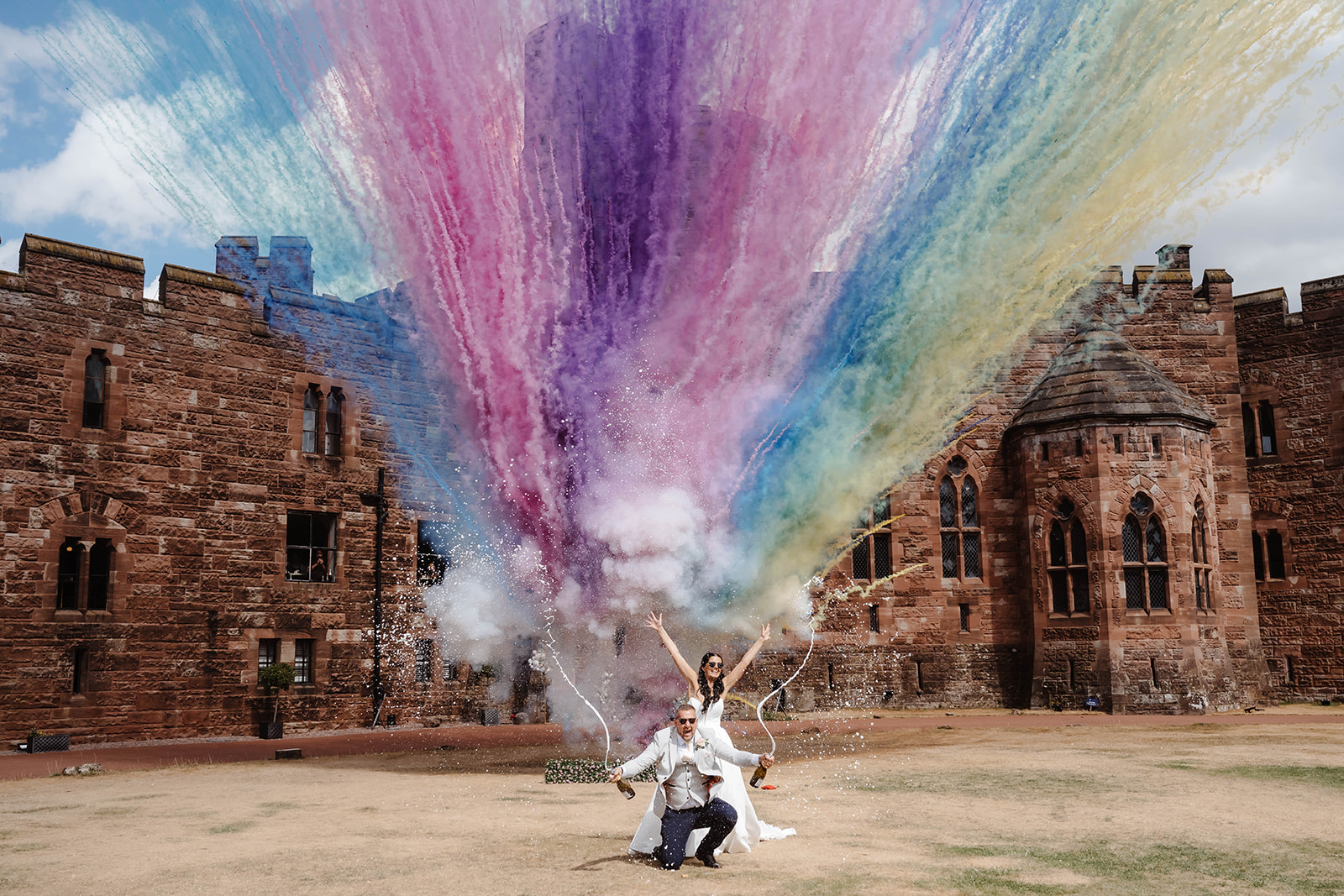
The most useful thing to do right after getting engaged isn't opening Pinterest - it's having the budget conversation first. Once you've spent time saving images of flower walls and marquee receptions, it becomes genuinely harder to consider more modest options without feeling like you're settling. Getting the financial picture clear before you fall in love with a particular vision saves a lot of frustration later.
Stop. Breathe. Don't open Pinterest yet.
The most common mistake newly engaged couples make isn't choosing the wrong venue or booking too late. It's opening Pinterest before they've had the one conversation that makes every other decision easier: the budget conversation. Once you've spent three hours saving images of flower walls and marquee receptions, it's genuinely hard to walk it back. You've already fallen in love with a version of your wedding that may or may not be financially realistic, and now every more modest option feels like a compromise.
So here's a practical place to start. Before you look at a single venue website, before you text your friends about bridesmaid dresses, and definitely before you create a wedding folder on your phone: do these ten things. They'll take a few days at most, and they'll save you weeks of frustration later.
If you're planning a 2027 wedding, the window to secure your preferred date and suppliers is tighter than most people expect. Venues in popular regions are already fielding enquiries for spring and summer 2027. Getting these foundations in place now means you'll be making informed decisions, not panicked ones.
The three conversations to have before anything else.
1. Have the budget conversation (the real one). This means sitting down together and working out what you're actually comfortable spending, not what you think a wedding should cost, and not what anyone else's wedding cost. Think about what you each have saved, whether family contributions are likely (and on what terms), and how you feel about taking on debt for a single day. You don't need a precise number immediately, but you do need a rough range. Everything else flows from this.
2. Talk about your guest list in broad terms. You don't need names yet, but you do need to know whether you're thinking 30 people or 130. Guest numbers directly determine which venues are even possible, and many of the most sought-after spaces have fixed capacities that rule them in or out immediately. A rough headcount range is one of the most useful pieces of information you can bring to any venue enquiry.
3. Discuss your non-negotiables as a couple. Not the aesthetic stuff (that can come later), but the things that would genuinely make or break the day for you. Is it important that the ceremony and reception are in the same place? Do you need the venue to be accessible for elderly relatives? Are you set on a religious ceremony, or a civil one? Getting clear on these early stops you from touring venues that were never going to work.
Understanding lead times before you fall in love with a venue.
4. Research venue lead times for your target year. This is the thing that catches couples off guard most often. Popular venues, particularly in Yorkshire, the Peak District, and across the South of England, can be booked 18 to 24 months in advance for Saturday dates in peak season. If you're hoping to marry in summer 2027, you're already in the middle of the realistic booking window. That doesn't mean you've missed out, but it does mean you shouldn't spend three months deciding before you start enquiring.
5. Settle on a rough time of year. You don't need an exact date yet, but knowing whether you want spring, summer, autumn, or winter narrows the field considerably. Season affects venue availability, daylight hours for photography and film, likely weather, and sometimes price. A winter wedding on a Friday in January will have very different availability to a Saturday in June. Neither is better; they're just different conversations to have with venues.
6. Check key dates against family calendars. Before you fall for a venue and a date, do a quick sanity check with your closest family. Are there any dates that would be genuinely impossible for people who matter to you? School holidays, existing commitments, significant clashes? You don't need to plan your wedding around everyone's schedules, but it's worth knowing about obvious conflicts before you put down a deposit.
Supplier availability: the part most couples discover too late.
7. Understand that photographers, videographers, and other key suppliers book up independently of venues. Your venue might have your date free, but your preferred photographer might not. In-demand suppliers, particularly photographers, videographers, florists, and live bands, often book 12 to 18 months ahead. Some of the most sought-after wedding photographers in the UK are already taking enquiries for summer 2027. This doesn't mean you need to book everyone immediately, but it does mean that once you have a date in mind, supplier availability is worth checking sooner rather than later.
8. Make a rough list of supplier categories you'll need. Before you start researching, it helps to have a clear picture of what you're actually looking for. A basic list for most UK weddings includes: venue, officiant, photographer, videographer, caterer (if not venue-provided), florist, hair and makeup, music (DJ, band, or both), and stationery. Some couples also want a wedding planner or coordinator, a cake maker, a photo booth, or transport. Knowing your list stops you from accidentally forgetting something important until three months before the day.
At Big Day Productions, we cover both photography and film for weddings across the UK, and we're always happy to chat through what's realistic for your date and budget before you commit to anything.
The two things that make everything easier from here.
9. Create one shared document or folder (just one). Before the Pinterest boards, the Instagram saves, the WhatsApp threads with your mum, and the screenshots of dresses that are screenshots of screenshots: create one place where you and your partner keep the actual decisions. A shared Google Doc works perfectly. Write down your budget range, your rough guest number, your non-negotiables, your preferred time of year, and anything else you've agreed on. This becomes your reference point for every decision that follows, and it stops you from having the same conversation four times.
10. Give yourselves a moment to enjoy being engaged. This one sounds obvious, but it's easy to forget. The planning will take up a lot of energy over the coming months, and the first few days of being engaged are worth savouring before the to-do list takes over. Tell the people you love, celebrate a little, and let yourself feel the excitement before it turns into logistics. The venues will still be there next week.
Once you have these ten things sorted, you'll be in a much stronger position to use Pinterest productively, as a tool for communicating your taste to suppliers, rather than as a wish list that has no relationship to your actual budget or situation.
What newly engaged couples actually need to know.
There's a version of wedding planning that feels manageable, even enjoyable, and a version that becomes a part-time job that follows you into every Sunday morning. The difference is usually in the order you do things. Couples who start with the foundations, budget, guest numbers, non-negotiables, and a realistic understanding of availability, tend to make faster, more confident decisions throughout the whole process. Couples who start with aesthetics often find themselves revisiting those foundational decisions months later, sometimes painfully.
A few practical things worth knowing as you get started:
- UK wedding venues often require a deposit of 20 to 30% to secure a date, so be ready for that conversation before you visit.
- Civil ceremonies in England and Wales must be conducted by a registrar or in a venue licensed for civil marriage. Check any venue's licence before assuming you can marry there.
- Humanist ceremonies are legally valid in Scotland but not (as of the time of writing) in England and Wales, where a separate legal ceremony is required. This affects planning if a humanist ceremony is something you want.
- Your guest list will almost certainly grow once you start writing it down. Build in a small buffer when you're thinking about venue capacity.
- If you're planning a 2028 wedding, you have a little more time, but the most popular venues and suppliers still fill up well ahead of the date. Starting the foundational conversations now doesn't commit you to anything.
The aim here isn't to make wedding planning feel like a project management exercise. It's to make sure that when you do open Pinterest, when you do start touring venues, and when you do start making decisions, you're doing it from a position of clarity rather than chaos.
Quick wins
- BUDGET FIRST: Agree a rough budget range with your partner before you look at anything else. Every other decision, venue size, supplier quality, guest count, flows from this one.
- CHECK AVAILABILITY EARLY: Popular venues and in-demand suppliers book 12 to 24 months ahead for peak dates. If you're planning a 2027 wedding, the window is already open.
- HEADCOUNT MATTERS: You don't need a final guest list yet, but a rough range (30 people vs 130 people) immediately narrows which venues are even worth touring.
- ONE SHARED DOCUMENT: Keep your agreed decisions in one place before the mood boards multiply. A simple shared doc with your budget, guest range, and non-negotiables will save you weeks of repeated conversations.
Frequently Asked Questions
How long do I have before I need to start booking things?
For a summer 2027 wedding, you're already in the realistic booking window for popular venues and suppliers. Most in-demand photographers and videographers take enquiries 12 to 18 months out, and Saturday dates in peak season go quickly. Starting the foundational conversations now, budget, headcount, and non-negotiables, means you'll be ready to move when you find the right venue.
Do I need to know my exact budget before I start looking at venues?
You don't need a precise figure, but a rough range is genuinely useful. Venues vary widely in price structure, and knowing whether you're working with £10,000 or £30,000 overall will immediately filter your options. Most venue coordinators will ask about your budget early in the conversation, so going in with at least a range saves time on both sides.
What's the first supplier I should book after the venue?
Photography and videography are usually the next priority after venue, because availability in your area for your specific date is the key constraint. Florists and bands can often be booked a little later, but photographers and videographers with a strong portfolio fill up fast, particularly for summer Saturdays.
Can I have a humanist ceremony in England?
As of the time of writing, humanist ceremonies are not legally recognised in England and Wales, meaning you'd need a separate civil ceremony to make the marriage legal. In Scotland, humanist ceremonies are legally valid and very popular. If this is something you want, factor it into your planning early, as it affects venue choice and registrar availability.