Most couples get the order wrong, and it costs them their first choice photographer, florist, or band. Here's the sequence that actually works.
The booking order that saves you from panic and regret.
We've sat across from couples at consultations who've already booked their florist, chosen their stationery, and spent three weekends visiting cake designers, but haven't yet secured a venue. We say this with warmth, not judgement: that's the wrong order, and it creates real problems down the line. Your venue dictates almost every other decision you'll make, from your guest list capacity to whether you can legally get married there, to what time you have to clear out at night.
The question of what order to book wedding suppliers isn't just a logistical one. It's about understanding which decisions open doors and which ones close them. Some suppliers have waiting lists of twelve months or more. Others are genuinely flexible and can be booked six weeks out. Knowing which is which means you can spend your energy in the right places at the right time, rather than scrambling to fill gaps in a half-finished plan.
So here's the framework we always share with couples who ask us where to begin. Think of it in three rough phases: the anchors (the things that set your date and shape everything else), the specialists (the people whose calendars fill up fast), and the finishing touches (important, but not urgent in the early months). Within those phases, there's some flexibility, but the anchors genuinely have to come first.
Book your venue and date before anything else.
Your venue is the single most important booking you'll make, and it needs to happen before you approach any other supplier. Here's why: until you have a confirmed date and location, nobody else can put you in their diary. A photographer can't hold a Saturday in July for you on the basis that you're 'probably' getting married somewhere in the Cotswolds. A caterer can't quote accurately until they know the kitchen setup. Your venue is the foundation everything else is built on.
When you're looking at venues, try to have a rough guest number in mind, even a loose range like 60 to 100 people. This narrows your options quickly and stops you falling in love with a barn that holds 200 when you're planning an intimate gathering of forty. Also think about whether you want a licensed venue for the ceremony itself, or whether you're planning a separate church or register office ceremony followed by a reception elsewhere. That distinction matters enormously for your supplier list and your timeline.
Once your venue is confirmed and your date is set, the planning process becomes so much clearer. You have a fixed point around which everything else can orbit. Couples who try to plan without that fixed point often find themselves going in circles, revisiting decisions they thought they'd made, and losing suppliers who couldn't wait around indefinitely.
If your preferred venue is already booked on your ideal date, take a breath before you panic. Most couples have more flexibility on date than they realise, and a weekday or off-peak date can open up availability across almost every supplier category simultaneously.
The specialists who fill up twelve months in advance.
Once your venue and date are locked in, the next wave of bookings should happen quickly, ideally within a month or two of securing the venue. These are the suppliers whose calendars fill up furthest in advance, and where losing your first choice genuinely stings.
In our experience, the suppliers to prioritise in this phase are:
- Photographer and videographer (often the first to go, particularly for peak Saturdays between May and September)
- Live music, whether that's a band, a string quartet, or a solo musician for your ceremony
- Catering, if your venue doesn't provide it in-house
- Hair and make-up artists, especially if you have a large bridal party requiring multiple artists on the morning
Photography and film are worth addressing together here, because so many couples book a photographer first and then treat videography as an afterthought, only to find that the videographer they actually wanted is already booked. If both matter to you, approach them at the same time. A lot of the best teams in the UK, including ours at Big Day Productions, cover both photography and film, which means one conversation, one contract, and a creative team who already knows how to work alongside each other without getting in each other's way.
For live music, the best bands in your region often have bookings stretching well beyond a year. If you've got your heart set on a specific act you've seen at a friend's wedding, contact them the week after you've signed your venue contract. Waiting until six months out is often too late for a popular Saturday date.
Florists, cake, and the details that can wait a little longer.
Here's where most couples breathe a bit easier, because this phase is genuinely less urgent. Florists, cake designers, stationery studios, and photo booth companies all tend to have more availability than photographers or bands, and many of them will work with you even six to nine months out from your date. That said, 'can wait' doesn't mean 'leave until the last minute.' If you're after a specific florist whose work you've seen all over Instagram, or a particular cake designer who only takes a handful of weddings per year, treat them like a phase-two supplier and contact them early.
Your florist conversation is worth having at least six to nine months before the wedding, even if the detailed design consultation happens later. This gives them time to understand your vision, plan around seasonal availability (sweet peas in January, for instance, are going to cost significantly more than sweet peas in June), and factor in any venue-specific requirements like altar arrangements or table centrepieces for a large guest count.
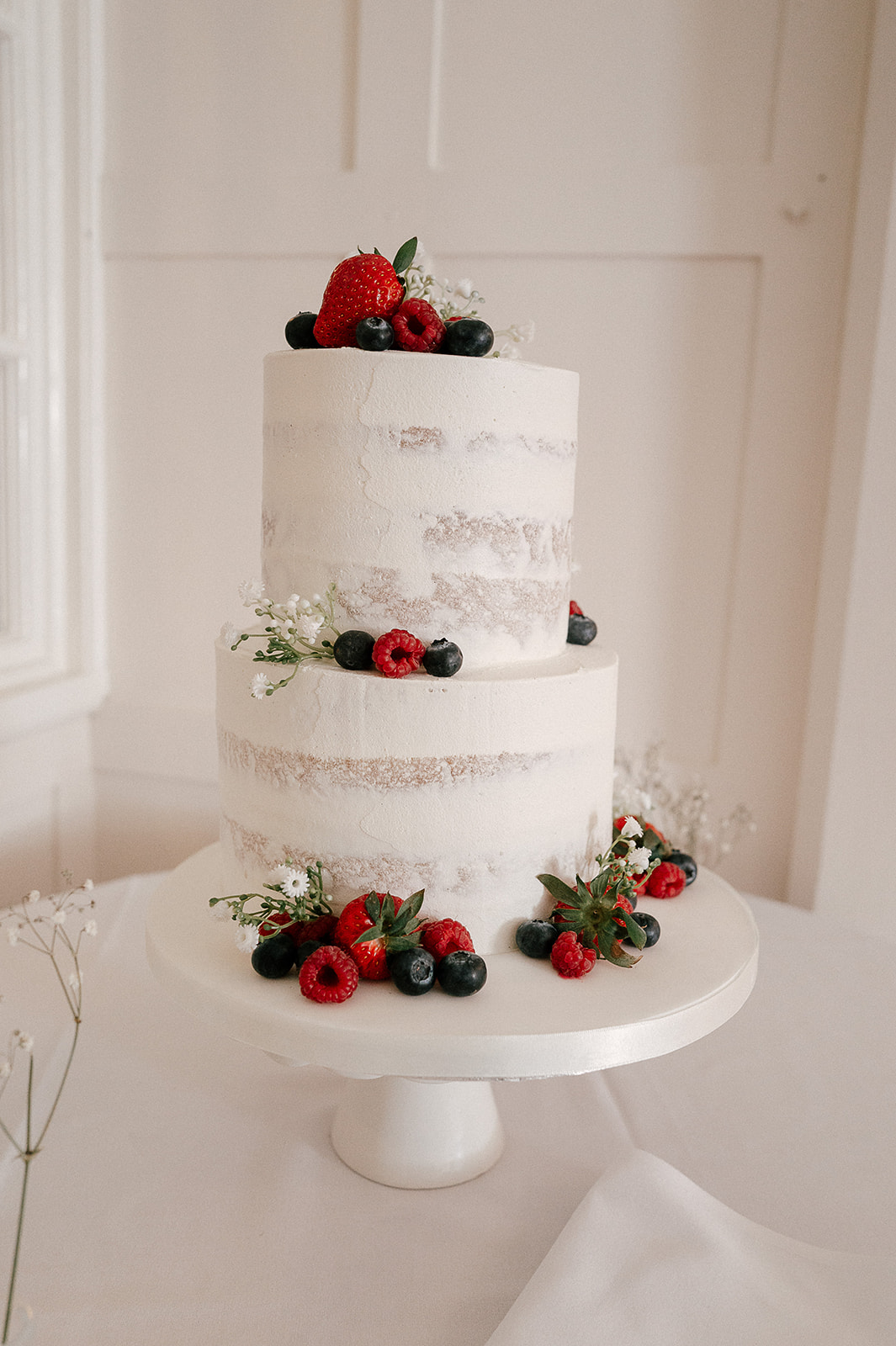
Cake designers often need less lead time than people expect, though bespoke multi-tier designs with intricate sugarwork are a different matter. If you want something architecturally ambitious, treat your cake designer like a specialist and contact them early. If you're happy with something more straightforward, eight to ten months out is usually fine.
Stationery, transport, favours, and décor hire can generally be left until around the six-month mark. These are important, but they don't have the same scarcity problem as your photographer or your venue. Use the breathing room wisely rather than trying to do everything at once.
The planning mistakes we see again and again.
Planning a wedding is genuinely exciting, and that excitement sometimes leads couples to sprint toward the fun decisions before the structural ones are in place. We've seen it so many times: a couple who fell in love with a dress before they'd confirmed a venue, or who booked a DJ before they knew whether the venue had a sound limiter that would cut their music off at 10pm. (Sound limiters, by the way, are one of the things we always suggest asking venues about upfront. They can significantly affect what kind of evening entertainment is even possible.)
A few specific mistakes worth avoiding:
- Booking suppliers before you have a signed venue contract. Until that contract is signed, your date isn't really your date. Things fall through. Don't commit other suppliers to a date that isn't yet confirmed.
- Leaving accommodation to the last minute. If you're marrying somewhere rural, like the Yorkshire Dales or coastal Cornwall, nearby accommodation fills up fast, particularly if there's a local event on the same weekend. Give your guests plenty of notice.
- Forgetting to check supplier availability for your rehearsal dinner or morning-after brunch. If these matter to you, factor them into conversations early.
- Treating your registrar or celebrant as an afterthought. If you want a specific celebrant, book them as early as you'd book a photographer. The best ones are just as sought-after.
And one thing that surprises almost everyone: officiant availability for popular dates at register offices in larger cities can be surprisingly limited. If a legal ceremony at a register office is part of your plan, get in touch with your local office early, particularly if you're marrying in London, Manchester, or Edinburgh.
A rough booking order, start to finish.
To pull it all together, here's the order we'd recommend working through when you're booking wedding suppliers. Think of this as a guide rather than a rigid rule; every wedding is different, and some couples are working with shorter timescales than the traditional twelve-to-eighteen months.
- Venue and date (as soon as you're engaged, or close to it)
- Photographer and videographer (within a month of confirming the venue)
- Celebrant or registrar (around the same time as your creative team)
- Catering, if not provided by the venue
- Live music or DJ
- Hair and make-up
- Florist (six to nine months out is usually fine, earlier if your choice is in high demand)
- Wedding dress and bridesmaids' outfits (allow at least six months for alterations; some designers need nine to twelve)
- Cake designer
- Stationery and invitations (send save-the-dates early, formal invitations around three months out)
- Transport
- Photo booth, décor hire, and finishing touches
If you're planning a shorter engagement, the principle stays the same but the pace changes. Prioritise the things that fill up fastest and be realistic about what you might need to compromise on. A wedding booked in four months is completely possible; it just requires being decisive and flexible in equal measure.
And if you're looking for a team to cover both your photography and film on the day, we'd love to hear about your wedding. Drop us a message and tell us your story.
Quick wins
- VENUE FIRST, ALWAYS: Your venue and date are the fixed point everything else orbits around. No other supplier can confirm availability until you have both locked in.
- BOOK CREATIVES EARLY: Photographers, videographers, and live bands fill up twelve months or more in advance for peak Saturdays. Contact them within weeks of signing your venue contract.
- FLORISTS CAN WAIT (A LITTLE): Six to nine months out is usually fine for floristry, but factor in seasonal availability and be honest about how bespoke your vision is.
- DON'T FORGET YOUR CELEBRANT: The best celebrants and registrars are just as in demand as the best photographers. Treat them like a phase-two booking, not an afterthought.
Frequently Asked Questions
How far in advance should you book a wedding photographer in the UK?
For peak Saturdays between May and September, we'd recommend booking your photographer at least twelve months in advance, and often longer for popular suppliers. Off-peak dates and weekdays have more flexibility, but the best photographers fill up fast regardless of the day.
Can you plan a wedding in less than six months?
Absolutely, and we've seen it done beautifully. The key is prioritising the suppliers who fill up fastest (venue, photographer, live music) and being genuinely flexible on everything else. Weekday and off-season dates open up availability significantly.
Should you book a photographer or florist first?
Your photographer, without question. Photographers and videographers have fixed availability tied to specific dates, and the best ones go quickly. Florists generally have more flexibility and can usually be booked six to nine months out.
When should you send wedding invitations in the UK?
Send save-the-dates as soon as your venue and date are confirmed, especially if guests are travelling from abroad or you're marrying during a busy period like school holidays. Formal invitations typically go out around ten to twelve weeks before the wedding.