Most wedding morning guides are written for brides. This one isn't. Here's what grooms actually need to organise, how long it realistically takes, and how to make the morning feel like something rather than just waiting for the ceremony to start.
How long does the groom's wedding morning actually take?
The honest answer: longer than most grooms plan for, and shorter than most brides get. A realistic groom's wedding morning, including getting dressed, group photos with your groomsmen or family, and any travel to the ceremony venue, runs to around three to four hours. If you're doing it in two, you're either rushing or skipping something you'll wish you hadn't.
The groom's wedding morning often gets treated as an afterthought in planning conversations, but that's changing. Statement suits, considered accessories, and group shots that are treated as a proper photography moment rather than a quick snap before the cars arrive are all part of how grooms are approaching their wedding day in 2026 and beyond. If that's the kind of morning you want, it needs a bit of structure behind it.
Here's a rough framework to start from. You'll need to adjust it based on your ceremony time, how far you're travelling, and whether you're getting ready at the venue or somewhere else entirely.
- Wake up and eat something. This sounds obvious. It is often skipped. Eat a proper meal before the adrenaline kicks in and your appetite disappears.
- Shower, shave, skincare. Allow 45 minutes if you're doing this properly, more if you're getting a professional shave or your hair done.
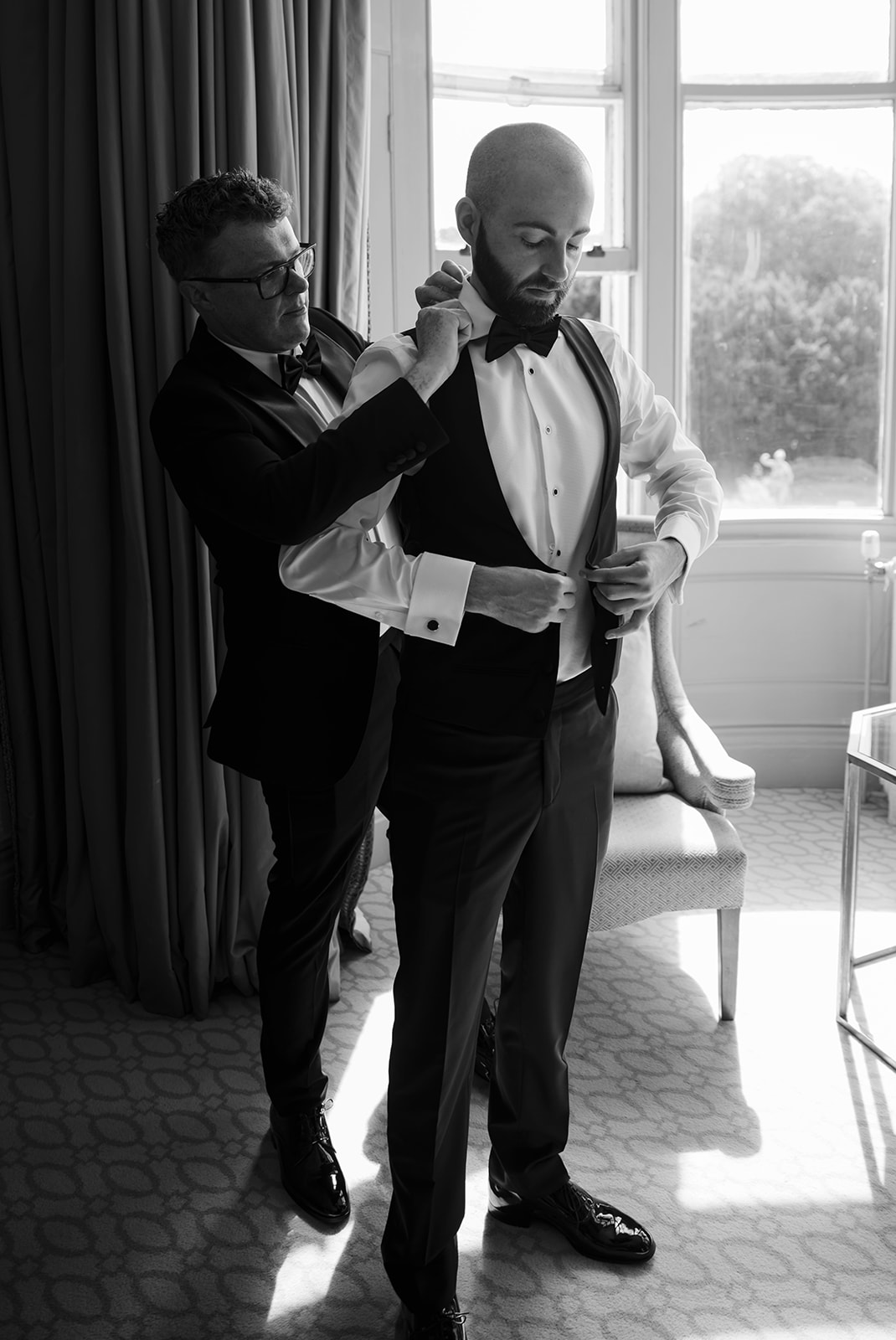
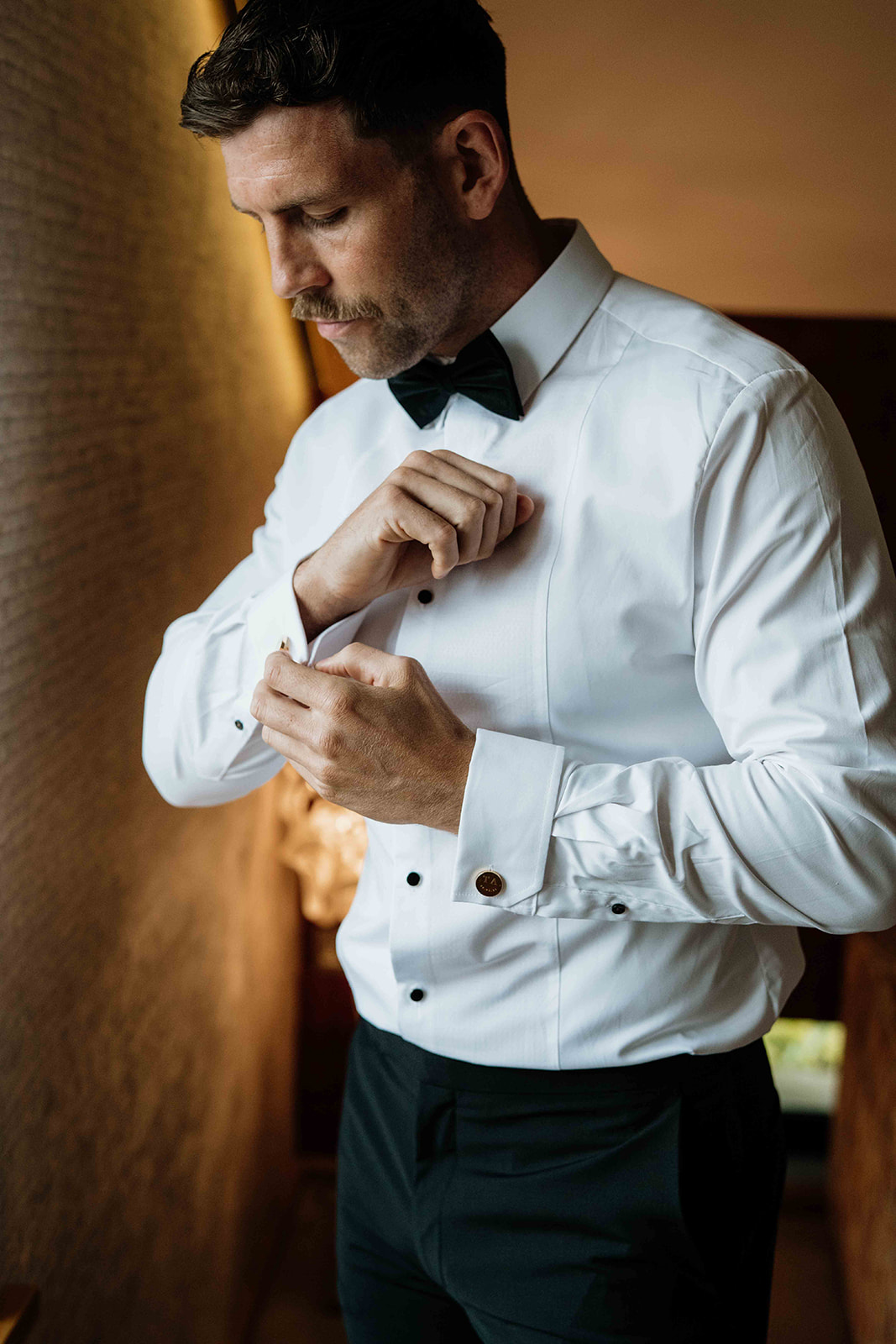
- Getting dressed. Budget 30 to 45 minutes, not 10. Buttonholes, cufflinks, and a waistcoat that doesn't sit right will all take longer than expected.
- Group photos and getting-ready shots. If your photographer is with you, plan for 30 to 45 minutes of relaxed coverage before you leave.
- Travel buffer. Add at least 20 to 30 minutes beyond your expected journey time. Traffic, nerves, and a groomsman who can't find his shoes are all real possibilities.
Dressing well takes time, so give it time.
The getting-dressed part of the groom's wedding morning is where most timelines quietly fall apart. It's not because anything goes wrong, exactly. It's because everyone underestimates how many small fiddly things are involved in putting on a full wedding outfit, especially when you've only worn it once before at the fitting.
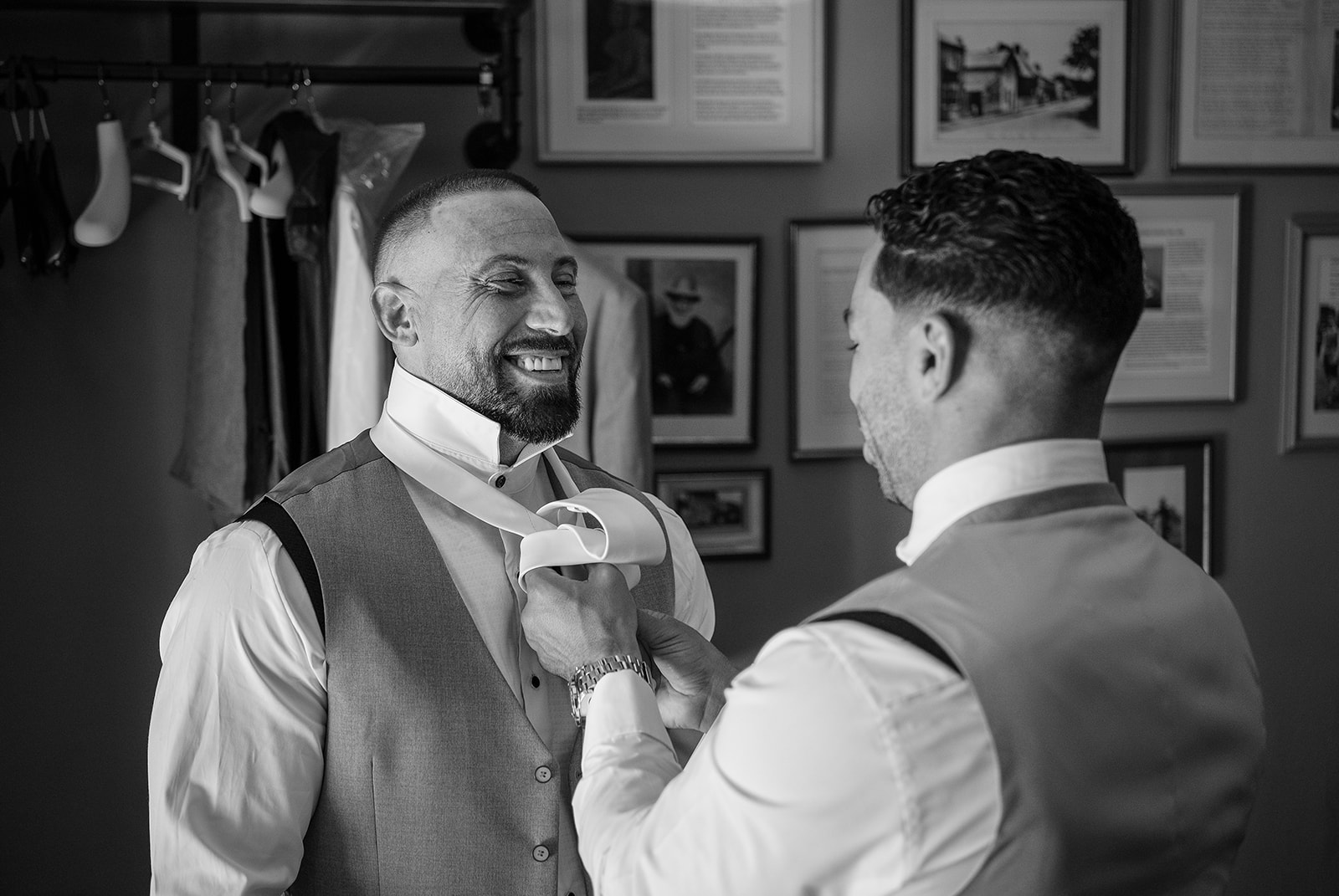
Cufflinks are a particular offender. So are collar studs on a dress shirt, pocket squares that need to be folded a specific way, and buttonholes that need to be pinned without wrecking the lapel. If your suit or morning coat has a lot of components, run through the full outfit the week before your wedding so you know what you're dealing with. Doing it for the first time on the day, with your best man watching and a car arriving in 20 minutes, is not ideal.
A few things that are worth sorting in advance:
- Know exactly where every piece of your outfit is the night before. Lay it all out if that helps.
- If you're wearing a hired suit or morning coat, try the full thing on at home before the day so you can flag any fit issues with the hire company.
- Assign someone (your best man, a groomsman, a parent) to hold the rings, the order of service, or anything else you'd otherwise be patting your pockets for all morning.
- Keep your phone somewhere accessible but not in your hand. You'll want to be present, not scrolling.
If you're investing in a made-to-measure suit or a really considered look, the getting-dressed moment is worth photographing properly. It doesn't need to be elaborate. A few frames of the details, the suit on the hanger, the shoes, the watch your dad gave you, and then the finished look. Those images tend to mean a lot more later than people expect them to.
The groom's group photos deserve a proper plan.
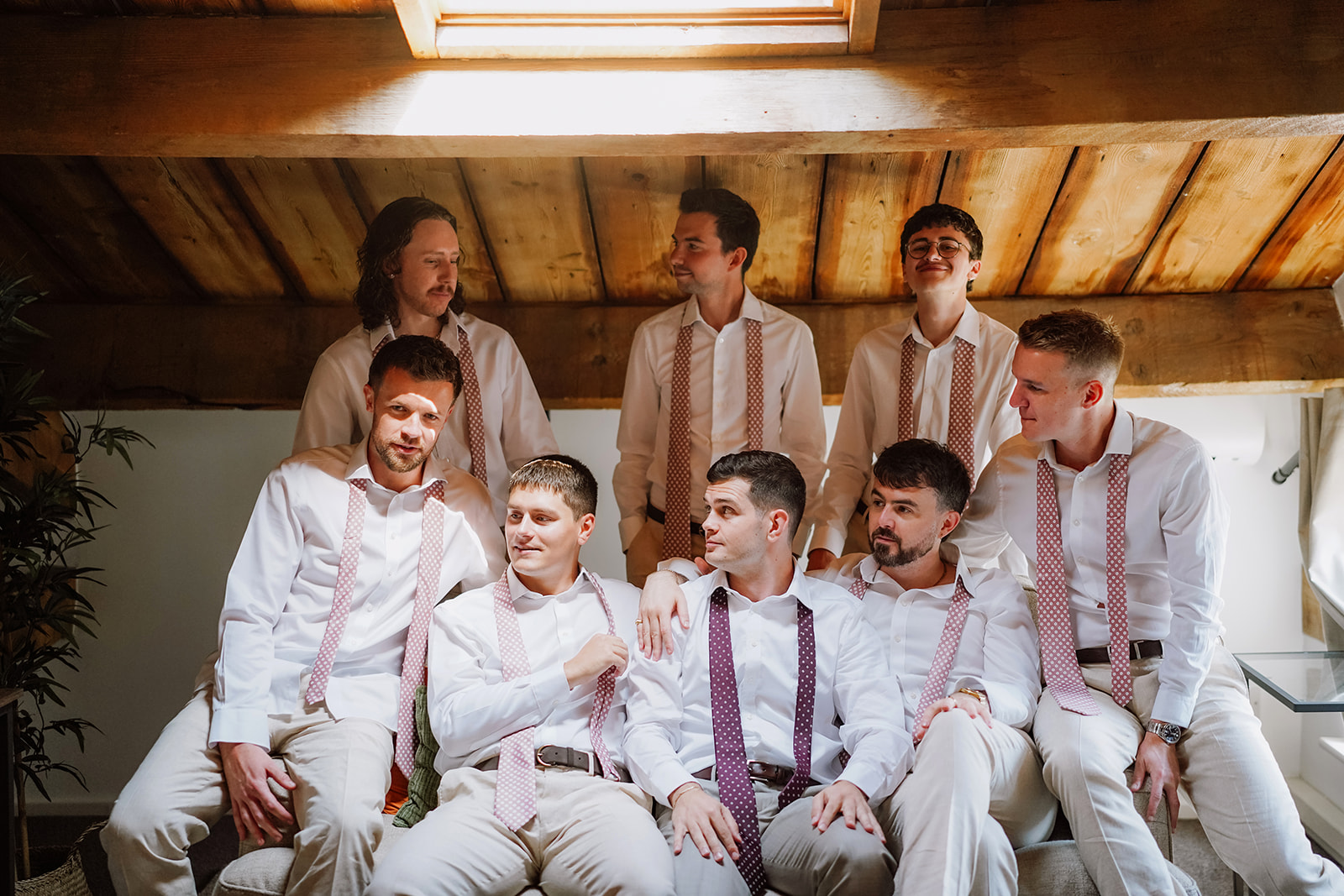
Groom group photos are having a moment, and rightly so. A well-composed shot with your groomsmen, your dad, your brothers, or whoever your people are, is worth the same amount of planning as any other portrait session on your wedding day. The difference is that it often gets crammed into five minutes between getting dressed and leaving for the venue, which is how you end up with everyone squinting into the sun outside a Premier Inn car park.
If your photographer is with you in the morning (and it's worth discussing this when you book), talk through what you actually want from the session. A few relaxed frames of everyone together, some individual portraits, close-ups of the details. It doesn't need to be long, but it does need to be intentional. Twenty to thirty minutes of unhurried time will give your photographer far more to work with than a frantic ten minutes as you're heading out the door.
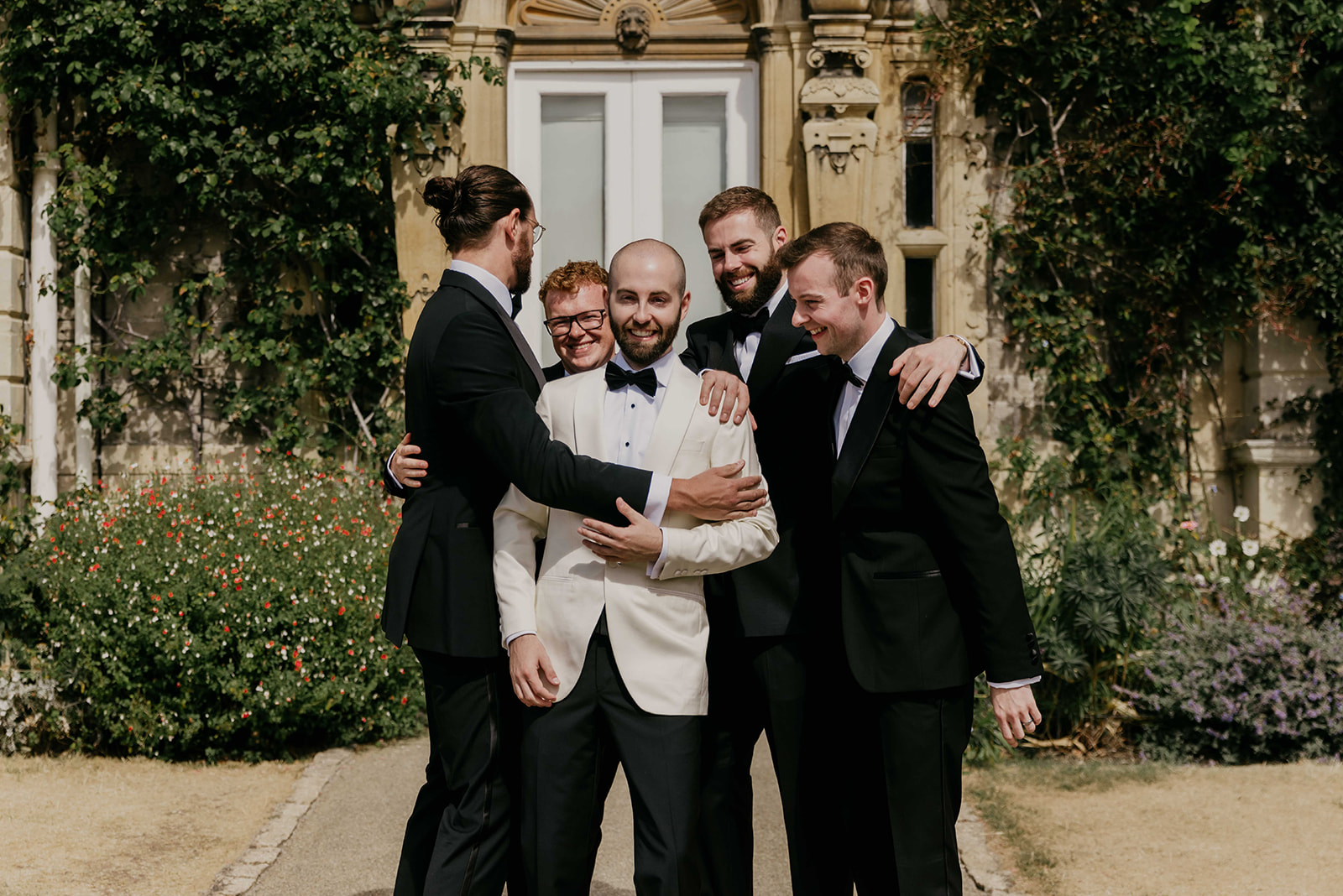
Think about your location too. If you're getting ready at or near the venue, there may be a courtyard, garden, or interesting interior that works well. If you're getting ready at home or a hotel, have a conversation with your photographer in advance about where the best light and background are. This is the kind of thing that makes a real difference to the finished images without adding any stress on the day itself.
One practical note: tell your groomsmen what time to arrive and add 15 minutes to whatever time you actually need them there. You know who you are inviting. You know which one will be late.
How to actually enjoy it, not just survive it.
The groom's wedding morning has a reputation for being low-key to the point of being slightly dull. You get dressed, you have a drink, you wait. That version of the morning is a choice, not an inevitability, and it's also a bit of a waste of what is actually a pretty significant few hours.
Here's a more useful framing: the morning is the last bit of time you'll have with your closest people before everything changes gear completely. Most grooms who reflect on their wedding day say the morning went faster than they expected. Building something into it that you'll actually remember, whether that's a decent breakfast together, a walk if you have time, or just sitting down properly with your dad or your best friend without the whole wedding happening around you, tends to be worth more than any amount of additional rushing.
A few things that help the morning feel good rather than just functional:
- Eat breakfast together as a group rather than grabbing something separately. It's a small thing that makes the morning feel more like an occasion.
- Have one person in charge of logistics (car times, rings, buttonholes) so you don't have to think about it.
- Keep the alcohol sensible. A drink is fine. Three drinks before 11am is a different thing entirely, and you've got a long day ahead.
- Give yourself permission to feel whatever you actually feel. Nervous, excited, weirdly calm, slightly overwhelmed: all of it is completely normal and none of it needs to be performed for anyone else's benefit.
- If you want a moment of quiet before you leave, take it. Step outside for five minutes. It's your morning too.
We cover both photography and film for weddings across the UK, and the groom's morning is something we're always glad to be part of when it's planned with a bit of intention behind it.
The practical checklist before you leave.
Before you get in the car, there are a handful of things worth confirming. Not because you're likely to forget them, but because the morning of a wedding is surprisingly good at making ordinary things slip your mind. Running through a short mental checklist while you're still at the getting-ready location is much easier than realising something's missing when you're ten minutes from the ceremony.
Here's what to check before you leave:
- Rings. Confirm who has them, confirm they are physically in that person's pocket right now, not in a bag or on a table somewhere.
- Speech or notes. If you're speaking at the reception, know where your notes are. Phone, jacket pocket, or given to someone reliable.
- Any documents your venue or registrar needs. For civil ceremonies in particular, there are sometimes things you need to bring. Check this well in advance and confirm the morning of.
- Transport confirmed. Know when your car is arriving, have the driver's number saved, and make sure everyone knows where they're going and when.
- Buttonholes. These often arrive separately from the rest of the flowers. Know who is bringing them and when.
- Phone charged, on silent (or off) for the ceremony. Decide in advance what you're doing with it and tell your groomsmen to do the same.
It's also worth building a small buffer between when you plan to leave and when you actually need to arrive. Ceremony venues generally expect the groom to be there before guests start arriving, which usually means 20 to 30 minutes before the ceremony start time. Factor that into your departure, not just your journey time.
If you're marrying in a venue that has a specific arrival protocol, particularly a church or a licensed venue with a formal processional, check with your coordinator or officiant in advance so there are no surprises about where you should be and when.
Why the groom's morning matters more than you think.
There's a version of wedding planning where the groom's morning is treated as a brief, logistical interlude before the real day begins. That framing does a disservice to what the morning actually is: the beginning of your wedding day, with the people who matter most to you, in a context that will never happen again in quite this way.
The shift happening right now in how grooms approach their wedding morning is a good one. Treating your outfit as something worth photographing, giving your group shots the same attention as any other portrait session, building some actual time and intention into the morning rather than just waiting around: none of that is excessive or self-indulgent. It's just paying attention to a part of the day that deserves it.
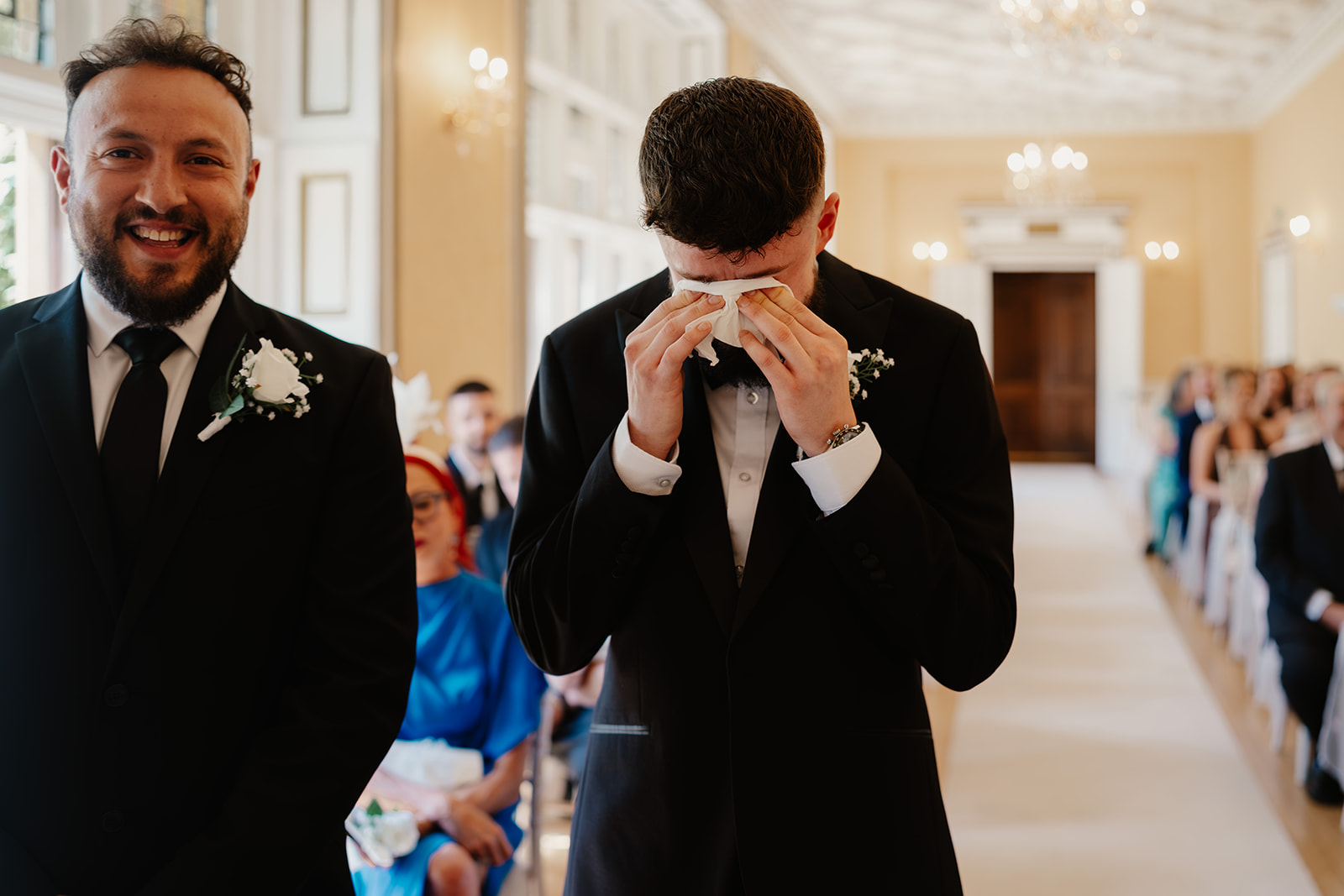
Your partner has almost certainly spent significant time and energy thinking about their morning. A bit of the same thought on your side means the whole day starts better, the photos from both sides of the morning feel balanced, and you arrive at the ceremony having actually experienced the morning rather than just got through it.
The practical stuff matters: the timeline, the checklist, the car times. But so does the texture of the morning, who you spend it with, what you eat, whether you take five minutes to breathe before everything accelerates. That's not something you can plan in detail, but you can create the conditions for it. Leave enough time, hand off the logistics, and let the morning be what it actually is.
If you're looking for a photography and film team to be part of your day from the very beginning, we'd genuinely love to hear about your wedding.
Quick wins
- ALLOW ENOUGH TIME: A realistic groom's wedding morning runs three to four hours. Build your timeline backwards from your ceremony arrival time, not your departure time.
- PLAN THE GROUP SHOTS: Groom group photos need the same intention as any other portrait session. Talk to your photographer in advance about timing, location, and what you actually want from it.
- DELEGATE THE LOGISTICS: Assign one person to hold the rings, confirm the cars, and handle anything logistical. You shouldn't be thinking about that stuff on the morning itself.
- LAY EVERYTHING OUT FIRST: Set out your full outfit the night before and do a complete run-through, including cufflinks and buttonholes. The morning of your wedding is not the time to discover a problem.
Frequently Asked Questions
What time should the groom start getting ready on the wedding day?
Work backwards from your ceremony arrival time, which is usually 20 to 30 minutes before the start. Add your journey time, then allow three to four hours for getting ready, group photos, and a buffer. For a 1pm ceremony, starting around 8 or 8:30am is a reasonable guide, depending on how much is in your morning.
Should the photographer come to the groom's getting-ready location?
It's worth discussing when you book. If you want proper coverage of the morning, including detail shots of the outfit and group photos with your groomsmen, having your photographer there for 30 to 45 minutes before you leave makes a real difference to what's in the final gallery.
What should the best man be responsible for on the wedding morning?
Practically, the best man should hold the rings, confirm transport logistics, and be the person who keeps the morning on time without making it feel stressful. Delegating those jobs clearly in advance means you can actually enjoy the morning rather than managing it.
How do groom group photos work if we're getting ready at different locations?
If you and your partner are getting ready separately, your photographer will typically split time between both locations or you'll each have separate coverage. Discuss the split when you plan your day timeline so both sides of the morning get the time they need.